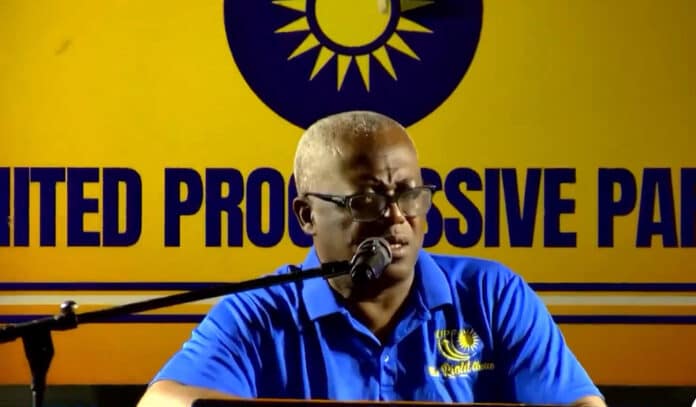
A fiery national debate over national sovereignty and political loyalty has erupted in Antigua and Barbuda following a provocative statement made by incumbent parliamentarian and United Progressive Party (UPP) candidate Sheffield Bowen during a recent party public gathering. What began as a routine political address has quickly grown into a defining conversation about the future of the island nation’s self-determination, just months ahead of the scheduled April 30, 2026 general election.
According to commentary from a local writer with deep ties to Antigua and Barbuda, Bowen’s comment was far more than offhand political rhetoric—it laid bare a dangerous ideological stance that threatens the core principles the nation fought to secure. Bowen reportedly told attendees that the United States and major European powers are pushing for a change in Antigua and Barbuda’s government to open the door for enhanced bilateral cooperation. In short, Bowen’s argument frames domestic democratic outcomes as something that should be shaped to align with the preferences of foreign governments.
This suggestion is not merely troubling—it is fundamentally unacceptable for an independent nation that earned its sovereignty through decades of struggle and sacrifice, the writer argues. Antigua and Barbuda’s electoral system was not built to win approval from overseas capitals; it exists to amplify the voice of the Antiguan and Barbudan people, shaped by their unique needs, lived realities and collective ambitions. To claim the nation should adjust its democratic process to suit external interests directly undermines the very foundation of the country’s hard-won independence.
Bowen’s reported stance raises unavoidable, serious questions about where his ultimate loyalties lie, the commentary continues. A leader who believes the nation must bend to the will of foreign powers to gain international acceptance can never be counted on to stand firm in defense of Antigua and Barbuda’s national interests. This posture is not pragmatic statecraft—it is submission rebranded as political strategy, a willingness to prioritize the comfort of foreign governments over the well-being of local citizens.
The writer draws a clear, critical distinction between constructive global engagement and outright surrender to external control. No one disputes that Antigua and Barbuda, as a active member of the global community, must maintain productive diplomatic, trade and cooperative relationships with international partners. But productive cooperation never requires compliance that comes at the cost of sovereignty, and equal partnership never means handing over decision-making authority to outside actors. No sovereign nation can ever outsource its governing power to foreign entities.
Beyond the core sovereignty question, the argument that a government change would resolve external pressure is deeply flawed and intellectually dishonest, the piece adds. This is not a challenge unique to Antigua and Barbuda: across the Caribbean, neighboring nations including Dominica, St. Vincent and the Grenadines, Saint Lucia, and St. Kitts and Nevis have all faced similar external scrutiny, particularly around visa policies and international regulatory checks. To frame a change in Antigua and Barbuda’s government as the fix for foreign relations is misleading fear-mongering—if the logic held, every Caribbean nation facing external pressure would be required to replace their leadership to satisfy foreign powers, an outcome no self-respecting democracy would accept.
History makes clear that powerful global nations prioritize their own national interests first, which is their right; but it is equally the right and duty of Antigua and Barbuda to prioritize its own citizens above all else. All policy, all leadership decisions, and all national direction must be guided by what benefits local people, not what appeases foreign governments. A leader’s core responsibility is to stand firm against external pressure, not pave the way for the nation to yield to it. When a politician openly suggests the electorate should change the government to align with foreign expectations, that politician is showing voters exactly how they will govern when pressure mounts: they will bend, and they will not stand when the nation needs them most.
This moment transcends everyday partisan political fighting, the writer emphasizes. It is a fight over core principle: it asks whether the people of Antigua and Barbuda still believe in their fundamental right to chart their own course free from foreign interference, and whether they value their sovereignty enough to defend it when it is challenged. Antigua and Barbuda is not a geopolitical pawn to be moved at the request of outside powers; it is an independent nation with a proud history of resilience, and every citizen’s vote is not a bargaining chip—it is an expression of the people’s will and their shared future.
As the country prepares for the 2026 general election, the choice facing voters is not just between individual candidates or party platforms. It is a choice about national conviction: will voters select leaders who will stand unapologetically for Antigua and Barbuda’s interests, or accept leaders who look to foreign capitals for direction before taking responsibility for domestic needs? The answer, the writer concludes, must grow from the identity of the Antiguan and Barbudan people: strong, independent, and uncompromising in their right to determine their own destiny. Antigua and Barbuda must always come first.