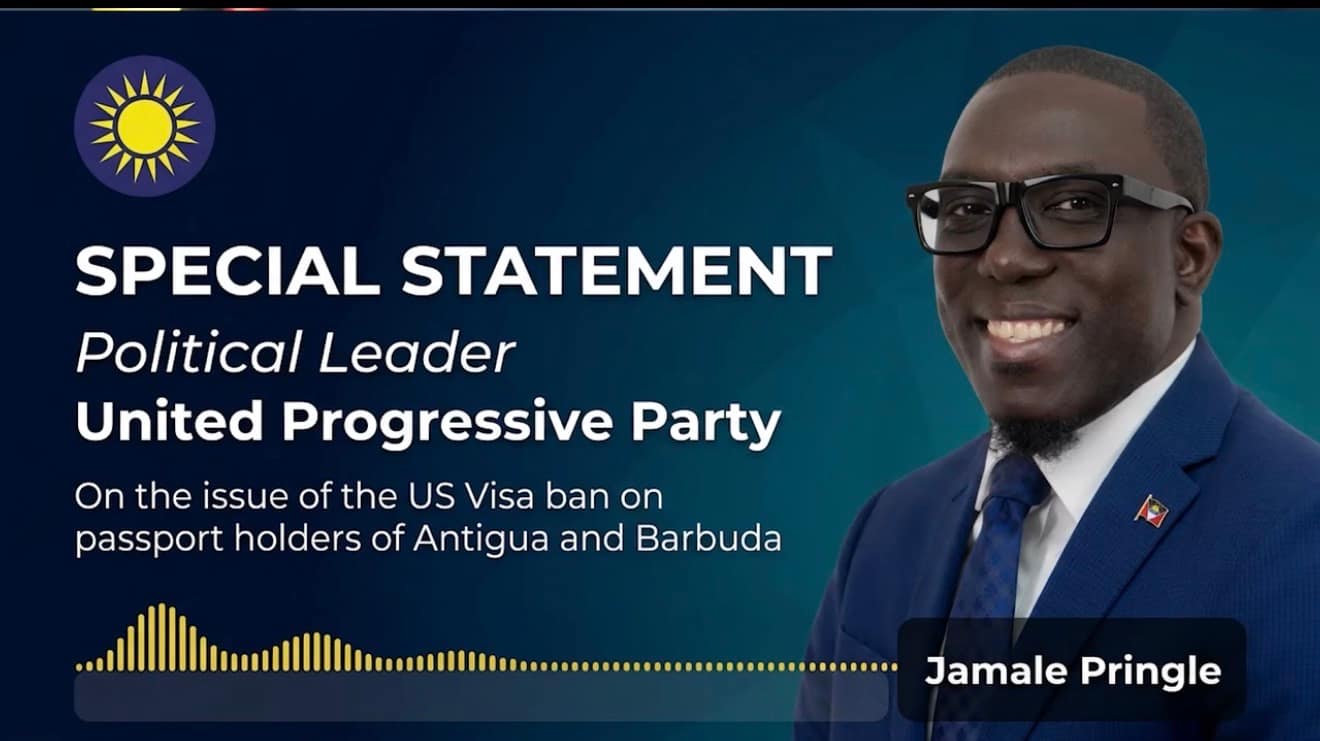
As the April 30 general election in Antigua and Barbuda approaches, the nation has been roiled by newly implemented U.S. visa restrictions that target local passport holders, and opposition leader Jamale Pringle has seized on growing public frustration to ramp up criticism of the incumbent Gaston Browne administration. Pringle, who leads the United Progressive Party (UPP), has labeled the new travel rules a full-blown national crisis that touches ordinary families, local business operations, and the overall health of the national economy.
The newly imposed measures, which include a mandatory surety bond requirement ranging from $5,000 to $15,000 for certain Antiguan and Barbudan travelers seeking U.S. entry, have sparked widespread anxiety across every segment of Antiguan and Barbudan society, Pringle noted in a recent public address. Many ordinary citizens are already trapped in uncertainty by the new rules: for low and middle-income travelers, the required bond is simply out of financial reach, while others have been forced to abandon their travel plans entirely after becoming ineligible to submit visa applications.
Beyond the disruptions to individual travel, Pringle emphasized that the restrictions are already sending shockwaves through the local business community. Many importers and industry operators warn that the new requirements could block their access to critical goods, specialized equipment, and cross-border business services, creating cascading risks that could damage the national economy if the standoff remains unresolved.
The opposition leader pinned full blame for the crisis on Prime Minister Gaston Browne’s ruling administration, framing the new visa restrictions as a direct result of the incumbent government’s mismanagement and diplomatic missteps. Pringle argued that the Browne administration created the conditions that prompted Washington to implement the restrictions, and now lacks the credibility and diplomatic capacity to reverse the policy. “Antiguans and Barbudans recognize that the same administration that created this problem can’t be trusted to fix it,” Pringle said, doubling down on criticism of the government’s diplomatic outreach strategy to date.
If the UPP secures victory at the polls on April 30, Pringle pledged, resolving the visa restriction crisis would be the new government’s top immediate priority. He laid out a concrete timeline for action: on the UPP’s first official working day, May 5, the new administration would open formal diplomatic talks with the U.S. State Department to seek redress for Antiguan and Barbudan passport holders. Pringle also revealed that preliminary outreach has already been completed with members of the Antiguan and Barbudan diaspora based in the United States, who have agreed to lend their support to negotiations and help broker an outcome that serves the interests of both nations.
Pringle framed a change in ruling party as the only viable path to repairing strained bilateral ties between Antigua and Barbuda and Washington. “Voters have a clear choice: electing the United Progressive Party is the first critical step to restoring positive, mutually respectful relations between our two nations,” he said, wrapping up his address with a direct appeal for voter support ahead of the general election.