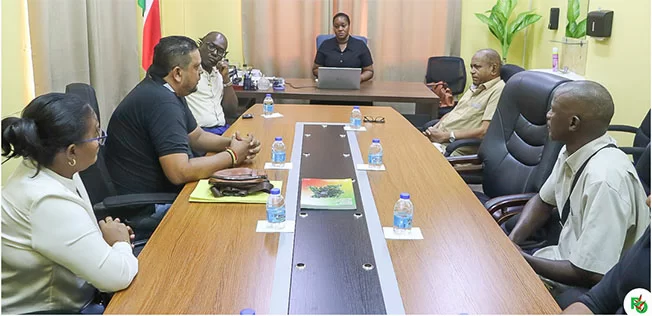
On Friday, the governing board of the Overliggend Waterschap Multipurpose Corantijn Project (OWMCP), a key water management agency supporting Suriname’s rice industry, held an introductory working visit to the country’s Ministry of Regional Development (RO). The meeting, centered on addressing operational challenges that have hampered the agency’s core functions, brought the most pressing bottlenecks facing OWMCP to the attention of senior ministry officials.
According to statements from the OWMCP board, the organization is currently grappling with two major interconnected issues: a significant shortage of operational funding and critical gaps in essential equipment. Compounding these problems, a large portion of the agency’s heavy machinery fleet is in poor technical condition, creating major delays and complications for ongoing and planned water management work across its service area.
In response to the concerns raised, RO officials announced plans to conduct an on-site assessment of OWMCP’s operations and infrastructure. Ministry representatives noted that an in-person visit to the project area will give officials a first-hand, clearer understanding of the full scope of the challenges, including the current condition of the machinery, unmet resource needs, and long-standing maintenance issues affecting the region’s irrigation canals.
The Ministry of Regional Development confirmed in its post-meeting announcement that the OWMCP board has welcomed the on-site assessment initiative, and has committed to providing full cooperation to support the ministry’s review.
As a subsidiary agency of the Ministry of Regional Development, OWMCP plays an indispensable role in Suriname’s agricultural economy, particularly the rice sector that forms a core part of the country’s food production and export market. The agency is tasked with two critical, farmer-focused responsibilities: delivering a reliable supply of irrigation water to agricultural polders in the Nickerie district, and managing the drainage of excess floodwater from these productive farmlands to prevent crop damage.