A major U.S. food conglomerate is conducting a deep-dive feasibility assessment to build a commercial, standards-compliant pork industry in Guyana, with long-term plans to position the country as a regional supplier aligned with CARICOM’s food import reduction goals.
Seaboard Corporation, the third-largest pork producer in the United States, was invited by the Guyana government to explore the opportunity through its local subsidiary, National Milling Company (NAMILCO). The firm subsequently contracted France-based agricultural consultancy GIRA Food to conduct on-the-ground research and produce a formal assessment that will guide Seaboard’s next steps: either pitch the project to stakeholders, abandon the initiative if it proves unviable, or move forward with full industry development.
NAMILCO General Manager Scott Mitchell outlined in an interview with Demerara Waves Online News that GIRA’s assessment will address every core component of a successful commercial swine sector, including appropriate livestock genetics, high-quality feed formulations, certified processing infrastructure, workforce training, and opportunities for value-added product development such as hams, bacon and sausages.
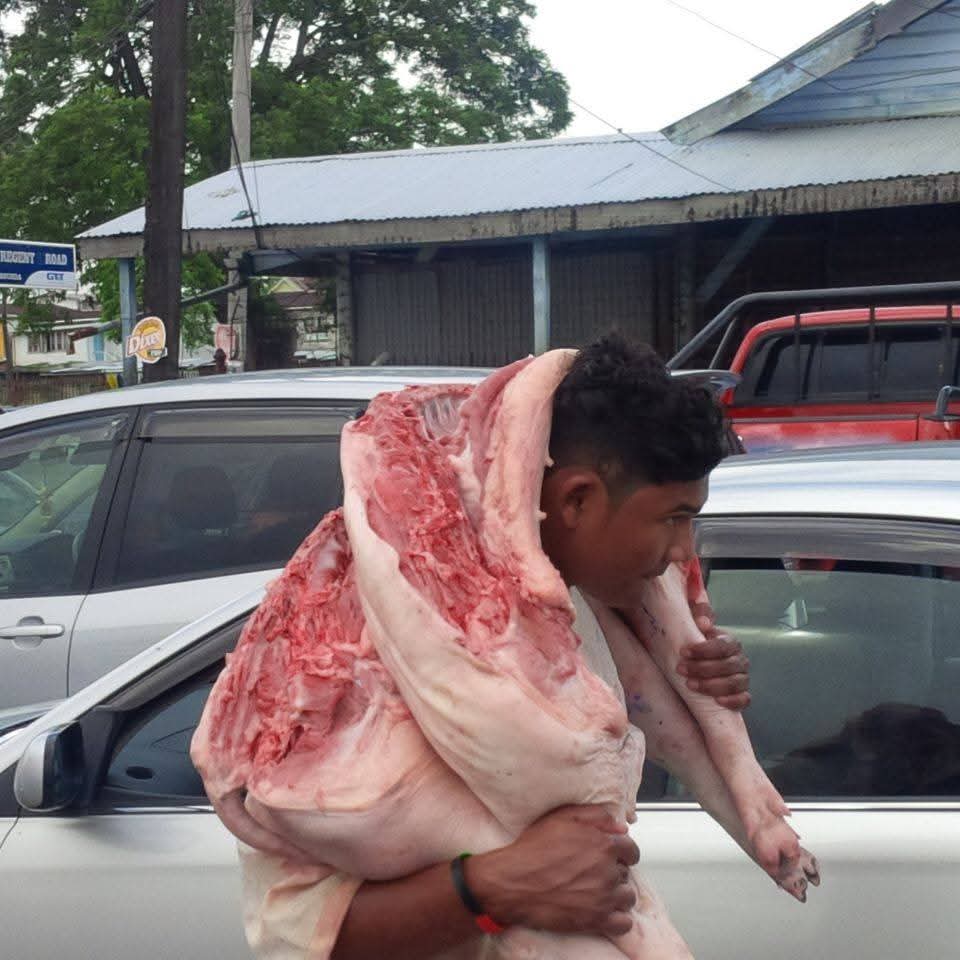
A critical gap GIRA’s report will highlight is the absence of a dedicated, certified swine slaughterhouse in Guyana. Currently, most small-scale pig producers slaughter animals on-farm, often in non-sanitary conditions that erode consumer trust and block access to formal local and export markets. Mitchell explained that a certified centralized abattoir would solve this issue, enabling regulated quality control, official quality grading, and flexible operations to process both certified and non-certified meat with full facility sanitization between runs.
Over the course of their assessment, GIRA experts have held consultations with a full spectrum of local stakeholders, including the Guyana Livestock Development Agency (GLDA), senior government ministers, small-scale pig rearers, major feed producers including Bounty Farms, hotels, restaurant chains, retail operators, local butchers, and farmer associations to map existing barriers and opportunities.
Beyond meeting Guyana’s growing domestic demand, the project aims to position Guyana as a pork exporter to the 11-million consumer CARICOM single market, advancing the regional bloc’s goal of cutting reliance on extra-regional food imports. To make the local industry competitive, Mitchell noted that Seaboard will push for targeted Common External Tariff protections against low-cost, mass-produced pork imports from the United States, whose large-scale production efficiencies create an unlevel playing field for smaller regional producers. Mitchell emphasized that the project will prioritize domestic commercial viability first, with regional expansion rolled out in phases only after a sustainable local market is established.
Mitchell explained that the Guyana government turned to Seaboard for this initiative due to the company’s extensive global experience in the pork sector: Seaboard processes between 15,000 and 20,000 hogs daily, raises 8 million hogs annually, and handles 24 million processed hogs per year across its operations, with its closest regional facility located in Colombia where it maintains an 800,000-sow breeding herd for genetic development.
Demand drivers for pork in Guyana are compelling, Mitchell argued. Per capita annual protein consumption in Guyana sits at around 55 kilograms, far below the 120-kilogram average in the United States, and historical trends show that protein demand – including for pork – rises consistently as incomes grow in emerging economies. Shifting demographics also boost demand: Guyana hosts a large immigrant population from pork-consuming markets including Venezuela, Cuba, Brazil and China, and offshore oil sector vessels operating in Guyana’s waters report pork is their most consumed protein. Currently, Guyana cannot supply this offshore demand because the sector lacks required ISO Food Safety System Certification.
Still, multiple challenges remain to building a viable industry. Key barriers include building consumer trust in local pork products, upholding international quality standards, and convincing smallholder farmers to invest in higher-quality feed formulated with added amino acids and protein. Mitchell noted that improved feed alone can increase average slaughter weight from 180 pounds to 250 pounds per animal, drastically improving farmer revenues. He also emphasized the need for farmer specialization: with improved genetics and better feed management, annual piglet output per sow could rise from the current 6 to 10 head to 12 head, still below the global standard of 35, but a major improvement for local producers.
Contrary to concerns that small family pig operations would be displaced by large-scale commercial development, Mitchell said all consultations to date show widespread enthusiasm among local producers for the project. Farmers are eager to expand production and secure reliable formal markets for their output, with no reports of fear of displacement from the supply chain.
In closing, Seaboard extended formal thanks to the Ministry of Agriculture, GLDA leadership, Bounty Farms, the local Swine Association, hoteliers, and all participating farmers for their collaboration during GIRA’s assessment. The company noted that the shared commitment to food safety, quality, and national food security demonstrated through this collaboration strengthens institutional partnerships and supports long-term growth for Guyana’s agro-processing and manufacturing sectors.