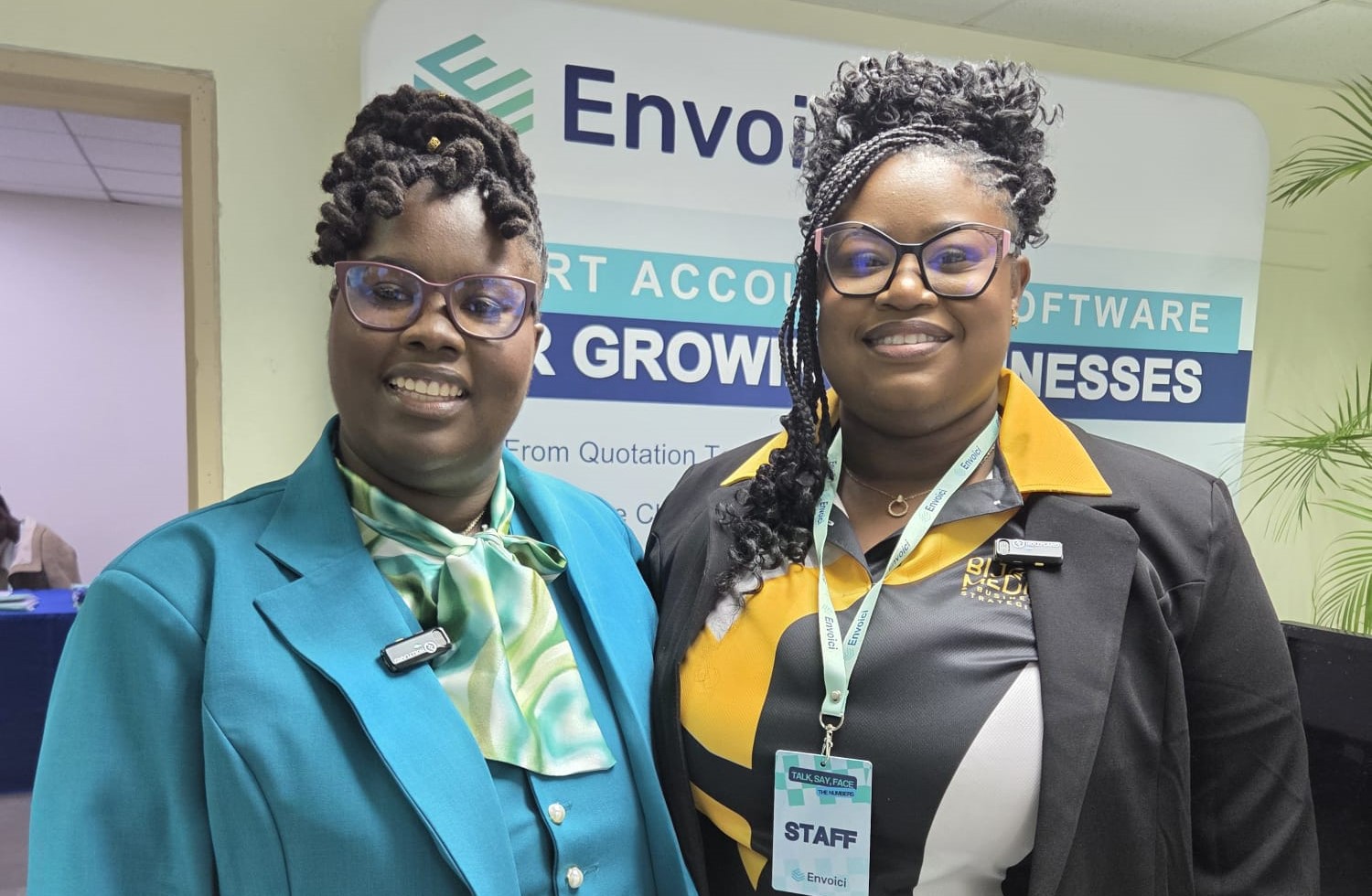
Across global markets, micro, small and medium-sized enterprises (MSMEs) serve as the backbone of local economies, driving job creation and community growth. But industry leaders gathering for a new business support initiative in Barbados have highlighted a common, underdiscussed flaw that pushes many small ventures to close long before they can reach sustainable success: a fundamental lack of intentional organizational structure and long-term strategic planning.
Hosted at the Lloyd Erskine Sandiford Centre, the inaugural Pathway to Profit initiative brought together local entrepreneurs and seasoned industry experts to share actionable guidance for building long-lasting, profitable businesses. The event, sponsored by Payce Digital, The Barbados Trust Fund Ltd, the Small Business Association and FundAccess, focused on upskilling small business owners in core operational areas including accounting, risk mitigation, insurance coverage and business continuity planning.
Ashley Phillips-Kinch, co-coordinator of the initiative and owner of local creative firm Bijou Media, acknowledged that limited access to capital and ongoing financial strain are widely recognized as top challenges for new and emerging entrepreneurs. But she emphasized that many MSME failures trace back to a self-imposed issue: small business owners often frame their ventures as “small” in structure as well as size, choosing to operate informally rather than building the formal systems that power larger, enduring corporations.
“As small business owners, we throw around the word ‘small’ so casually that we let it define how we run our companies, when we should actually be operating with the same intentional structure as any large corporate entity,” Phillips-Kinch explained. “We need clear systems for every part of our operations, knowing what tasks to prioritize, when to complete them, and how to organize our work. Instead, most of us think about structure last, if we think about it at all. We assume because it’s just me or my family running the business, formal structure isn’t necessary. We know we need funding and we know we need marketing, but structure is the critical missing piece for most of us.”
Rochelle Walrond-Cox, fellow co-coordinator and CEO of two local digital firms Digital IRC and Envoici, echoed Phillips-Kinch’s remarks, noting that intentional organizational structure is non-negotiable for building long-term business success that outlasts the founder. She pointed to the high rate of small business collapse within the first few years of operation, noting that many founders fail to plan for long-term growth, exit strategies or intergenerational succession—all outcomes that depend on a solid structural foundation.
“Structure is what allows you to build a lasting legacy for your business,” Walrond-Cox told local outlet Barbados TODAY. “We’ve seen so many micro and small businesses shut down after just a few years. If you don’t have structure, you can’t answer the critical questions: What legacy do you want to leave? What’s your exit plan? How will you scale your business so it can continue to operate, whether you pass it to the next generation or sell it down the line?”
Walrond-Cox added that many small business owners also face gaps in operational knowledge that hold back growth, particularly when it comes to technological investment. Many founders struggle to identify which digital tools will actually move the needle for their business, leaving them unable to leverage technology to scale effectively.
The Pathway to Profit initiative was developed to address exactly these gaps, giving local MSME owners direct access to expert insight that can help them move from informal, unstable operations to structured, profitable ventures that contribute to long-term economic growth in Barbados.