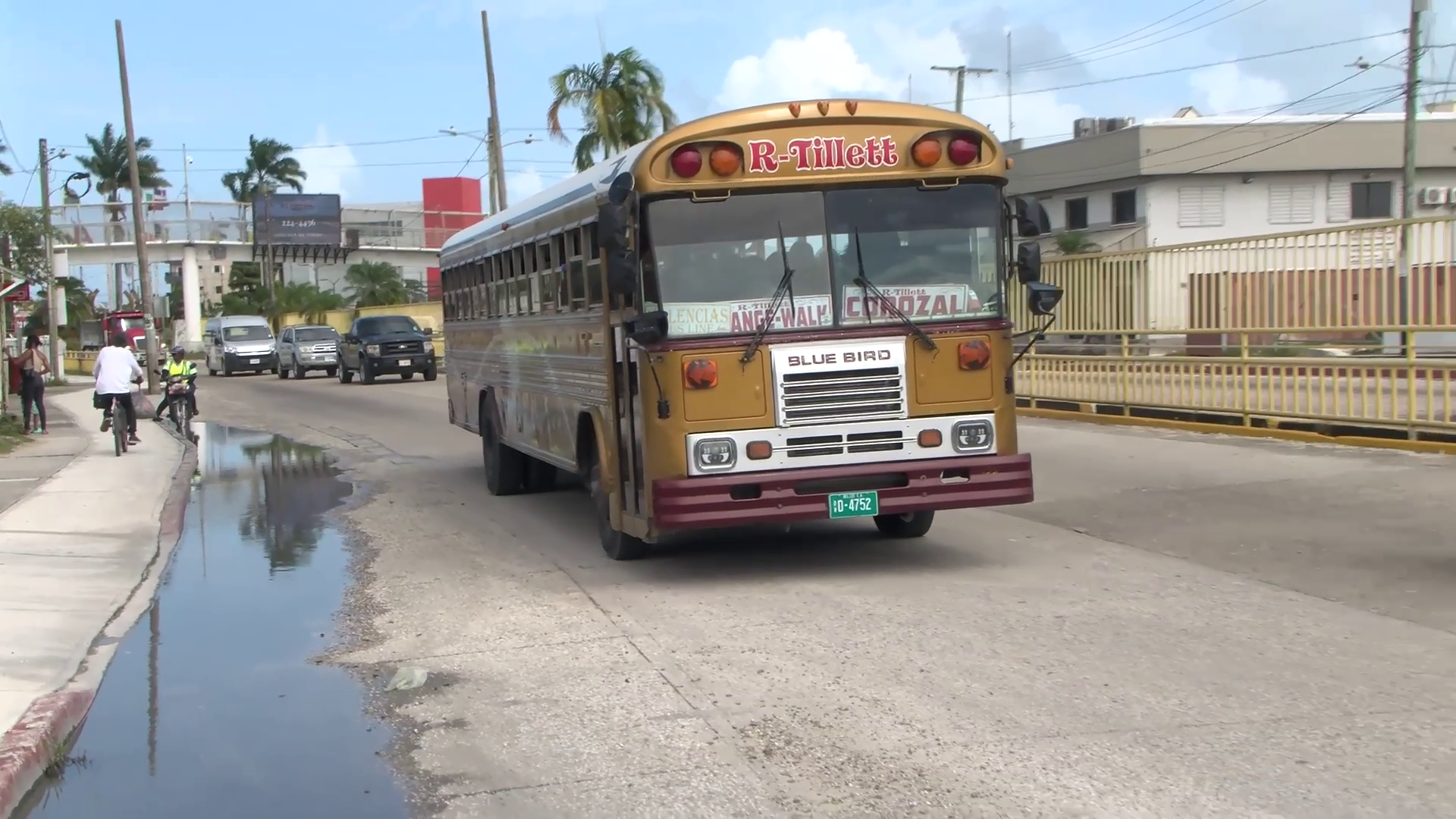
A looming transportation crisis is building across Belize, as the nation’s bus operators have formally announced they will suspend all service starting Monday unless the national government intervenes to address crippling cost increases from soaring diesel prices. The impending shutdown comes after months of failed negotiations and growing financial strain that has pushed even small, family-run operations to the edge of collapse, threatening to leave thousands of daily commuters stranded across the country.
The crisis traces back to a nearly 20% jump in global diesel prices at the end of March, which translated to an extra $2.50 per gallon at the pump for operators. For many companies, that increase pushed daily operating costs far beyond revenue, turning every mile driven into a net loss. Leaders of the Belize Bus Association say operators have absorbed these extra costs for as long as they can, and patience has now run out.
“For a very long time, our members have pressured us to take action, but I held out for diplomacy and negotiations with the ministry of transport,” explained Phillip Jones, president of the Belize Bus Association. “That approach has gotten us nowhere, so we have reached this breaking point. The reality is we are running on fumes presently, and we simply cannot sustain these losses any longer.”
Operators have put forward three potential solutions to ease the strain: temporary fuel tax relief, government subsidies to offset higher fuel costs, or approval for a modest adjustment to passenger fares. To date, all three proposals have been rejected by government officials, who have only urged operators to “wait and see” how global fuel markets evolve. But for small and independent operators already operating on razor-thin margins, waiting is no longer an option.
News Five’s deep dive into the financials of two independent family-run bus operations lays bare the unsustainable math operators now face. Michael Frazer, owner of LIMTD Bus Service, runs one route between Orange Walk and Belize City, and a second cross-border route to Chetumal, Mexico. He says a single round trip on the Orange Walk–Belize City route now costs $350 in diesel alone – that is before accounting for driver wages, vehicle parts, licensing fees, insurance, and regular maintenance.
“In peak season, when the bus is completely full with teachers, students, farmers, working people and shoppers, we bring in roughly $550 in total revenue from that round trip,” Frazer explained. “Of that, $350 goes straight to fuel, leaving just $200 to cover every other cost. We survive only because this is a family business: I drive one bus myself, my son drives the other, my wife handles ticketing and on-board help. We even do all our own maintenance and cleaning to cut costs. Most independent operators rely on affordable secondhand parts from the Mennonite community just to keep repair bills down. After 18 years in this business, I can’t cut costs any further.”
Jaquelline Bonell, owner of D & J Guinea Grass Trans Service, tells an identical story. Her company serves hundreds of rural villagers running routes between Guinea Grass, Belize City, a local technical secondary school, and Orange Walk Town. On her core Guinea Grass–Belize City route, fuel costs alone hit $325 per round trip, while revenue often falls short of covering that cost, especially on return trips where passenger volumes are low.
“Everything is getting more expensive: coolant for the engine, cleaning supplies, social security contributions for employees, income tax, parts. We are a family operation too – I work full time without drawing a salary, my son worked last week and didn’t get paid, I handle all my own administrative work to avoid hiring extra help,” Bonilla said. “We have kept running even while losing money because hundreds of local people depend on us to get to work, school and town for services. But we have hit our limit. All we are asking for is a little help, a small fare increase to cover our extra fuel costs. We don’t expect to get everything we want, just some relief.”
Operators stress they are not seeking to disrupt daily life for commuters, but they have no other option after repeated requests for government intervention have gone unanswered. “We aren’t trying to create havoc, but we aren’t backing down. We’ve asked for help too many times with nothing to show for it,” Frazer said. Unless government acts to provide some form of relief before Monday, operators across the country will pull their buses off the road, leaving thousands of Belizeans without access to their primary form of public transportation. This report was compiled by Paul Lopez for News Five.