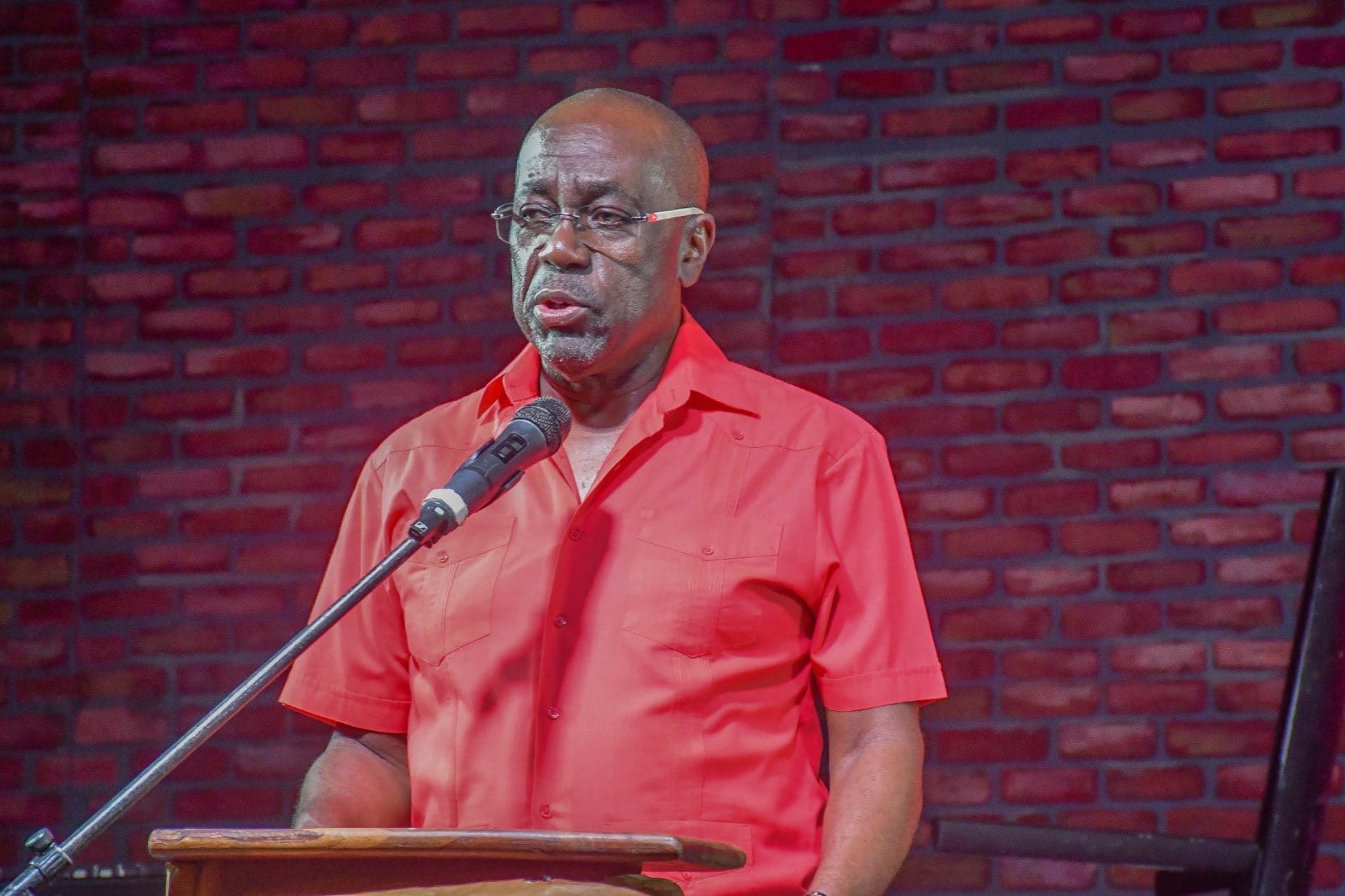
Amid growing resident speculation that current road construction projects across St. Paul’s constituency are a rushed pre-election publicity push, Antiguan cabinet minister E. P. Chet Greene has pushed back against these claims, framing the ongoing works as a carefully designed, multi-year long-term infrastructure improvement strategy for the region and the entire country.
Greene addressed constituent concerns directly during a recent community meeting, where local residents had raised questions about project timing, construction quality, funding transparency, and public safety alongside existing poor road conditions in some neighborhoods. Rejecting outright assertions that crews were rushing work to beat a potential election timeline, he emphasized that the entire programme follows a structured, phased rollout that has been in motion across Antigua for nearly two years.
“This is not a rush job to check boxes ahead of a vote — we are rolling out projects according to a pre-set plan,” Greene explained. “Major improvements to the country’s core transportation network have been ongoing across the entire nation for the past 24 months, ranging from full upgrades of primary highways to critical arterial routes that connect communities and facilitate commerce.”
The centerpiece of the current work phase in St. Paul’s is the long-awaited rehabilitation of All Saints Road, a project that Greene says will deliver transformative improvements to regional transportation connectivity. He confirmed that construction has already begun on the high-demand route, noting that the programme extends far beyond major thoroughfares to include incremental upgrades to secondary feeder roads and smaller neighborhood routes. These secondary upgrades are targeted at boosting access for both local residents and small businesses that rely on passable infrastructure for daily operations.
To address constituent worries over the allocation and use of public funding for the projects, Greene offered explicit reassurance that all resources budgeted for roadworks are being dedicated exclusively to infrastructure development. “The money appropriated for this programme is going directly to fixing roads,” he said, confirming that long-term financing structures are already in place to support continued, incremental improvements across the constituency in coming years.
In response to resident concerns about persistent poor road conditions and public safety hazards in under-upkept areas, Greene noted that the government’s approach prioritizes long-lasting, durable solutions over quick, low-quality fixes. To extend the functional lifespan of new and reconstructed roads, the ministry is utilizing more resilient, weather-resistant construction materials that can withstand heavy use and local climate conditions. He also called on local community members to partner with the government in preserving new infrastructure, urging residents to avoid actions that could cause premature damage to freshly completed road surfaces.
Greene wrapped up his remarks by reaffirming that the St. Paul’s road programme forms one core pillar of a broader regional development agenda. He stressed that reliable, well-maintained transportation infrastructure is a foundational requirement for supporting sustained economic activity and improving quality of life for all residents of the constituency.