A prominent Saint Vincent and the Grenadines political figure has launched a sharp rebuke of the incumbent New Democratic Party (NDP) administration’s sudden push to amend the national constitution, arguing the last-minute change is a self-interested move to shield two top ruling party lawmakers from ongoing election challenges rather than a genuine effort at legislative reform.
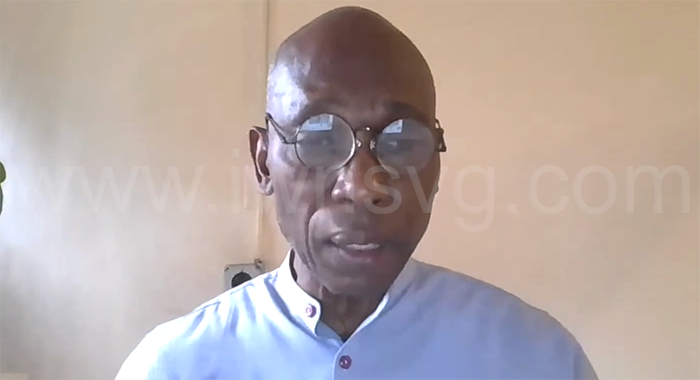
Jomo Thomas, a former House of Assembly speaker, trained lawyer, veteran journalist and longtime political commentator who once ran as a Unity Labour Party (ULP) candidate before splitting from the opposition in 2019, shared his critical assessment in an exclusive interview with iWitness News. Thomas, who stepped down from the speaker’s post in early 2020, made clear that despite his break with the ULP, he remains convinced the opposition’s election petitions challenging Prime Minister Godwin Friday and Foreign Minister Fitzgerald Bramble will ultimately fail in court. That, he argues, makes the government’s hasty amendment push all the more unnecessary.
The controversy stems from two separate election petitions filed by the ULP’s unsuccessful 2025 general election candidates Carlos Williams and Luke Browne. Williams ran in Northern Grenadines, while Browne contested the East Kingstown seat; both challengers failed to unseat Friday and Bramble, who secured their sixth consecutive and second five-year terms respectively, with the ULP having never won either constituency. The petitions center on the fact that Friday and Bramble hold dual Saint Vincentian and Canadian citizenship, a status that opponents argue violates eligibility requirements for parliamentary office.
After the Order Paper for next Tuesday’s parliamentary sitting was distributed to lawmakers earlier this week, opposition leader Ralph Gonsalves first accused the NDP of rushing the constitutional change to protect its two top officials. Thomas has echoed that critique, going further to argue that the amendment reveals a hidden lack of confidence in the government’s own legal case, despite Friday’s public dismissal of the petitions as “frivolous” after the first court hearing.
Thomas pointed out that the constitutional section targeted for change is not an entrenched provision, meaning it does not require a two-thirds parliamentary majority or a public referendum to revise. With the NDP holding a dominant 14-1 majority in the 15-seat parliament, the amendment can be passed with a simple majority vote. He noted that if the NDP’s goal was actually to modernize dual citizenship rules for all elected office — a legitimate policy objective — the government could have crafted a broad, forward-looking reform that would allow any native-born Vincentian to run for parliament regardless of what foreign citizenship they hold.
Instead, Thomas argues the amendment is narrowly tailored to provide short-term protection specifically for Friday and Bramble. “This is not broad, inclusive reform — this is an insurance policy for two of the NDP’s most senior leaders,” Thomas explained. “If the government truly believed their legal position was solid, why would they need to change the law retroactively to insulate themselves from a court ruling? This move makes it look like they don’t actually believe their own claims that the case is frivolous.”
The former speaker also raised red flags over the proposed change’s retroactive scope, which would apply back to SVG’s independence in 1979, a provision he calls deeply troubling and unnecessary. “Constitutional changes should lay the groundwork for the future, not rewrite the rules of the past to benefit sitting officials,” he said. “I am convinced Friday and Bramble would prevail if the case is decided on its legal merits under the existing constitution. The uniqueness of our constitutional framework means the opposition’s cited precedents from St. Kitts and Nevis, Jamaica, and Australia simply do not apply here. Letting the court issue a ruling would permanently settle all the ongoing debate about dual citizenship eligibility for high office, which is exactly what we need.”
Thomas also questioned the justification for Friday retaining his Canadian citizenship while serving as prime minister, arguing claims that the status is needed for future health and social security benefits ring hollow. “Former prime ministers in this country already have full access to taxpayer-funded top-tier health care, a benefit that past leaders including Arnhim Eustace and James Mitchell have already used,” he noted. “There is no justifiable reason for a sitting head of government to maintain citizenship in another country, and the public has a right to ask why this is such a priority for the prime minister.”
Beyond the substance of the change, Thomas criticized the NDP’s process for pushing the amendment through parliament. Reports indicate the government plans to complete all three readings of the bill in a single sitting, cutting off any opportunity for meaningful public input or robust legislative debate. “Changing your country’s constitution is one of the most consequential actions a parliament can take, and doing it in a single day without public discussion does a disservice to democratic governance,” Thomas added.