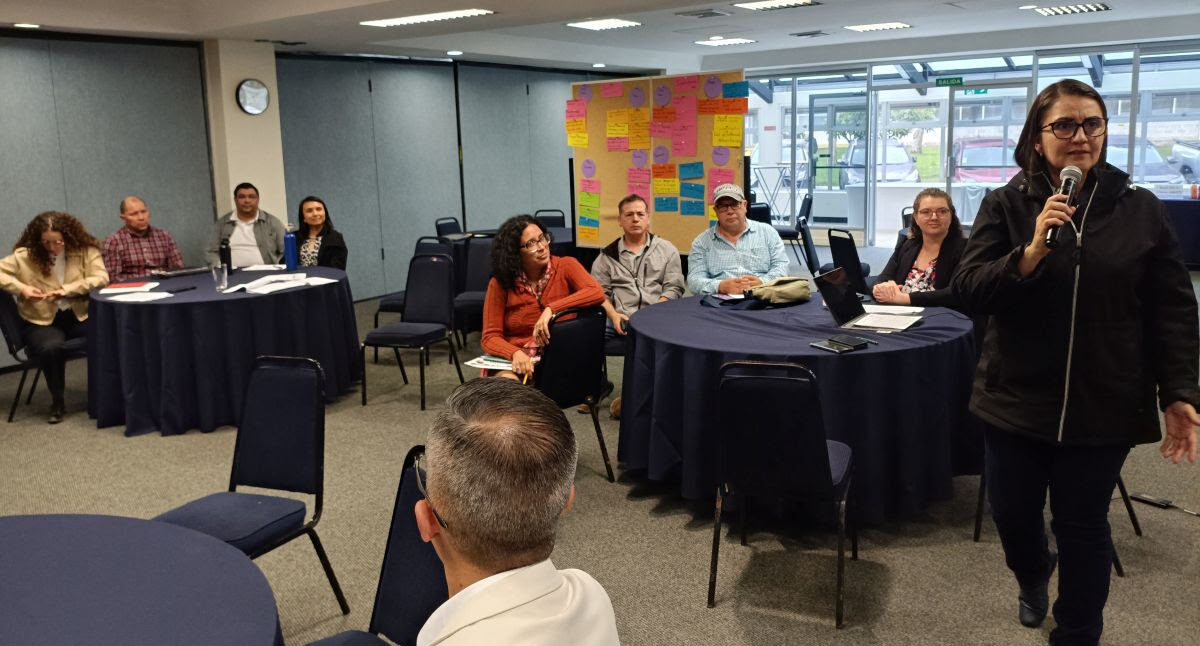
Costa Rica is advancing toward a transformative agricultural policy with the development of its 2026–2034 National Bio-inputs Strategy, receiving comprehensive technical support from the Inter-American Institute for Cooperation on Agriculture (IICA). The initiative reached a critical validation phase during a high-level workshop convened at IICA’s Headquarters in San José, bringing together diverse stakeholders to finalize the strategic framework.
The collaborative effort unites representatives from Costa Rica’s Ministry of Agriculture and Livestock (MAG), public institutions, academic and research centers, producer organizations, and international cooperation agencies. This multi-sectoral participation ensures the strategy’s goals and implementation mechanisms are technically robust and broadly supported.
Central to the strategy is creating an enabling environment—spanning regulatory, scientific, technical, and financial dimensions—to facilitate large-scale adoption of biological agricultural inputs. Key objectives include reducing dependency on imported chemical products, enhancing agricultural sustainability, developing local production chains, fostering innovation and technology transfer, and establishing Costa Rica as a regional leader in sustainable agriculture.
Marco Zapata, IICA’s Country Representative, emphasized the importance of collaborative governance: “We are aligning the public sector, academia, producers, the financial system, and international cooperation under a unified national vision.”
International partnerships significantly bolster this initiative. German cooperation agencies, including GIZ through its ‘From Farm to Fork’ program and a dedicated bio-inputs project for Latin America, are providing expertise. The effort receives funding from FONTAGRO, a mechanism for agricultural innovation, and involves collaboration with Costa Rica’s National Institute for Agricultural Innovation and Technology Transfer (INTA).
These collaborations are coordinated via IICA’s Hemispheric Bio-inputs Platform, which enhances the strategy’s technical foundation by facilitating regional knowledge exchange, harmonizing approaches, accelerating scientific validation, and strengthening Costa Rica’s position in the regional landscape of agricultural innovation.