The Grenada Food and Nutrition Council (GFNC) has released comprehensive guidance on maximizing the health benefits of the nation’s abundant seafood supply. Grenada’s waters provide a diverse array of species including yellowfin and blackfin tuna, mahi-mahi, king mackerel, marlin, and various shellfish such as lobster and shrimp. These marine resources offer substantial nutritional value through high-quality protein, omega-3 fatty acids for cardiovascular and cognitive health, and essential vitamins that support immune function.
The Council emphasizes that these health benefits can only be preserved through proper handling techniques from point of purchase to preparation. Unlike many other food products, fish is particularly susceptible to rapid quality deterioration due to bacterial proliferation and enzymatic activity when exposed to elevated temperatures.
Critical recommendations include transporting freshly purchased fish in insulated coolers with adequate ice to maintain temperatures below 4°C during transit. This initial chilling phase represents one of the most effective interventions for preventing nutrient degradation and reducing foodborne illness risks.
Upon reaching the kitchen, immediate processing is advised. Fish should be cleaned, portioned, and either refrigerated near 0°C or frozen at -18°C without delay. Temperature control remains paramount throughout handling, as pathogens including Salmonella, E. coli, and Aeromonas pose significant health threats if allowed to multiply.
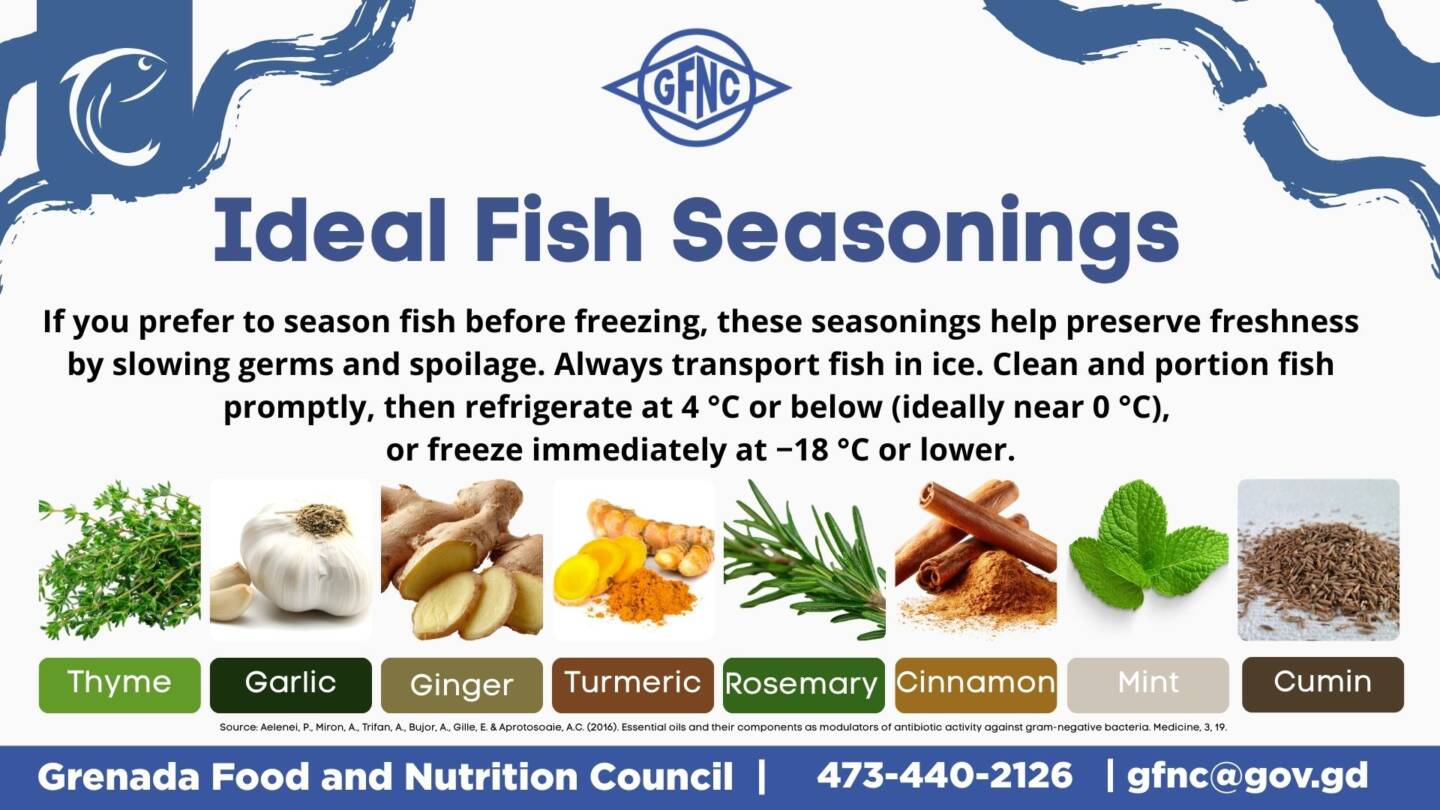
The GFNC addresses seasoning practices, noting that while immediate pre-cooking seasoning generally yields optimal texture and flavor, pre-seasoning before freezing can be safe if performed hygienically and followed by immediate freezing. Research cited from the International Journal of Food Science & Technology indicates that certain herbs and spices—including thyme, garlic, ginger, turmeric, and rosemary—may provide additional preservation benefits through their antimicrobial and antioxidant properties during chilled storage.
The Council frames proper fish handling not merely as a culinary concern but as a fundamental public health investment. When handled correctly, Grenada’s seafood resources represent a powerful nutritional asset for building healthy families and communities.