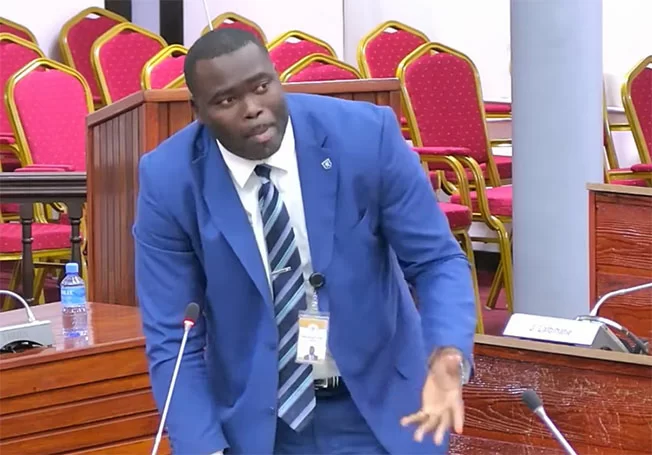
A contentious parliamentary session in Suriname’s National Assembly has exposed deep divisions over proposed constitutional reforms affecting the judicial system and Office of the Attorney General. The debate, which unfolded during Friday’s session, revealed fundamental disagreements between governing and opposition parties regarding the future of Suriname’s legal framework.
NDP Assembly Member Michael Marengo delivered the most striking criticism, declaring that Surinamese society has lost confidence in the current Attorney General and warning that the nation faces a profound “crisis of trust” in its judicial institutions. This blunt assessment set the tone for a heated exchange that crossed party lines.
The core disagreement centers on two competing visions: the governing NDP faction advocates for establishing a domestic third judicial instance, while the opposition VHP party supports joining the Caribbean Court of Justice (CCJ). NDP Member Ann Sadi expressed concerns that CCJ membership would primarily benefit wealthy Surinamese citizens due to high costs and accessibility barriers, creating a two-tier justice system.
VHP representative Krishna Mathoera pressed for concrete details about the proposed College of Attorneys General, questioning how many members it would contain, what safeguards would prevent political influence, and how the organization would function practically. Meanwhile, NDP members Jennifer Vreedzaam and Tashana Lösche argued that systemic reform is necessary to strengthen institutions rather than target individuals, suggesting that a distributed responsibility model could reduce vulnerability to pressure and selective enforcement.
The most vehement opposition came from VHP Assembly Member Mahinder Jogi, who characterized the proposed college as a form of “political interference” that would increase pressure on the Office of the Attorney General. Jogi asserted the concept was unsuitable for Suriname’s context and would ultimately prove unworkable.
In response to the emotional debate, initiator Raymond Sapoen (NDP) emphasized that constitutional amendments require pragmatic rather than emotional approaches. He clarified that the reform seeks to modernize an outdated system centered on a single Attorney General—a model he described as “no longer of this time”—while explicitly denying any personal targeting of current officeholders. Sapoen indicated that specific operational details would be established through subsequent legislation, with the current focus being on creating constitutional flexibility for future restructuring.