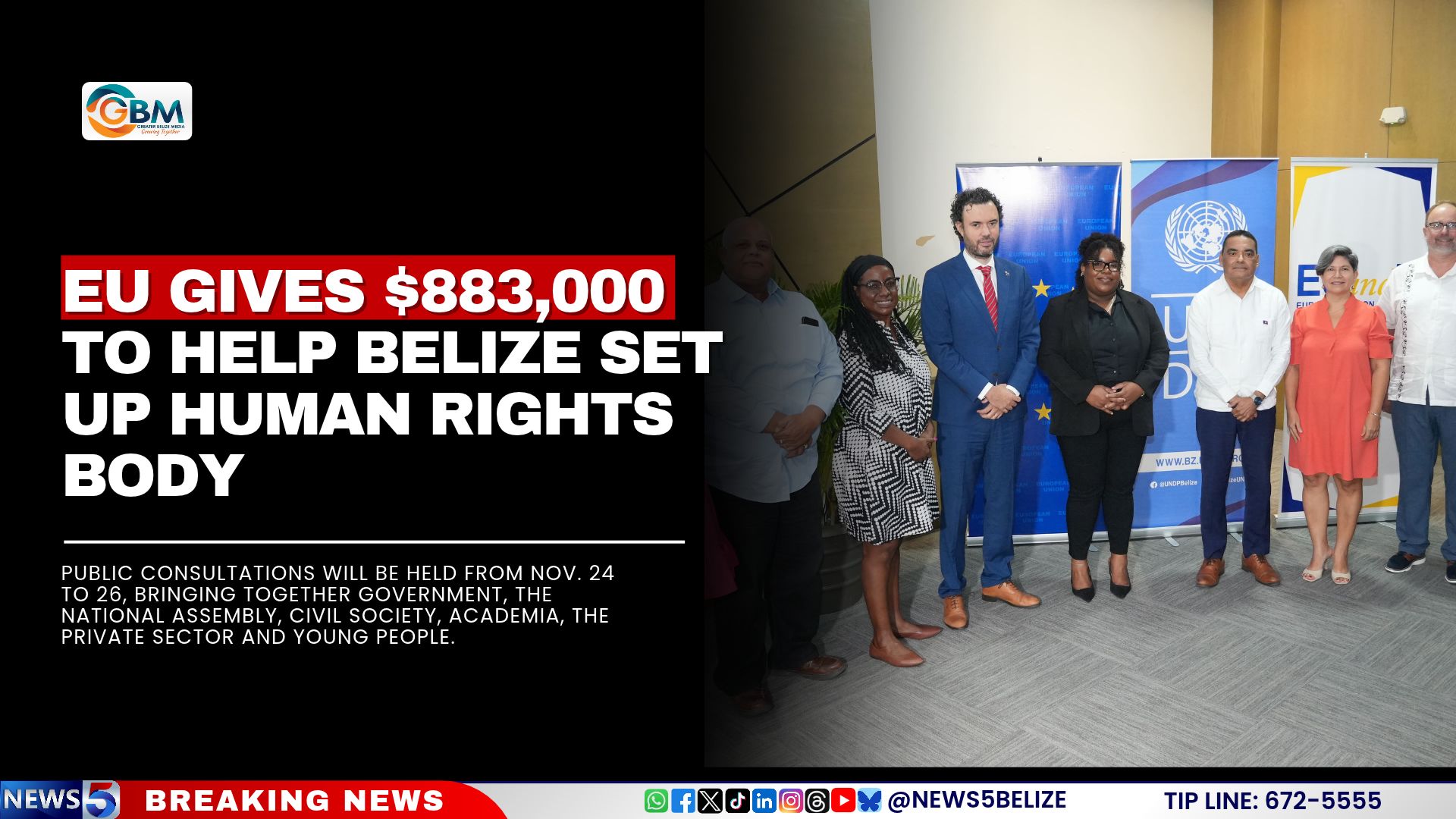
On November 15, 2026, a landmark collaborative initiative was formally launched between the Government of Belize and the United Nations Development Programme (UNDP), backed by €400,000 (equivalent to approximately BZ$882,640) in funding from the European Union, to lay the groundwork for Belize’s first fully compliant National Human Rights Institution. The multi-stakeholder project will be executed in close partnership with the Office of the UN High Commissioner for Human Rights and the Network of National Human Rights Institutions of the Americas, with a core mandate to ensure the upcoming national body fully adheres to the Paris Principles, the globally recognized benchmark for independent, credible human rights oversight institutions. Belize’s Minister of Foreign Affairs Francis Fonseca emphasized that the entire design and implementation process will be nationally led and deeply inclusive, rather than adopting a one-size-fits-all external model. He noted the initiative is tailored to reflect Belize’s unique local social, cultural and governance realities, reinforce public sector accountability across all levels of administration, and guarantee equitable, accessible human rights protection and redress pathways for every resident of the country. The project will first prioritize drafting robust legal and regulatory frameworks to formalize the new institution’s mandate, operational structure and independent oversight mechanisms, building directly on the existing foundational work and public trust established by Belize’s longstanding Office of the Ombudsman. Final decisions on specific legislative language and institutional operational arrangements will be reserved for formal national legislative and public deliberation processes, to ensure full local ownership. Michael Lund, UNDP Deputy Resident Representative for Belize, underscored that independent, accountable national human rights bodies are non-negotiable cornerstones of long-term sustainable development and sustained public confidence in state governance. To center community voices in the early design phase, a series of three days of cross-sector public consultations will be hosted across Belize from November 24 to 26, convening representatives from government ministries, the National Assembly, grassroots civil society groups, academic institutions, private sector leaders and youth advocacy networks to contribute feedback and shape the future institution’s priorities.