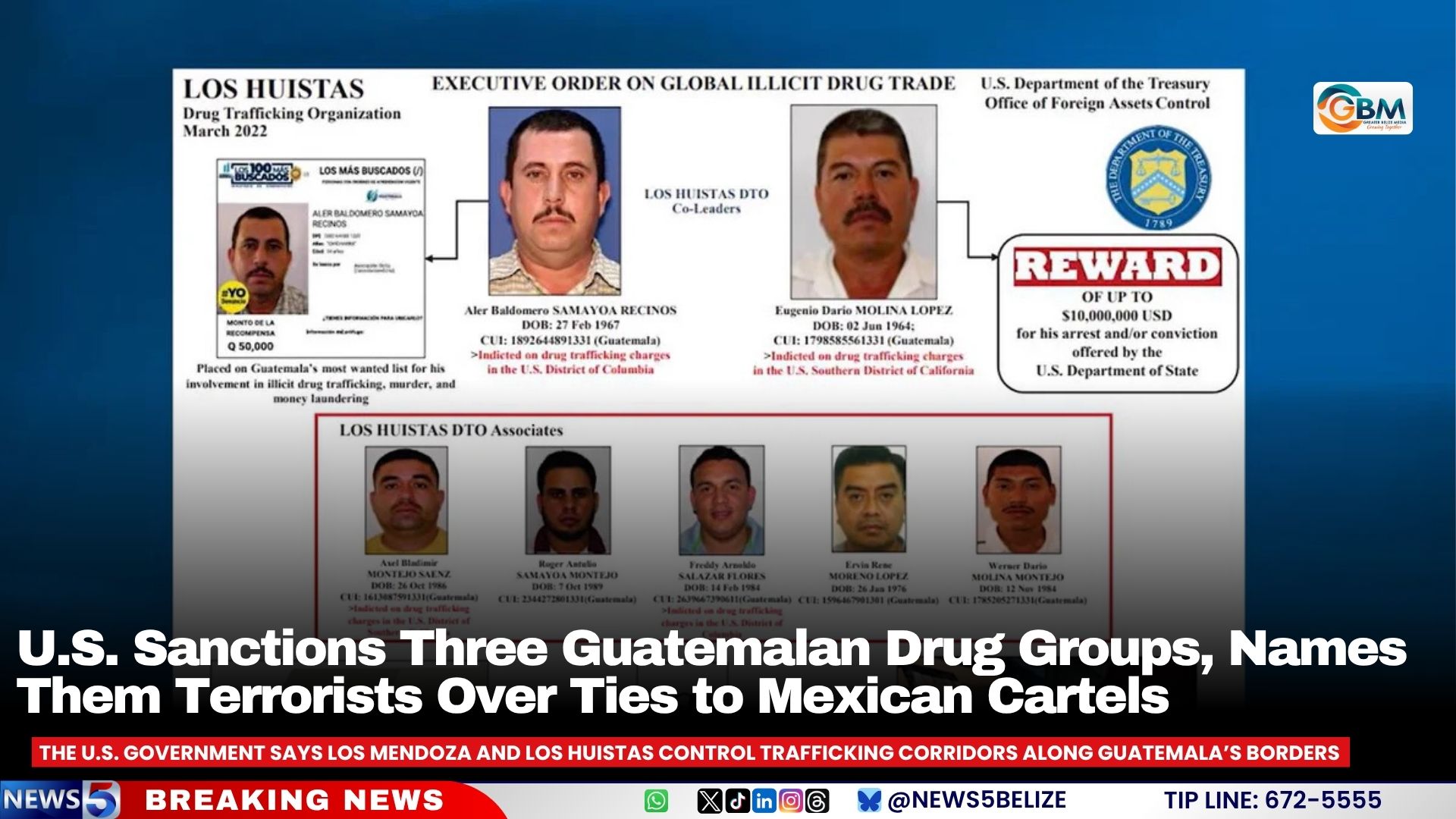
Washington, D.C. – On November 13, 2026, the U.S. Department of the Treasury and U.S. Department of State jointly unveiled sweeping enforcement actions targeting three Guatemala-based transnational criminal networks, citing their deep operational alliances with two of Mexico’s most violent drug trafficking organizations: the Sinaloa Cartel and the Jalisco New Generation Cartel (CJNG).
Two of the groups, Los Mendoza and Los Huistas, were added to the Treasury’s Specially Designated Nationals (SDN) list, freezing all assets they hold under U.S. jurisdiction or controlled by U.S. entities, and prohibiting all U.S. persons from engaging in any transactions with the networks. For the third group, Los Lorenzanas, the State Department took the unprecedented step of formally classifying it as both a Foreign Terrorist Organization (FTO) and a Specially Designated Global Terrorist, a designation that carries far-reaching legal and diplomatic consequences beyond standard narcotics trafficking sanctions.
U.S. officials outlined that Los Mendoza, a family-run criminal enterprise established in the 1980s, controls critical smuggling routes across Guatemala’s northern border with Mexico, operating clandestine airstrips, remote drug storage facilities, and secured border crossing points across the departments of San Marcos, Huehuetenango, and Petén. The group, which also has documented economic holdings in Izabal and northern border zones, is accused of orchestrating targeted contract killings and running extensive money laundering operations to launder cartel proceeds. Los Huistas, a network active since the 1990s that was first targeted by U.S. sanctions in 2022, acts as a key intermediate link in the global cocaine supply chain, facilitating the flow of narcotics originating in South America northward through Guatemala toward Mexican cartel partners. U.S. authorities note the group has cultivated deep corrupt ties with local business leaders, rank-and-file law enforcement officers, and elected politicians across northwestern Guatemala, allowing it to operate with near-impunity for decades.
Treasury Secretary Scott Bessent emphasized that the coordinated enforcement actions were designed to shine a light on the symbiotic relationship between politically connected Guatemalan criminal factions and Mexican terrorist-designated cartels that fuel the flood of deadly fentanyl and other narcotics into U.S. communities. Secretary of State Marco Rubio, meanwhile, described Los Lorenzanas as one of Guatemala’s most ruthless and powerful drug trafficking clans, pointing to its long record of brutal violence against civilian populations, government officials, and national military forces deployed to counter trafficking operations. Rubio added that the U.S. would not remain passive as these transnational networks systematically erode the integrity of Guatemala’s public institutions.
In a critical warning to global financial institutions, the U.S. Treasury clarified that any foreign bank or financial service provider that knowingly facilitates transactions for the three targeted groups will be exposed to harsh secondary U.S. sanctions, effectively cutting them off from access to the U.S. financial system.