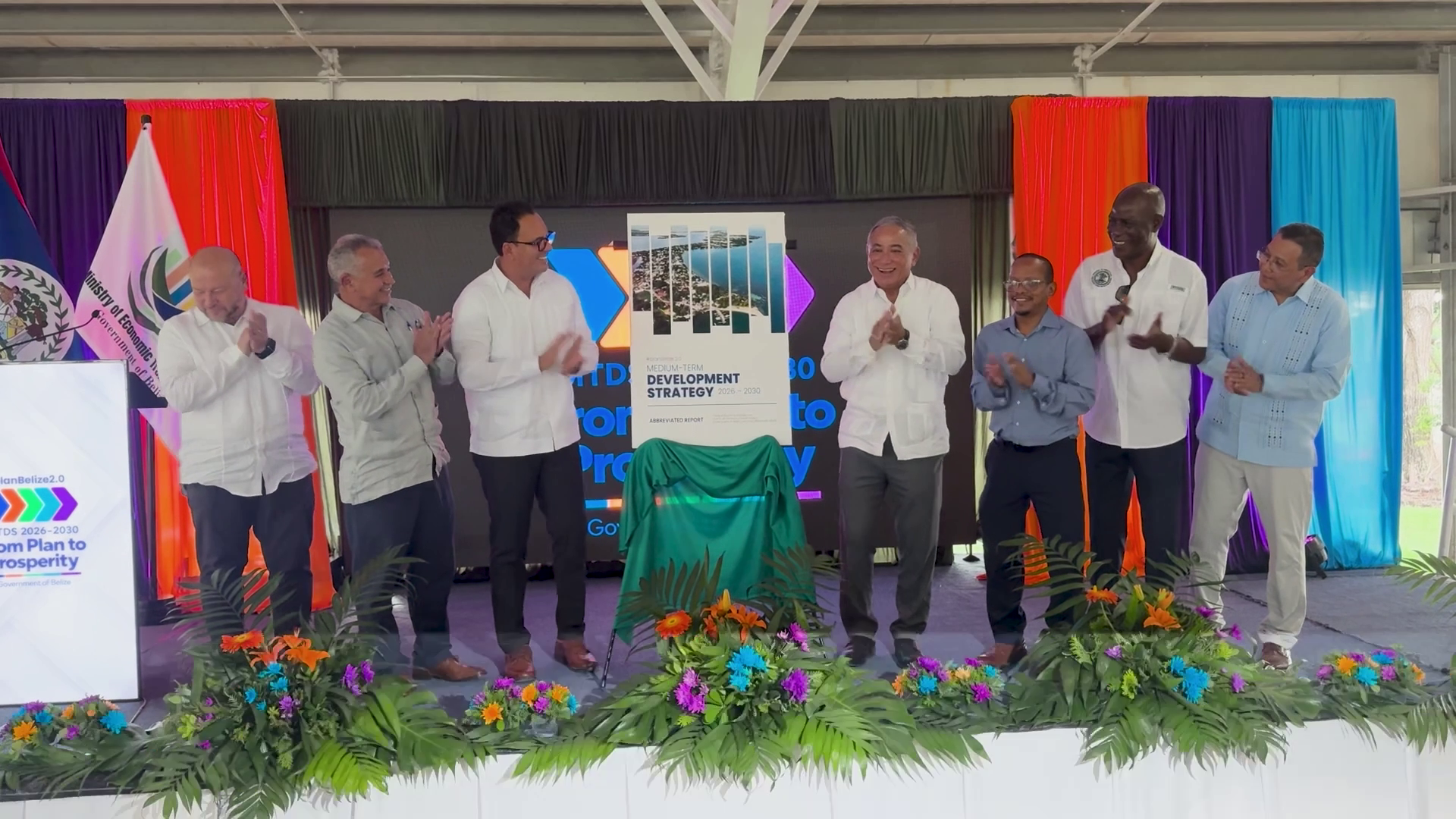
On November 13, 2026, Belize’s central government formally rolled out its long-awaited Plan Belize 2.0 Midterm Development Strategy at Orange Walk’s Muffles College Auditorium, framing the five-year policy framework under the core theme “From Plan to Prosperity.” The administration has laid out a set of aggressive 2030 milestones: pushing multidimensional poverty below 10%, locking in annual gross domestic product growth of no less than 7%, and bringing public debt down to under 60% of total GDP, alongside sharp reductions in homicide rates and expanded access to core public services.
Senior officials highlighted tangible progress logged since 2021 to justify the new strategy’s targets: multidimensional poverty has nearly been cut in half, lifting 13,000 Belizeans out of conditions of material and social deprivation, a milestone attributed to successive minimum wage hikes, expanded school meal programs, and broadened public health insurance coverage. Over 50,000 new jobs have been created across the economy, 40% of which are based in the fast-growing business process outsourcing sector, while public debt has already fallen from a peak of 103% of GDP to roughly 70% as of 2026.
Prime Minister John Briceño emphasized that the era of drafting policy documents is over, and the national priority now shifts to rigorous, coordinated implementation. “We cannot afford to let this plan become another forgotten draft that leaves Belizeans looking back at missed opportunities,” Briceño noted, acknowledging that successive prior administrations had announced well-intentioned national development plans that stalled before delivering tangible public benefits. Carlos Pol, Chief Executive Officer of the Ministry of Economic Transformation, added that the new framework is designed to avoid top-down overprescription, instead providing a unified performance measurement system that lets every government ministry align its work with national goals, rather than operating in disconnected silos.
Despite the carefully structured roadmap, independent analysis from News Five reporter Paul Lopez flags a critical, unaddressed bottleneck: current government budget allocations are not aligned with the strategy’s stated priorities. Core funding for economic transformation initiatives, smallholder agricultural support, and climate resilience programs all fall short of the levels the administration’s own policy documents identify as necessary to hit 2030 targets. While the 2026–27 national budget will include a marked increase in public capital spending, analysts warn that Belize’s long-term pre-pandemic average annual growth rate of just 1.2% — far below the 7% target — means the government will need to rapidly close the funding gap to avoid seeing hard-won recent gains erased by increasingly frequent extreme climate shocks. Orlando Habet, Minister of Sustainable Development, confirmed that every ministry will be assigned clear, public performance benchmarks, deadlines and outcome indicators to let Belizeans directly track whether policies deliver reduced poverty, better services, more jobs, more climate-resilient communities, and improved quality of life for ordinary residents. As the 2030 deadline draws near, the success of Plan Belize 2.0 will ultimately hinge on whether the administration can translate its stated ambitions into fully funded, actionable programs rather than producing another unfulfilled policy promise.