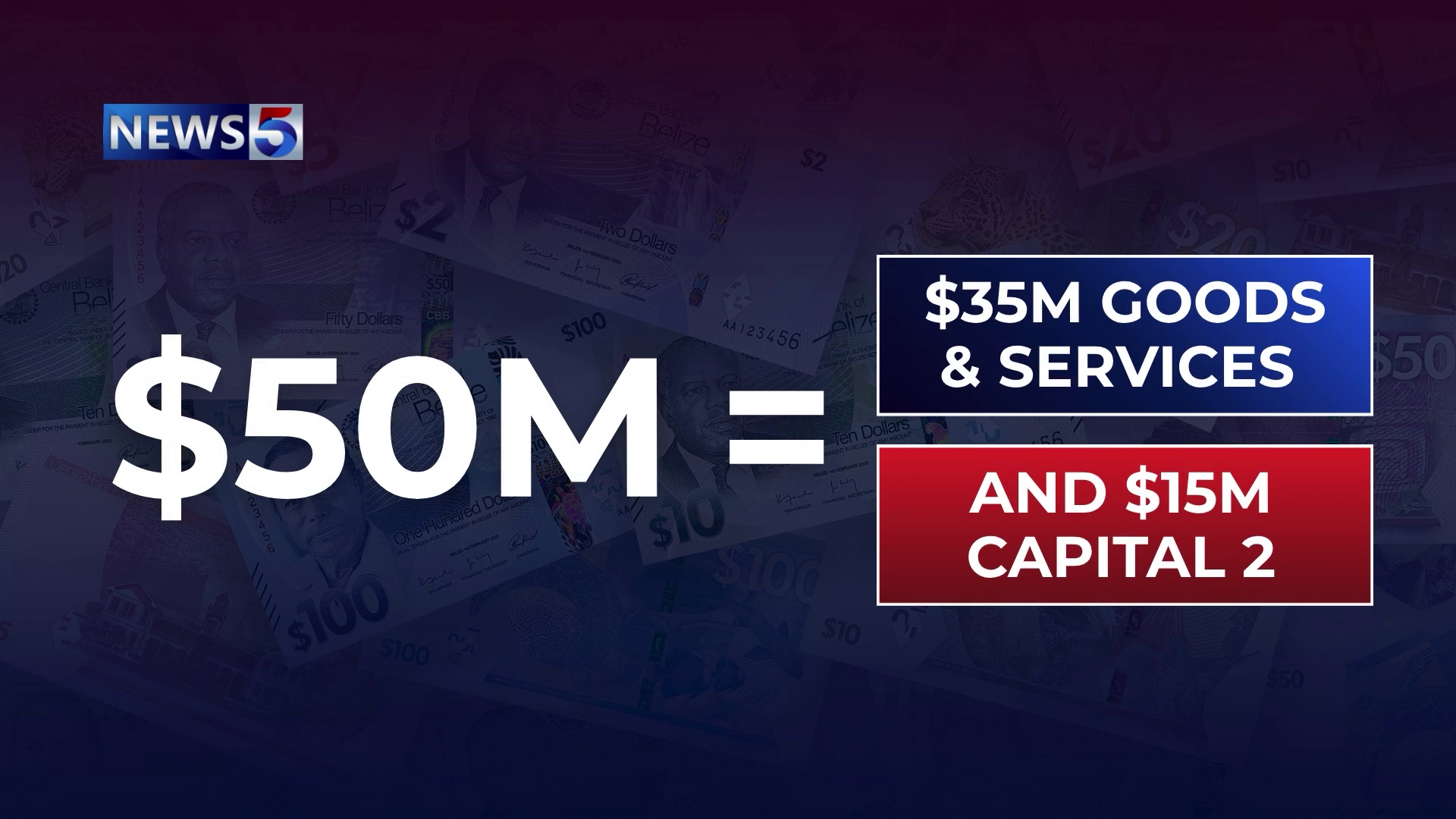
On November 13, 2026, Belize’s government unveiled a controversial $50 million spending reduction plan, framed as a mechanism to direct critical financial support to financially strained households while upholding the country’s fiscal commitments to international financial institutions (IFIs) including the International Monetary Fund. Announced by Prime Minister John Briceño, the policy is positioned to shield three core priority sectors: social support programs, education, and public health, with initial public communications framing the savings as coming exclusively from low-impact recurrent administrative costs such as office stationery, pens, and paper supplies. A granular analysis of the national $1.9 billion federal budget, however, reveals that the proposed cuts extend far beyond trivial office supplies, raising widespread concerns about potential erosion of frontline public services for Belizean residents. The $50 million total reduction breaks down into two distinct streams: $35 million carved from the national government’s goods and services expenditure pool, and an additional $15 million pulled from the Capital Two public projects portfolio. As a supplementary cost-saving measure, all cabinet ministers have agreed to forfeit 50% of their official personal allowances. Prime Minister Briceño emphasized that the policy is designed to preserve the country’s mandated primary fiscal balance, a key pledge made to global lending bodies, while redirecting unneeded administrative spending to vulnerable families grappling with cost-of-living pressures. But budgetary data shows the full scope of the goods and services pool totals $264 million, covering every operational expense for ministries outside of wages, pension payouts, and national debt servicing. A $35 million cut to this line item equals a nearly 13% reduction across all non-payroll operational spending. Even if the government eliminated every dollar of the combined $24 million total for all office-related costs — including stationery, printing, IT peripherals, and general office sundries — it would still fall $11 million short of its $35 million goods and services savings target. This gap forces ministries to make reductions to far larger, service-critical budget lines: $33 million allocated for public infrastructure and facility maintenance, $26 million for official fleet and operational fuel, $18 million for work-related travel and staff subsistence, and $16 million for contracted professional services. No centralized, ministry-specific cut mandates have been released to date, leaving individual government departments to identify their own cost-saving measures. This unstructured approach means large, frontline-facing ministries including Finance, Home Affairs, Education, National Defense, and Health could all face steep proportional cuts to budgets that already prioritize core operational costs such as electricity, fuel for emergency vehicles, transportation for school services, and food for public health facilities. Public Service Union President Dean Flowers issued a stark warning about the policy’s cascading risks, noting that public servants are the direct providers of healthcare, education, and essential community services that Belizeans rely on daily. He calculated that the proposed cuts amount to a 25% reduction in operational spending spread across the remaining five months of the fiscal year, a change he said will inevitably degrade service quality rather than deliver the full promised household relief the public expects. Opposition Leader Tracy Panton has also raised critical concerns, criticizing the government for failing to release transparent, detailed breakdowns of how the $50 million will be reallocated to household relief, and demanding guarantees that the support funds will be distributed evenly across all constituencies rather than being concentrated in areas aligned with the ruling People’s United Party. Additionally, the government has not released any public details about which public projects under the $15 million Capital Two portfolio may be delayed, scaled back, or eliminated entirely to meet the savings target. While the administration continues to pledge that all essential public services will remain unharmed, independent budget analysts and public stakeholders note that the final outcome of the policy will hinge entirely on how individual ministries navigate the tight constraints, with a very real risk that ordinary Belizean citizens will end up bearing the cost of the savings through longer wait times, reduced facility upkeep, and diminished access to core public services.