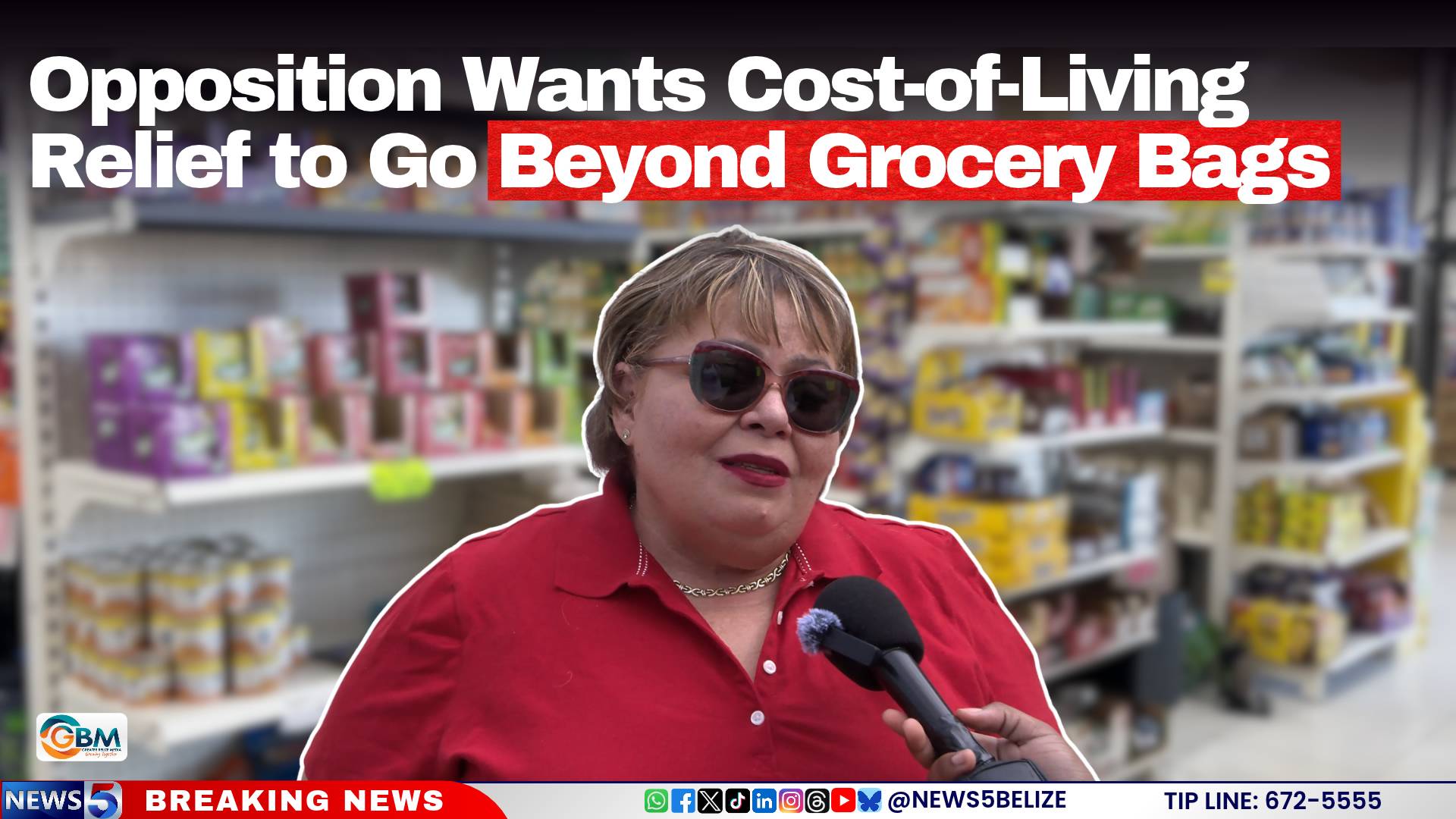
On November 13, 2026, Belize’s Opposition Leader Tracy Panton publicly pushed the ruling John Briceño administration to expand its upcoming $30 million cost-of-living relief package far beyond the existing grocery distribution and targeted housing assistance frameworks, as ordinary households across the country grapple with cascading daily cost pressures. While Panton acknowledged the government’s recently announced expansion of the national Grocery Bag Programme as a positive first step, she emphasized that the current rollout in her own Albert constituency fails to reach even a small share of the residents who are facing severe financial strain. “Our constituents are being financially squeezed to the breaking point just to cover basic survival needs,” Panton stated in remarks to local outlet News 5. “Every trip to the supermarket brings new price hikes, fuel costs keep climbing, electricity tariffs are volatile and consistently rising, leaving families unable to cover utility bills, keep up with rent, or even afford necessary prescription medications for their health conditions.” During a Thursday session of the House of Representatives, Prime Minister John Briceño unveiled plans to inject an extra $3 million into the Grocery Bag Programme over the coming five months, an investment intended to double the total number of households receiving food support. The administration also earmarked an additional $3 million for targeted housing aid as part of its broader cost-of-living strategy. But Panton pointed out that the allocated monthly grocery funding of $5,000 in her district only covers 50 families per month, given that a basic essential grocery bundle costs roughly $100 per household – a figure she described as drastically insufficient to meet widespread unmet need. Beyond expanding direct cash and in-kind support, the opposition leader also called for urgent regulatory reform to break a documented monopoly on vegetable imports from Mexico. Panton noted that only a single licensed provider currently controls all cross-border vegetable imports from the neighboring nation, a stranglehold that she says keeps local produce prices artificially inflated. Opening the import market to multiple licensed operators, she argued, would introduce healthy market competition and drive down retail vegetable costs for all consumers. Her series of targeted demands comes as the Briceño government finalizes implementation plans for its full $30 million national cost-of-living relief initiative, which is slated to launch in the coming weeks.