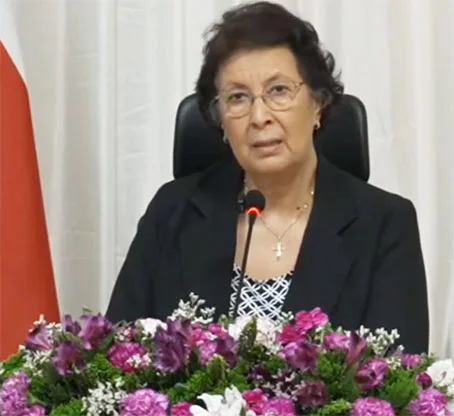
On November 9, Suriname’s President Jennifer Simons formally announced a sweeping, stakeholder-backed regulatory overhaul for the country’s long-chaotic artisanal gold mining sector, following months of inter-agency research, community consultation and cross-party evaluation. The multi-pronged strategy deliberately avoids large-scale forced evictions of informal miners, instead prioritizing gradual formalization, environmental protection, improved public safety and fairer distribution of gold sector revenues that have for decades disproportionately benefited a small elite, while leaving taxpayers and indigenous and riverine communities to foot the bill for widespread mercury contamination, unregulated hazardous chemical transport and degraded watersheds. Simons laid out six core pillars of the new policy framework during a national press briefing, noting that successive previous governments had launched fragmented, unsuccessful attempts to bring the $1.8 billion a year informal gold sector under state oversight, with no lasting results. The first pillar introduces strict, end-to-end monitoring of hazardous chemical imports, sales, transport and use, building on an already implemented ban on the highly toxic mining chemical Jin Chan. The National Environment Authority (NMA) will be mandated to crack down on unregulated transport of dangerous mining substances in unprotected plastic containers via river routes, a practice that has caused dozens of documented spill incidents in remote interior regions in recent years, until formal safe transport protocols are fully established. Second, the government will collaborate with the Ministry of Land Policy and Forest Management to formally demarcate permitted and no-go mining zones, with an immediate priority on banning all mining activity at headwater river sites, where chemical contamination can cascade down entire river systems to threaten the drinking water and livelihoods of tens of thousands of downstream residents. Simons emphasized that the policy distinguishes between manageable, low-impact mining-related environmental disruption and the unregulated, unmonitored chemical pollution that has poisoned large swathes of Suriname’s interior waterways over the past two decades. Third, authorities will launch a full, sector-wide registration drive targeting an estimated 10,000 unlicensed informal gold miners, many of whom have operated in remote interior regions for years, some on third-party concession land and others outside all formally allocated mining zones. The government has ruled out mass eviction as logistically impossible and socially disruptive, and will instead assess eligible miners for formal legal status, while only requiring operators in high-priority protected zones to relocate. The NMA has already been tasked with conducting a full inventory of all mining activity along the Saramacca River, where recent water quality testing has returned to safe levels after earlier contamination incidents, allowing local communities to resume previously restricted water use activities, though ongoing monitoring will continue. Fourth, the administration is developing a multi-year, collaborative phase-out plan for mercury use in gold mining, a practice that is already formally banned but remains ubiquitous across the informal sector. Simons noted that an immediate total ban is not feasible without alternative low-toxicity mining technology and training for small-scale operators, so the government will roll out supported transition programs targeting miners, with full implementation of the mercury elimination plan scheduled to begin in early 2027, with a projected 6 to 7 year timeline for full phase-out, subject to available funding and sector cooperation. Fifth, a centralized national Gold Board will be established via new draft legislation that is already in advanced drafting stages, set to be tabled before the National Assembly in 2027. The body will act as a regulated, fair-price purchaser for all domestic gold production, oversee fully traceable gold export flows, ensure full royalty collection, and support the Central Bank of Suriname to allocate a share of domestically produced gold to strengthen the country’s national monetary reserves. Existing licensed gold exporters will be allowed to continue operating, but all export shipments will eventually be routed through the Gold Board’s transparent tracking system, with confirmed support from national and international financial sector partners for the new structure. Sixth, the government will significantly expand resourcing for the NMA and other oversight agencies, providing additional personnel, air transport access via aircraft and helicopters for remote interior inspections, and access to supplementary testing facilities including the national water utility’s laboratory, to extend formal state presence to currently unmonitored mining zones. Simons stressed that urgent, short-term environmental mitigation measures will be rolled out immediately, rather than waiting for the full multi-year reform plan to be finalized. She noted that the unregulated sector currently deprives the national treasury of hundreds of millions of dollars in annual potential revenue, while state funds are diverted to cover costly pollution cleanup operations and interior security deployments, with almost no economic benefit flowing to local communities living in mining regions. The president called on all stakeholders, including small-scale miners, concession holders, export firms, civil society groups, political parties and media outlets, to collaborate on the gradual transition, warning that without coordinated action, Suriname’s finite gold reserves will continue to be exploited for private gain while the public is left to bear all associated environmental and social costs, denying critical funding for public investments in education, healthcare and core community services.