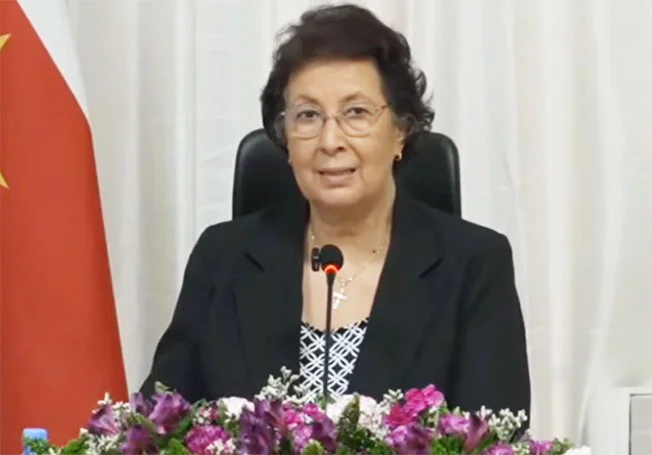
On November 9 at 11:34 local time, Suriname’s President Jennifer Simons announced a sweeping set of immediate and long-term public safety interventions during an ongoing press conference, in direct response to a recent spate of brutal armed robberies and close-range fatal shooting incidents that have sparked widespread public alarm. The new policy framework follows a series of closed-door consultations Simons held over the past several weeks with her national security advisory team, relevant law enforcement stakeholders, and emergency weekend talks with top security officials in the wake of the latest wave of violent crime, which Simons noted is far more severe than the typical seasonal uptick in criminal activity that usually occurs toward the end of each calendar year. The flagship directive of the new security plan formalizes a partnership between the Suriname National Army and the national police force, with military personnel set to provide operational support to frontline law enforcement once remaining administrative organizational arrangements are finalized. To maximize deterrence, authorities will dramatically scale up highly visible joint patrols across Paramaribo, with a particular focus on the capital’s historic downtown district and popular nightlife hubs, building on pre-planned extra police deployments already scheduled for the high-crime November and December period that will now be significantly expanded. Law enforcement will also adopt a data-driven resource allocation model, mapping high-crime locations and peak offending time windows to deploy limited personnel and equipment far more strategically, rather than spreading resources thinly across low-risk areas. A long-vacant former Military Police outpost, situated between the National Assembly and the President’s Cabinet and previously transferred to the tourism sector, will be reactivated as a permanent 24/7 security hub in the historic city center, offering a dedicated point of contact for local residents, tourists, and patrolling officers seeking assistance. Simons confirmed the responsible cabinet minister was not notified of the decision in advance, as the urgent public safety priority required immediate action before formal administrative handover processes could be arranged. The security overhaul extends well beyond the capital, with plans to ramp up surveillance and uniformed presence across Suriname’s vast inland regions, where unregulated illegal gold mining and unauthorized unmonitored air traffic have long posed persistent public safety and governance challenges. Simons highlighted a pending bilateral cooperation agreement with the United States, currently awaiting parliamentary ratification, that will give Suriname expanded capabilities to track unregistered flights and unauthorized landings in remote interior zones to block unvetted foreign aircraft from operating without government oversight. To address years of underinvestment that have significantly degraded the operational capacity of both police and military forces, the administration is planning targeted capital expenditures to acquire new helicopters, modernize frontline personnel equipment, and rehabilitate previously decommissioned remote security outposts, as well as secure access to satellite imagery to vastly improve inland monitoring capabilities. Simons clarified that these critical security investments cannot be funded through existing social bond allocations, and the government is actively exploring alternative financing pathways, including favorable concessional credit lines from allied partner nations, rather than waiting for future projected revenue increases from the gold sector to roll out the upgrades. She emphasized that these security expenditures are not a drain on public finances, but a high-return investment that will strengthen regulation of the inland gold mining industry, boost long-term government revenue, and fully pay for itself within a 12 to 24 month timeframe. The national police force will host a separate dedicated press conference in the coming days to release full granular details on the day-to-day operational implementation of the new security measures.