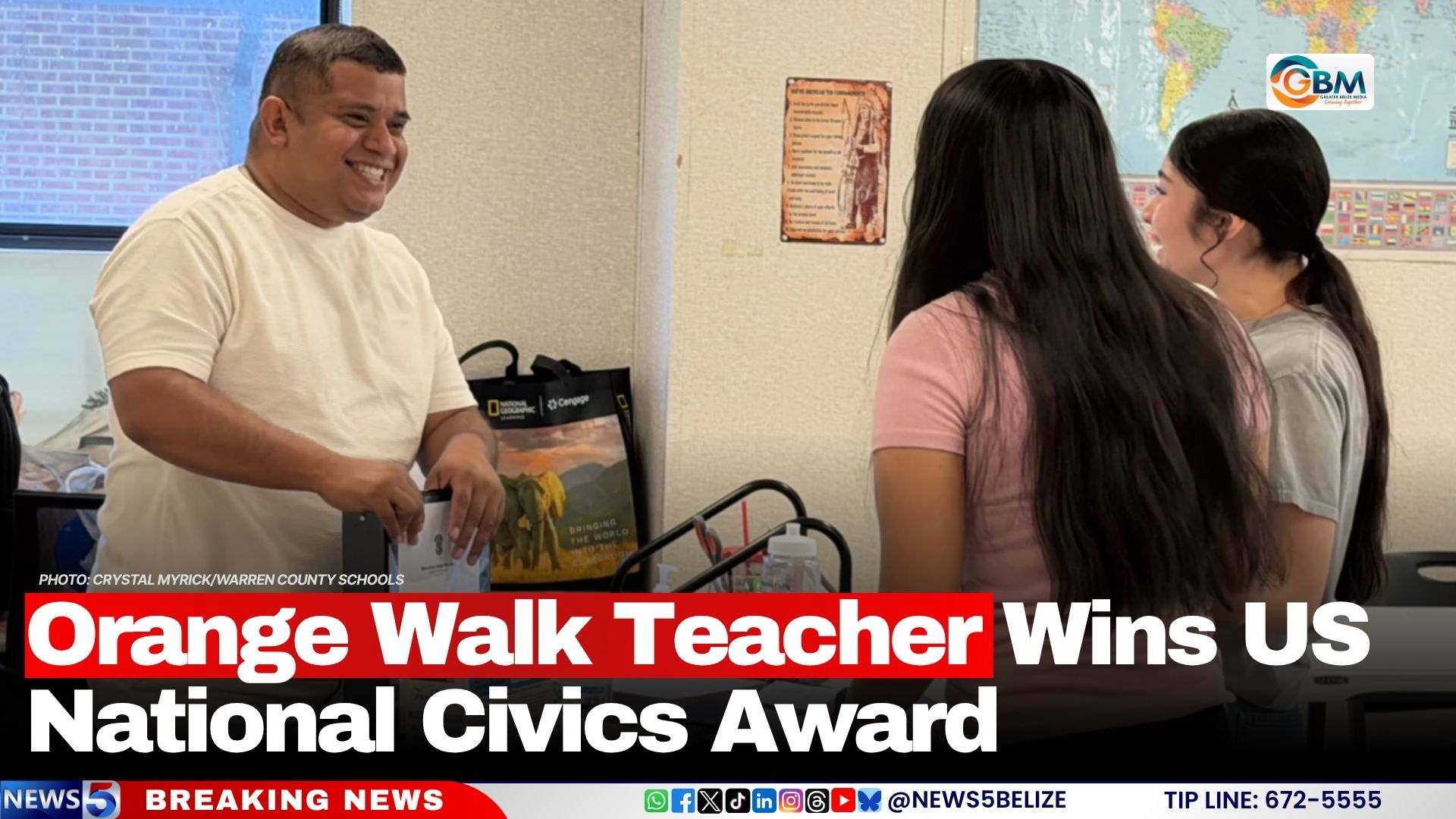
On November 7, 2026, the national U.S. civic education community celebrated a standout achievement from a Belizean educator hailing from San Lazaro, Orange Walk: Juan Moguel, a social studies instructor at Warren Early College High School in North Carolina, has been crowned the top 9th to 12th grade civics educator in the nation’s 2026 Civic Star Challenge. The prestigious dual-organizer award, co-presented by leading nonprofits the Bill of Rights Institute and iCivics, comes with a $5,000 cash prize to support Moguel’s ongoing classroom and community civic outreach initiatives.
Moguel did not claim the national honor alone: he shares the 2026 Civic Star Challenge top tier recognition with two exceptional peer educators, a elementary school teacher based in Florida and a middle school educator from Utah, all selected for their exceptional track records of embedding foundational U.S. civic principles into daily K-12 learning. The national contest was specifically launched to commemorate the 250th anniversary of the signing of the Declaration of Independence, with judging panels prioritizing educators who can connect the document’s core tenets to real, actionable student experiences through structured civic action projects, critical media literacy training, and structured student debate and community dialogue programs.
The award caps off a year of landmark professional milestones for Moguel. In 2025, he led his Warren Early College student cohort to claim first place at the inaugural Eastern North Carolina Civics Bowl, a regional event hosted by local Representative Rodney Pierce, and he was also selected as his school’s 2025-2026 Teacher of the Year. Shena Judkins, principal of Warren Early College High School, emphasized to local outlet The Warren Record that Moguel’s impact extends far beyond standard classroom lesson plans. “Mr. Moguel does not just teach students to memorize civic facts: he is actively equipping them with the confidence to step forward and contribute meaningfully to the conversations and decisions that directly shape the future of their local communities,” Judkins noted.