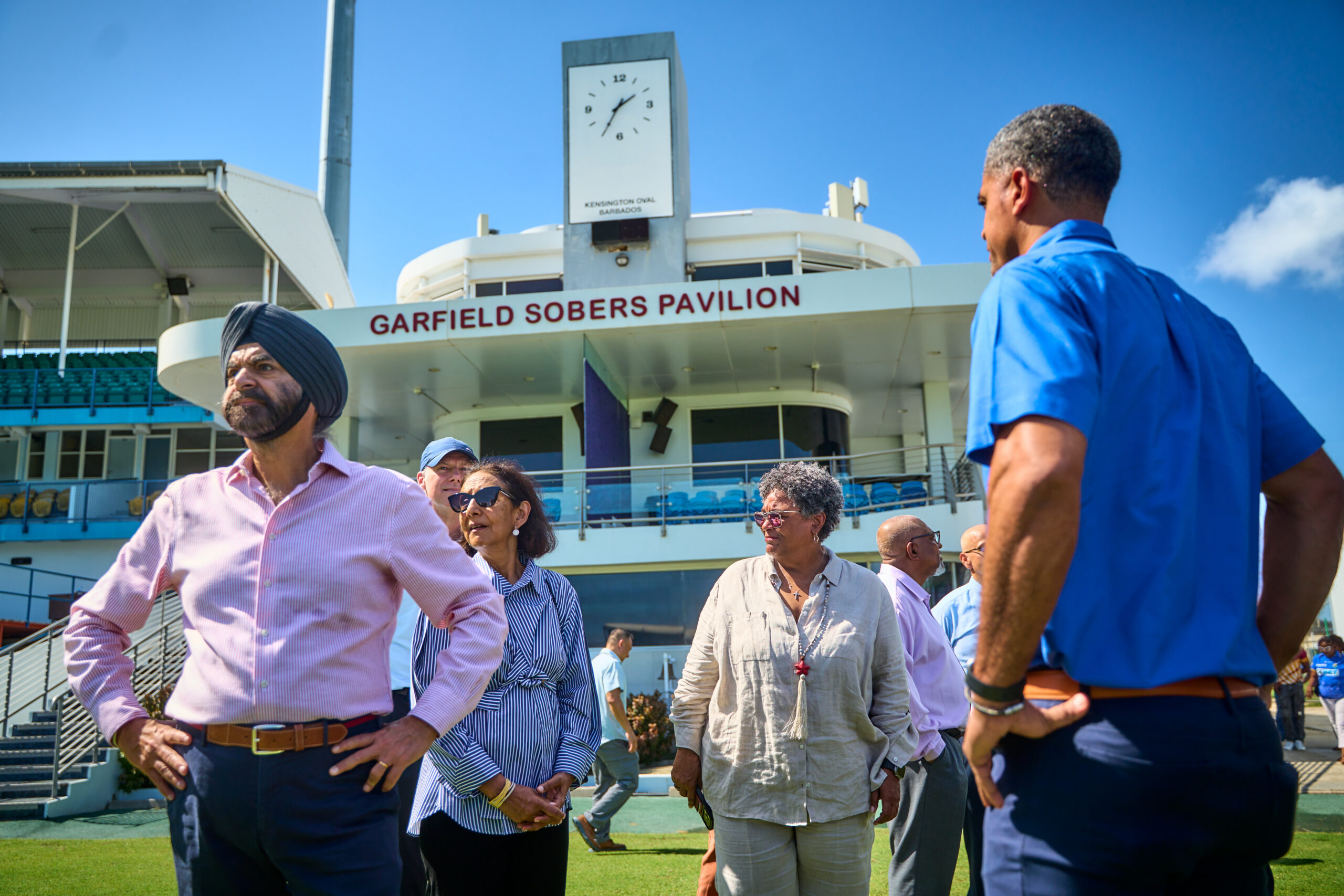
During an official working visit to Barbados, World Bank Group President Ajay Banga laid out a targeted policy roadmap for Small Island Developing States (SIDS) to accelerate inclusive, resilient economic progress, centred on cutting red tape, lowering financing costs, and de-risking investments to draw in far greater volumes of private capital. Banga delivered the remarks while touring a portfolio of World Bank-supported local development sites alongside Barbadian Prime Minister Mia Mottley and senior government leadership, including the Oceana Innovation Hub, Bridgetown Fisheries Complex, Kensington Oval, Six Men’s fishing village, and the National Botanical Gardens.
In his address to assembled reporters, Banga emphasised that streamlining regulatory frameworks to reduce unnecessary administrative friction – while retaining robust safeguards to protect public welfare – would immediately boost SIDS’ competitiveness as investment destinations. He used a tangible example to illustrate the gap: a hotel chain developer choosing between a jurisdiction that requires 30 separate permits to launch operations, and Barbados where only nine are mandated, would unhesitatingly direct its resources to the more efficient market. He clarified that regulatory streamlining is only the first step of a multi-pronged strategy, with complementary reforms required to bring down exorbitant borrowing costs for island economies and create structured risk-mitigation tools for external investors.
Banga detailed that the World Bank’s ongoing bilateral partnership with Barbados is tailored to support the country’s next growth phase, with coordinated work to optimise public spending efficiency, strengthen core government institutional systems, and catalyse expanded private sector participation. He confirmed that he and Prime Minister Mottley are in active advanced discussions on advancing climate-resilient infrastructure rollouts, overhauling public sector operational efficiency, and restructuring Barbados’ existing debt portfolio via targeted World Bank guarantees that can unlock far more favourable long-term financing terms. The cost savings generated from these restructured arrangements, Banga noted, will be channelled directly to high-priority public projects, including a new national geriatric hospital and a pipeline of climate-adaptive infrastructure upgrades.
The World Bank chief also highlighted the success of flexible disaster response clauses embedded in the institution’s loan agreements for vulnerable nations, a policy framework that was first shaped during his initial discussions with Mottley shortly after he assumed the World Bank presidency in June 2023. Under these provisions, SIDS can redirect up to 10% of unspent, pre-approved project funding to deliver emergency support to citizens immediately following a natural disaster, without navigating lengthy new approval processes. Banga noted that the intentionally broad, non-restrictive language of these clauses has already proven highly effective across a wide range of crisis scenarios, from earthquakes and flash floods to major hurricanes, avoiding narrow eligibility rules that would have blocked vulnerable countries from accessing critical rapid relief. He added that the policy is explicitly designed to centre national leadership, ensuring that response decisions are led by local governments rather than external institutional mandates.
Banga also shared updated institutional data showing that the World Bank successfully mobilised $112 billion in global private capital for emerging markets in the most recent fiscal year, on top of $120 billion deployed directly from the institution’s own balance sheet – a volume of private capital mobilisation that is 3 to 4 times higher than the totals recorded just three years prior.
For her part, Prime Minister Mottley outlined Barbados’ dual-track investment strategy, which aims to combine incoming foreign private capital with untapped local household savings to expand broad-based economic participation for all Barbadian citizens. She noted that roughly 16 billion Barbadian dollars (equivalent to $8 billion USD) is currently held in domestic bank accounts earning only 0.1% annual interest, and that the government is collaborating closely with the World Bank to design new accessible financial instruments that will allow ordinary Barbadians to invest small portions of their savings in national development projects, without requiring households to draw down all of their accumulated funds. Mottley acknowledged that while expanding local investment ownership is a core policy priority, domestic savings alone will not be sufficient to meet the country’s full long-term investment requirements, making targeted, responsible foreign capital inflows a critical complementary component of Barbados’ growth agenda.