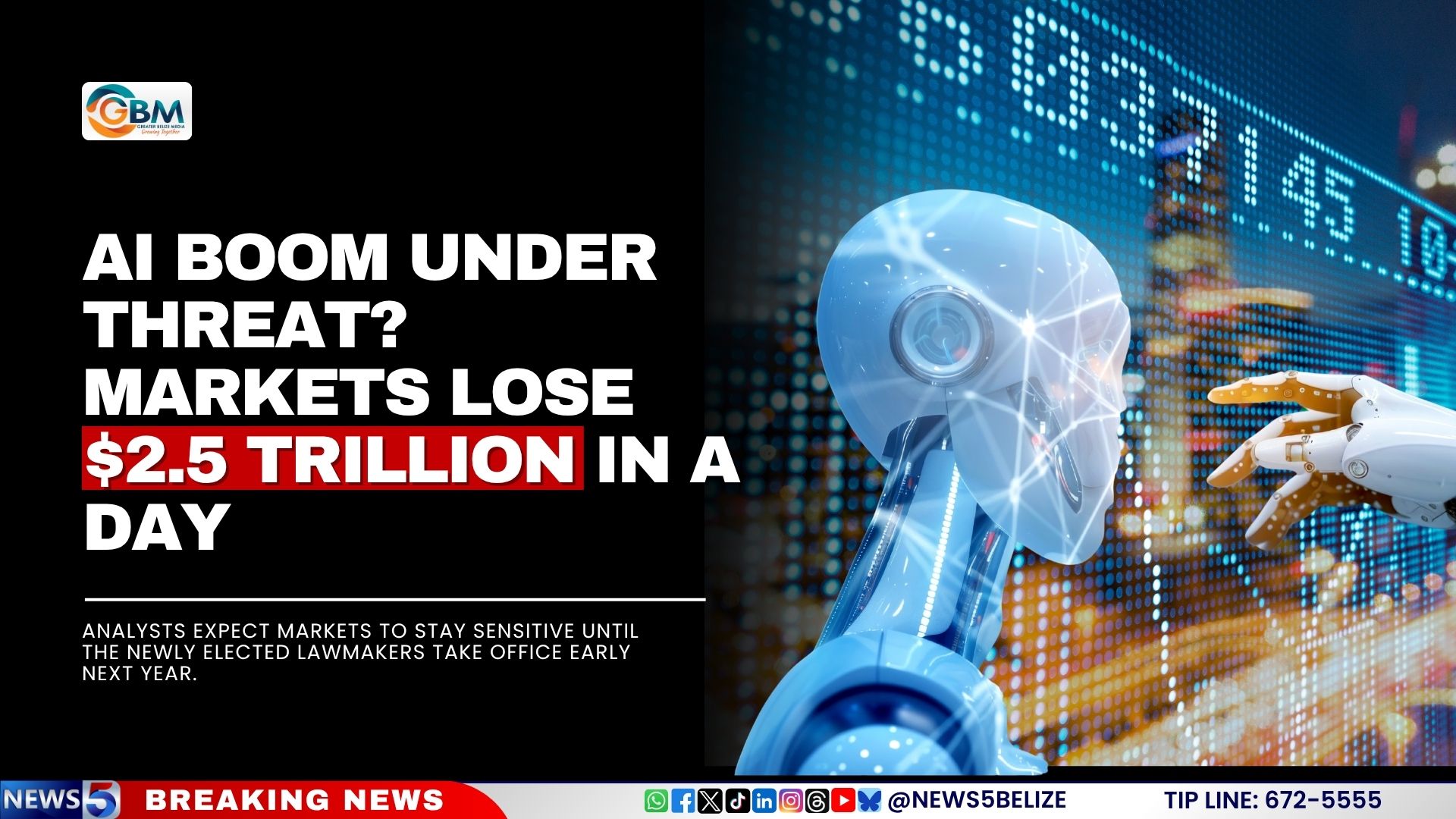
On November 6, 2026, a historic single-day sell-off across global artificial intelligence-linked equities erased approximately $2.5 trillion in total market capitalization on Wall Street, sending cascading shocks through Asian and European trading sessions before tentative signs of stabilization began to emerge. The market downturn, which unfolded fully on Thursday, was triggered by investor reassessment of policy risks following a decisive Democratic sweep of both chambers of the U.S. Congress in the latest midterm elections. Prior to the partial recovery on Friday, the Nasdaq composite index plummeted 5.5% — marking its steepest single-day decline since April 2025, when former President Donald Trump unveiled sweeping new tariffs targeting America’s largest global trade partners. Among the hardest-hit assets were leading AI sector giants: chipmaker Nvidia and aerospace and AI infrastructure firm SpaceX each shed more than 9% of their value on Thursday, with Nvidia logging its worst trading performance since January 2025. Market participants grew concerned that the incoming unified Democratic congressional majority would move to restrict or slow federal funding for new AI infrastructure rollouts, as public pushback over the massive energy footprint of AI data centers and their disruptive impact on local communities emerged as a high-profile campaign issue in the 2026 midterms. The ripple effects of the U.S. sell-off hit Asia particularly hard during Friday’s trading hours, as regional semiconductor suppliers that have ridden the 2026 AI boom to record revenue gains faced sharp valuation corrections. By the time U.S. pre-market trading opened on Friday, tentative rebounds began to take shape: the Nasdaq was poised for a 1.3% uptick, the S&P 500 projected a 0.4% rise, and previously battered AI stocks posted partial recoveries, with Nvidia climbing 5.5% and SpaceX gaining 4%. Only the blue-chip Dow Jones Industrial Average diverged from the trend, trading 0.9% lower in early sessions. Industry analysts warn that heightened market volatility is likely to persist for months, with investors remaining highly sensitive to new policy signals until the newly elected congressional class is sworn in to office in early 2027.