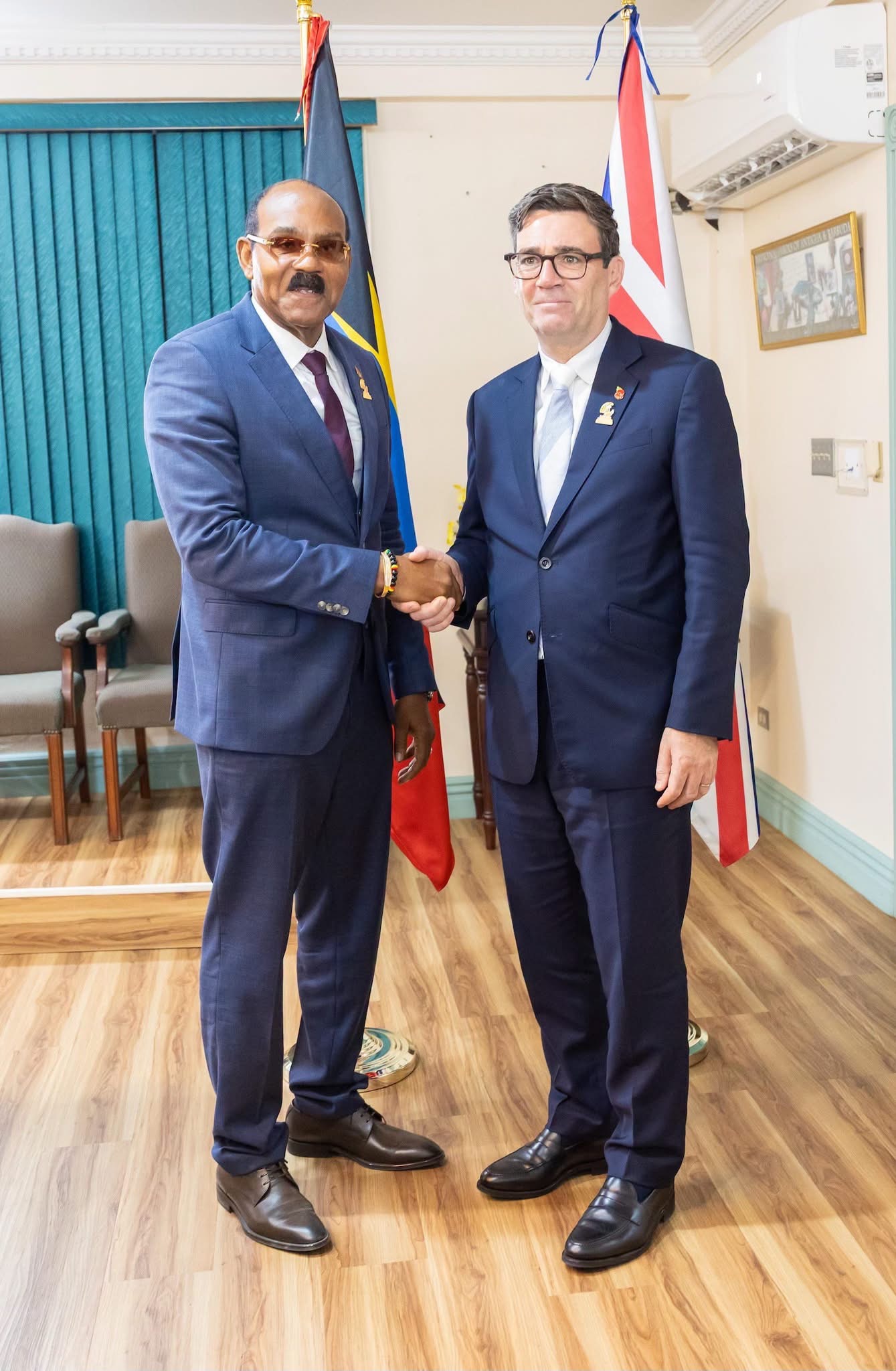
On November 4, 2026, on the sidelines of the 2026 Commonwealth Heads of Government Meeting hosted in Jumby Bay Island, Antigua and Barbuda, Gaston Browne – the nation’s sitting Prime Minister and current Chairman-in-Office of the Commonwealth – convened a high-level bilateral discussion with British Prime Minister Andy Burnham, marking a key diplomatic engagement between the two longstanding Commonwealth partners. The closed-door dialogue spanned a broad spectrum of shared priorities covering bilateral ties, collective Commonwealth governance, and pressing global challenges that disproportionately impact small island and vulnerable economies. The agenda kicked off with targeted discussions on debt restructuring frameworks and expanded equitable access to low-cost development financing for small and vulnerable states, alongside tailored reviews of Antigua and Barbuda’s existing financing arrangements and pathways to deepen targeted development partnerships between the two nations. The two leaders also exchanged in-depth perspectives on the evolving role of the 56-member Commonwealth bloc, debating structural reforms to ensure the intergovernmental organization remains relevant and effective in tackling cross-border crises ranging from extreme weather events to widening global economic disparity. A significant portion of the talks was dedicated to climate action priorities, including scalable disbursement of pledged climate finance and the feasibility of rolling out a Commonwealth-wide mutual insurance mechanism to shield vulnerable island nations from catastrophic disaster-related costs. The pair also aligned on commitments to mobilize untapped international pledges and public-private resources to accelerate both climate mitigation and inclusive sustainable development across the Caribbean. Turning to bilateral economic cooperation, Prime Minister Browne outlined Antigua and Barbuda’s evolving trade landscape, noting that while the United Kingdom historically stood as one of the country’s top sources for imported goods, the United States has since emerged as its dominant trading partner. Browne emphasized that expanding procurement from British suppliers would deliver mutual benefits: it would drive growth for UK domestic enterprises and support local job creation, while also granting Antigua and Barbuda greater access to more competitively priced, diversified purchasing options for its domestic market. Both leaders acknowledged that unlocking tangible growth in bilateral trade, particularly for Caribbean food and agricultural exports to the UK, would require coordinated action to address inflated shipping costs, secure consistent, reliable cross-ocean transportation links, and build out streamlined, cost-efficient logistics networks connecting the two regions. The economic dialogue also extended to untapped collaboration opportunities in the tourism sector, cross-border services trade, and regulated financial services partnership. The two heads of government also prioritized discussions on cascading climate-related crises facing small island states, including accelerating sea level rise, chronic water scarcity, worsening drought events, and pervasive threats to regional food security. Additional points of cooperation mapped out during the meeting included joint programming for public health system strengthening, expanded student exchange and education alignment, coordinated deployment of ethical artificial intelligence tools for public service delivery, and accelerated digital infrastructure development across the Caribbean. The pair also confirmed their shared commitment to close alignment and coordinated advocacy within key multilateral institutions to amplify the collective voice of small and marginalized nations on the global stage. The high-profile conclave concluded with a joint reaffirmation of both governments’ commitment to deepen longstanding bilateral relations, and to advance actionable, people-centered practical cooperation across the entire Commonwealth network, with targeted priority given to delivering tangible support for the unique development priorities of small and vulnerable member states.
PM Browne Discusses Ways to Strengthen Trade with Britain and Reduce Reliance on US Imports During Meeting with British PM