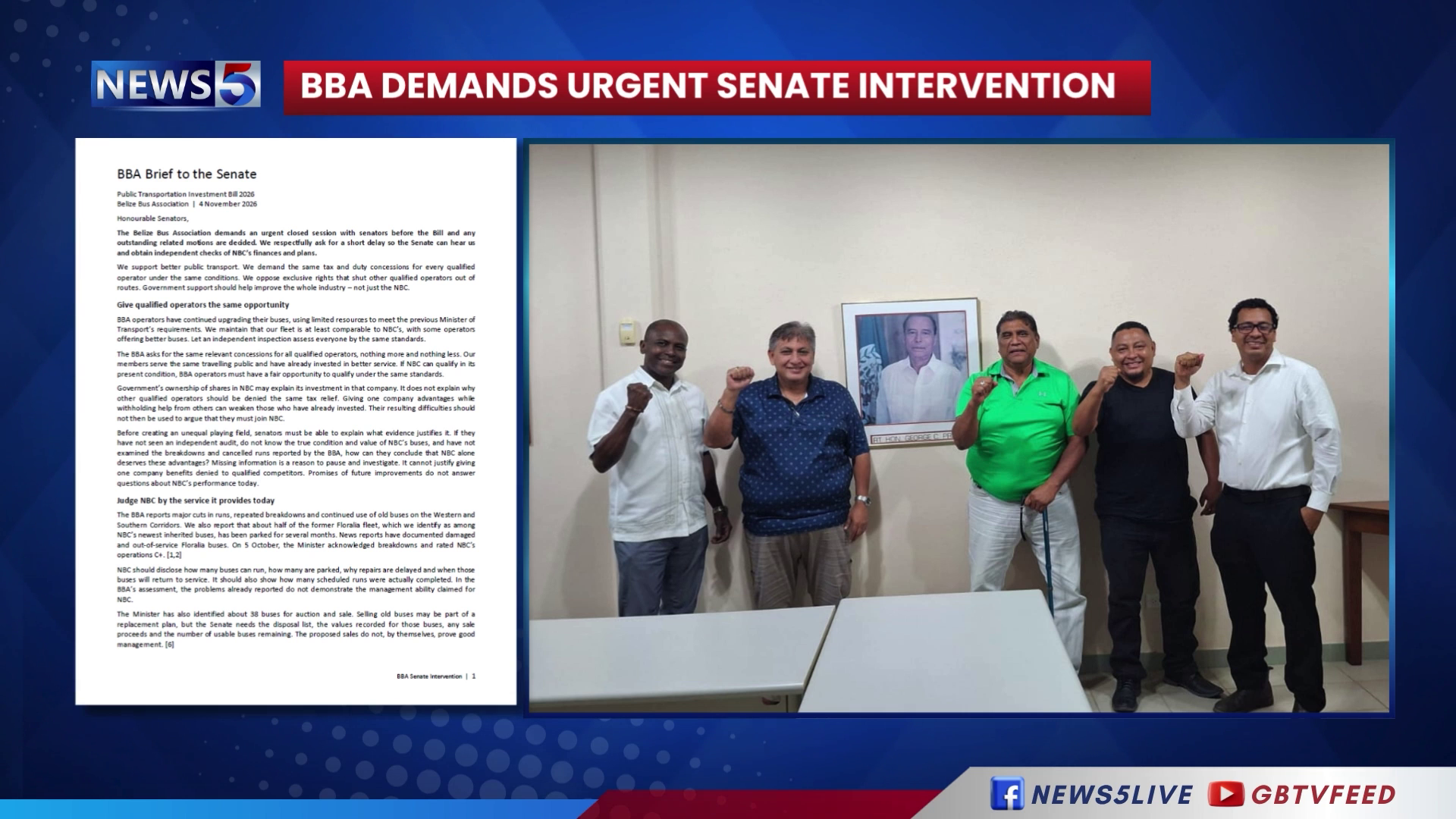
On November 4, 2026, a major standoff has emerged between Belize’s formal bus operator coalition and national transport authorities over a landmark public transit reform package that marks the most sweeping proposed restructuring of the country’s passenger transportation network in a generation. The Belize Bus Association (BBA) is formally calling on members of the Senate to postpone the upcoming scheduled vote on the Public Transportation Investment Bill 2026, citing a lack of critical verified data about the newly established National Bus Company (NBC) that the legislation would formalize as a core public-private transit provider. BBA representatives argue that no independent third-party review has been conducted to validate the NBC’s financial records, the operational condition of its full vehicle fleet, and the long-term feasibility of its multi-year business roadmap, leaving critical gaps in transparency that could put the entire reform effort at risk of costly failure. Beyond the demand for a full independent audit covering all three of these domains, the association is also pushing for national policymakers to extend equal tax breaks and duty exemption benefits to all licensed, qualified private bus operators across the country, rather than limiting those preferential concessions exclusively to the state-backed NBC. The group has submitted an official request for a closed-door, private consultation with all Senate members ahead of the planned vote to air their unaddressed concerns in full. Transport ministry leadership, however, is framing the proposed delay as an unnecessary setback for commuters who have endured decades of substandard service. Chester Williams, Chief Executive Officer of Belize’s Ministry of Transport, emphasized that ordinary passengers have long been forced to navigate a transit system plagued by outdated, poorly maintained vehicles, chronic overcrowding on popular routes, and frequent unexpected breakdowns that disrupt work, school and personal travel. Williams clarified that the NBC was structured as a collaborative public-private partnership specifically to lift overall service standards, not to push existing independent private bus operators out of the market entirely. The reform plan is set to deploy 24 new electric passenger buses paired with a network of solar-powered charging infrastructure, procured with technical and financial backing from Taiwan, investments that transport officials project will deliver far safer, more consistent, and lower-cost transit options for the general public. As the Senate prepares to schedule its final debate and vote on the bill, the BBA is urging legislators to weigh two competing priorities: moving forward with long-overdue transit upgrades, or pausing first to confirm that the new National Bus Company operates on a level, fair playing field, with full transparency and proven long-term financial stability.