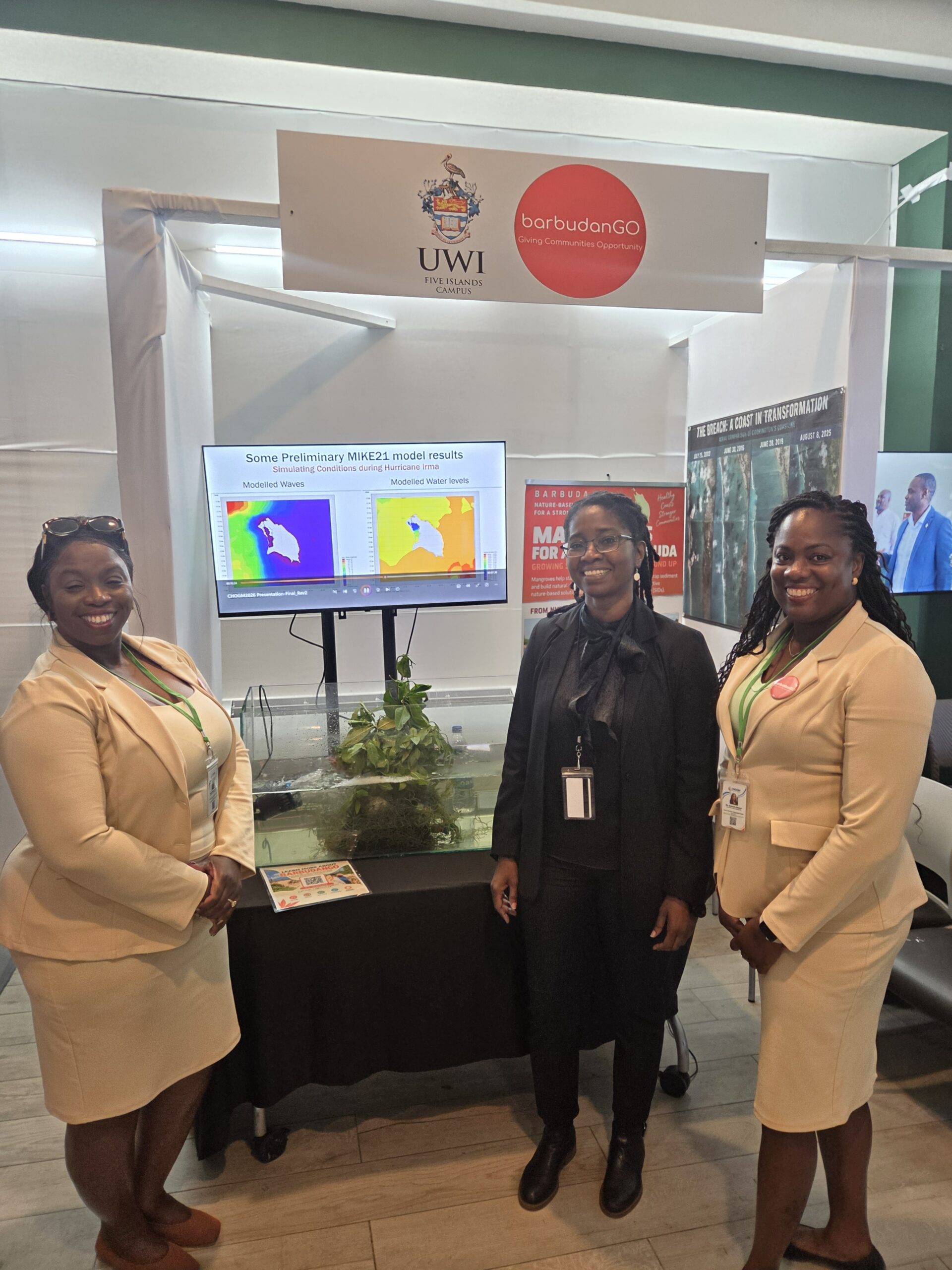
On Tuesday, 3 November 2026, local Barbuda-led stewardship organisation barbudanGO took centre stage at the Commonwealth Blue Finance and Innovation event hosted at Antigua and Barbuda’s John E. St. Luce Finance and Conference Centre, bringing grassroots perspectives on marine conservation and sustainable island development to a high-level gathering of global ocean stakeholders.
Curated to unite cross-sector delegates including impact investors, national government policymakers, blue tech innovators, and leading ocean conservation practitioners, the summit was designed to unlock actionable pathways to deploy innovative financing frameworks and emerging technologies to speed up marine ecosystem restoration, biodiversity protection, and the equitable, sustainable use of shared ocean resources across all Commonwealth member nations.
BarbudanGO’s participation was made possible by a formal invitation from Dr. Branson Belle, whose backing cleared the way for the small community organisation to elevate Barbuda’s on-the-ground experiences and unique local insights to a regional and international audience that often overlooks frontline island voices.
Representing the organisation at its dedicated exhibition booth were Pethrolyna Isaac, barbudanGO’s Director of Environment, and Rashella Webber, the group’s Programme Manager, who curated a display showcasing the organisation’s decade-long track record across marine protected area management, community mangrove restoration projects, coastal resilience programming, and grassroots environmental stewardship initiatives. One of the booth’s most popular interactive features was a live mangrove wave demonstration, which used a scaled physical model to visually illustrate how dense mangrove root systems dissipate storm surge energy, reduce coastal flood risk, and create critical habitat for fish, crustaceans, and other marine species that underpin local food security.
Beyond showcasing successful conservation models, the booth also served as a platform to draw urgent global attention to the rapidly accelerating coastal erosion crisis at a site known locally as The Breach on Barbuda’s coastline, where shifting shorelines have become a stark symbol of the cascading climate vulnerabilities facing small island developing states. During direct conversations with hundreds of event visitors, the barbudanGO team shared verified local monitoring data showing erosion rates as high as two feet per day at the site, a pace of change far outstripping the capacity of limited local government resources to address unassisted. By centring The Breach in their outreach, the organisation aimed to push global blue finance stakeholders to prioritise targeted, science-backed coastal adaptation measures, expanded long-term shoreline monitoring, and direct investment in solutions designed and led by local communities rather than distant external consultants.
BarbudanGO’s leadership emphasized that sites like The Breach cannot be sidelined from mainstream blue finance discussions: the rapid erosion unfolding there is far more than a standalone environmental issue, as it threatens to wipe out traditional fishing grounds, destroy critical public infrastructure, displace longstanding community settlements, and undermine the long-term climate resilience of the entire island nation.
A key highlight of the organisation’s event experience was sharing adjacent exhibition space with Dr. Lamb, BSc, PhD, CEng, MICE, M.ASCE, FRSA, a specialist Lecturer in Coastal Engineering and Management at the University of the West Indies (UWI). The shared booth space created an unprecedented collaborative platform to bridge grassroots community conservation knowledge with world-class academic coastal engineering expertise and cutting-edge marine innovation research.
The summit’s core focus on expanding equitable blue finance access carries particular weight for small island developing states across the Commonwealth bloc, which collectively oversee one third of all ocean territory under national jurisdiction globally, host 45 per cent of the world’s remaining tropical coral reefs, and are home to 25 of the world’s most climate-vulnerable small island nations. This scale of shared marine stewardship responsibility makes targeted, community-centred investment in ocean protection an urgent global priority, rather than a niche environmental concern.
For the barbudanGO team, the event served as a high-impact platform to amplify a core, underrepresented message: blue finance funding cannot continue to flow exclusively to large international NGOs and multinational corporations, and must be directed to the local communities that live and work on the frontlines of ocean conservation every day. All blue economy investment frameworks must formally recognise, centre, and resource the traditional ecological knowledge, on-the-ground leadership, and proven practical contributions of local community groups that bear the direct brunt of accelerating marine and coastal environmental change.
As a community-rooted organisation that runs interconnected programmes across Culture, History, Education, Environment and Disaster Mitigation (CHEED), barbudanGO has long documented that durable, long-lasting ocean conservation cannot be imposed from outside, and requires full local community participation, sustained investment in local workforce capacity, and multi-year funding commitments rather than short-term one-off project grants.
Following the event, the barbudanGO team extended formal gratitude to Dr. Branson Belle for the invitation that made their participation possible, as well as to Dr. Lamb and the broader UWI team for their collaborative partnership during the summit. The organisation has reaffirmed its ongoing commitment to ensuring Barbuda’s unique voice, on-the-ground lived experiences, and proven community-led ocean solutions are centred in every global conversation shaping the future of shared global marine ecosystems.
barbudanGO Showcases Community-Led Ocean Conservation at Commonwealth Blue Finance and Innovation Event