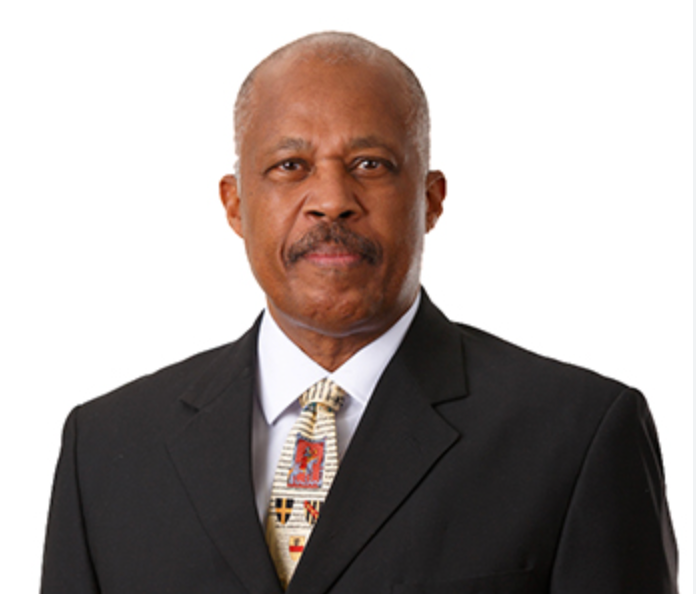
In a landmark shift after decades of staunch British government resistance, the Chairman of the CARICOM Reparations Commission, distinguished historian and University of the West Indies Vice-Chancellor Professor Sir Hilary Beckles, has confirmed that the UK is prepared to launch formal, structured negotiations with Caribbean former colonial territories over reparatory justice for the brutal system of chattel slavery imposed across the British West Indies. Beckles shared the breakthrough update on the eve of the 56-nation Commonwealth Heads of Government Meeting (CHOGM), which kicked off Tuesday in Antigua and Barbuda, just hours after King Charles III and newly appointed British Prime Minister Andy Burnham arrived on the Caribbean island for the high-level summit. While the current UK administration has signaled openness to issuing a formal, official apology for the atrocities of chattel slavery, Beckles noted that London remains cautious and non-committal on the question of direct financial compensation for descendant communities. The historic regional advocacy push for reparations comes eight months after the United Nations formally designated the transatlantic chattel slave trade as the single gravest crime against humanity in modern history. As a leading global authority on British colonial slavery, Beckles emphasized that the uniquely dehumanizing system of chattel slavery was a British innovation, first pioneered in 1600s Barbados before being exported across the entire West Indies and North American colonies. Unlike any prior form of forced labor in human history, this system classified enslaved African people as legally indistinguishable from tangible property: they could be bought, sold, leased, mortgaged, used as currency, and taxed as if they were land or livestock. Over 200 years, more than 10 million enslaved African men, women, and children were forced to work without pay across British Caribbean plantations, generating unprecedented wealth that directly fueled Britain’s commercial expansion and Industrial Revolution, catapulting the nation to the status of the world’s first global industrial superpower. When the UK Parliament passed the 1833 Slavery Abolition Act, the government awarded the equivalent of 40% of the entire national budget at the time — £20 million — exclusively to white slave owners as compensation for their lost “property”, while the millions of enslaved people who had built the nation’s wealth received no redress, and were even ordered to remain compliant and grateful for their emancipation. Beckles hailed Burnham’s willingness to enter formal dialogue as a historic break from the long line of previous British prime ministers who categorically refused to entertain reparations discussions, citing former Labour leader Tony Blair’s outright dismissal of the claims and former Conservative premier David Cameron’s notorious 2015 remark during a Jamaica visit that Caribbean communities should simply “get over” the legacy of slavery. He described those prior dismissals as “racist diatribe” that had obstructed generations of demands for dignity and redress. Even though official CHOGM agendas did not list reparations as a scheduled formal discussion topic, Beckles stressed that the issue had permeated every layer of the summit context, dominating street conversations, media coverage, corridor discussions, and public sentiment across Antigua and Barbuda. For the first time in regional history, he noted, Caribbean national governments, academic institutions, faith organizations, and grassroots community movements are fully united behind the CARICOM 10-Point Reparations Plan, a comprehensive negotiating framework that covers critical priorities including public health investment, targeted education funding, cultural heritage restoration, colonial-era debt cancellation, and equitable capital transfer. Far from being a narrow regional demand, Beckles pointed out that 123 United Nations member states representing 80% of the global population have voted in support of resolutions mandating reparatory justice for the legacy of chattel slavery, with the framework extending beyond descendants of enslaved Africans to also recognize the harms faced by Indigenous communities targeted by colonial genocide, and indentured laborers forcibly brought to the Caribbean from India and China. Beckles added that Prime Minister Burnham’s personal roots in the industrial north of England, the historic heartland of Britain’s 19th century manufacturing economy, make him uniquely positioned to lead this difficult reckoning: Lancashire’s cotton mills ran on slave-harvested cotton from the Americas, the region processed vast quantities of Caribbean slave-grown sugar, and Liverpool, the iconic northern port, served as one of the central hubs of the brutal transatlantic triangular slave trade. “You represent that entire complex history,” Beckles told Burnham, extending a formal welcome on behalf of the CARICOM Reparations Commission and expressing hope that the upcoming talks would mark a new era of enlightened, dignified dialogue that advances global justice and human equality for the 21st century.