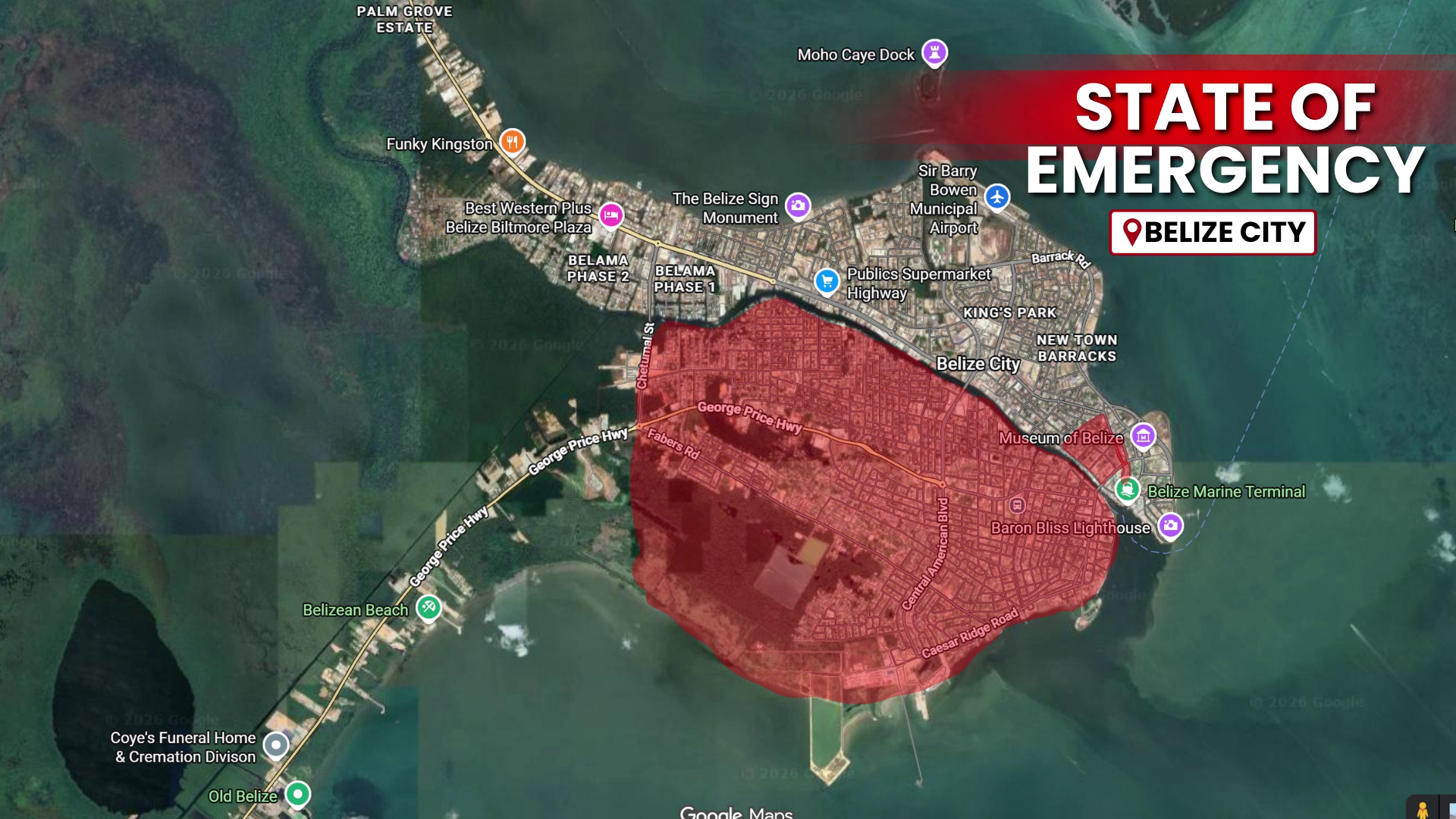
On November 2, 2026, a sweeping new State of Emergency (SOE) has been enacted across multiple communities in Belize and Cayo districts, following one of the nation’s deadliest recent weekends that left seven people dead amid a wave of gang-linked shootings. Declared by Governor General Froyla Tzalam on Saturday, the emergency order covers Southside Belize City, a portion of Northside Belize City, Ladyville, Cotton Tree, and Unitedville, granting law enforcement expanded authority to curb a months-long surge in retaliatory gang violence.
National Security Minister Michel Chebat and Police Commissioner Dr. Richard Rosado formally announced the extraordinary measure on Sunday, framing it as a constitutionally justified intervention to protect public safety. Rosado emphasized that the operation is rooted in verified, targeted intelligence rather than random sweeps, noting that coordinated gang activity across the two districts meets the strict threshold set out in Section 18.3 of Belize’s constitution, which defines a public emergency as a threat severe enough to endanger community safety and disrupt essential public services. Authorities have compiled investigative files for roughly 60 individuals with documented ties to gang networks and ongoing violent probes, with several detentions already completed and more expected in the coming days. Chebat acknowledged that a 2020 SOE was previously ruled unconstitutional by the Court of Appeal, a decision currently under review by the Caribbean Court of Justice (CCJ), but argued that the government cannot afford to rule out any available public safety tool while fatal violence continues to rise.
The crackdown has already ignited fierce pushback from affected families, many of whom insist their detained loved ones are completely innocent and are preparing formal legal action against the state. A Belize City woman whose three male relatives have been held in custody for between 96 and more than 100 hours prior to the SOE’s declaration pointed out that fatal shootings have persisted even as the men remain locked up, questioning how extended emergency detention will halt the ongoing bloodshed. She also reported that heavily armed police officers returned to her home late one night searching for a relative who was already in custody, an encounter that left her two-year-old child terrified of officers carrying large weapons. The family says they intend to file a lawsuit against the government over what they describe as arbitrary, unnecessary harassment.
A second mother from Unitedville added that her son, who has no prior criminal record, was taken into custody under the new SOE rules, a move that threatens to cost him his full-time job and leave his pregnant partner and two young children, aged four and six, without critical financial support. She has also vowed to pursue legal representation to challenge the detention if her son is held beyond the initial 48-hour window, calling the operation a deliberate harassment of innocent members of the public.
As law enforcement moves forward with its planned detentions, the SOE sits at the center of a tense national debate: government officials defend it as a last-resort measure to stem a cycle of lethal gang retaliation, while civil society critics and affected families argue that the expanded emergency powers risk eroding fundamental constitutional rights and targeting innocent residents without due process. The long-term effectiveness of the measure in reducing violent crime, as well as its ability to withstand an expected new round of legal challenges, remains uncertain as the operation unfolds across the affected districts.