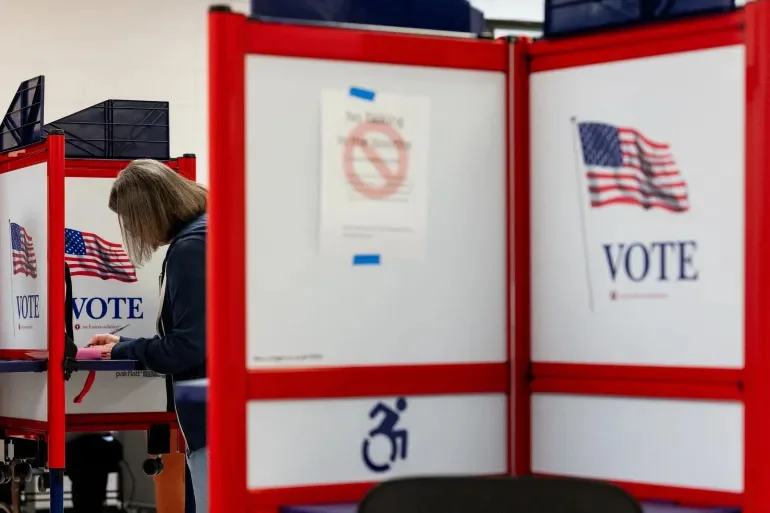
On November 3, polling stations across multiple U.S. states officially opened for the highly anticipated 2026 midterm elections, a landmark national referendum that will shape the trajectory of President Donald Trump’s second term in office. The electoral contest puts all 435 seats in the U.S. House of Representatives, 35 out of 100 Senate seats, and dozens of state governor positions and local public offices up for grabs, serving as the most comprehensive barometer of public approval for the sitting administration’s policies to date.
Heading into Election Day, the Republican Party currently holds majority control of both chambers of Congress. Democratic candidates have set their sights on flipping at least one legislative body, a move that would grant the opposition sweeping authority to stall White House-backed legislation, launch oversight hearings into executive branch activities, and impose significant checks on the president’s domestic and foreign policy priorities. What once appeared to be a steep uphill battle for Democratic contenders has grown far more competitive over the course of the election cycle, driven by widespread voter discontent over persistent cost-of-living spikes, economic headwinds, and ongoing U.S. military engagement in the Iran conflict.
Recent Reuters/Ipsos polling data pegs President Trump’s job approval rating at just 32%, putting unprecedented pressure on down-ballot Republican candidates even in deep-red districts that have long been considered safe party strongholds. Still, Democratic victory is far from guaranteed: the GOP retains a massive war chest for last-minute campaign operations, and a loyal base of voters concerned about the Democratic Party’s policy direction remains deeply motivated to turn out at the polls. Final outcomes will hinge heavily on turnout rates among young voters and other core Democratic demographic groups that historically show inconsistent midterm participation.
The House of Representatives is widely viewed by political analysts as the most likely chamber to flip party control. Democrats only need a small net gain of seats to erase the current Republican majority, a shift that would allow the opposition to block administration legislative proposals, subpoena executive branch officials for public hearings, and launch formal investigations into White House operations. For President Trump, losing House control would force him to negotiate across party lines to advance key pieces of his agenda, even as he retains full executive authority over federal administrative operations.
The battle for Senate control carries equally high stakes. Republicans currently hold a 53-to-47 seat majority in the upper chamber, meaning Democrats must secure a net gain of four seats to claim full control. High-profile toss-up races in Alaska, Kansas, Maine, North Carolina, Ohio, and Texas are drawing national scrutiny, particularly contests in states that delivered decisive victories for Trump in the 2024 presidential election. A Democratic upset in these traditionally red states would signal growing discontent with the administration even among segments of the Republican voter base. The Senate’s unique constitutional authority to confirm federal judicial nominations and senior cabinet appointments means a party flip would directly shape the future composition of the federal judiciary and the leadership of key federal agencies for years to come.
Voter priorities leading up to Election Day have been dominated by pocketbook issues: skyrocketing grocery costs, surging housing prices, and elevated fuel prices have emerged as top decision-driving factors for most voters. Other hotly debated campaign issues include the Trump administration’s hardline immigration crackdown, sweeping new import tariffs, and ongoing U.S. military involvement in the Iran conflict. Republican candidates have framed these policies as critical to protecting American national security and domestic economic interests, while Democratic campaigns have emphasized the downstream financial burdens and global geopolitical risks associated with the administration’s approach.
Turnout data ahead of Election Day has already shattered previous midterm records: the University of Florida Election Lab reports that more than 57 million Americans cast their ballots during the early voting window, far exceeding the 46 million early votes recorded during the 2022 midterm cycle. Political analysts caution that high overall early turnout does not inherently predict a winning party, as final outcomes will depend on the demographic breakdown of early voters, in-person Election Day turnout patterns, and the geographic distribution of votes across competitive districts and states.
While the midterm elections will not alter the fact that Trump will serve out the remainder of his second presidential term, the results will have profound ripple effects on U.S. politics for years. If Republicans retain their majorities in both chambers, the president will be able to advance his full legislative agenda with minimal legislative pushback. If Democrats flip one or both chambers, the opposition will gain powerful oversight tools to constrain administration actions, and a lopsided Republican loss could even spark internal party debates over the future of Trump’s leadership within the GOP. The results will also lay the groundwork for candidate positioning ahead of the 2028 U.S. presidential election.
Polling station closing times vary across U.S. states, and final vote tabulation may extend for multiple days after Election Day, particularly in competitive races with large volumes of mail-in ballots. Early partial returns on election night will offer preliminary clues about the scale of potential Democratic gains, but definitive calls on which party controls the House and Senate may not be confirmed for several days after polls close.