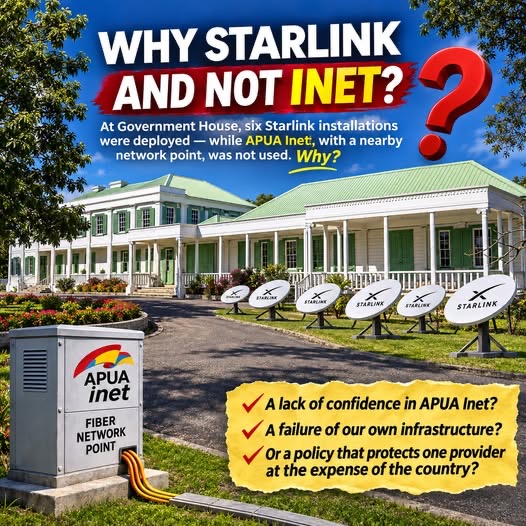
In a thought-provoking new industry opinion piece, digital connectivity analysts are posing a pointed question that has rippled through global telecommunications circles: why has SpaceX’s Starlink satellite internet constellation captured millions of loyal users across underserved and even well-connected markets, while conventional terrestrial internet service providers (ISPs, referred to here as “Inet” in the original framing) continue to struggle to keep pace with consumer demands?
The analysis traces Starlink’s unprecedented market surge to three core structural advantages that legacy internet providers have failed to prioritize for decades. First, its low-Earth-orbit satellite architecture eliminates the need for costly, labor-intensive physical fiber or cable infrastructure rollouts across remote geographies, from rural mountain communities to disaster-stricken regions where terrestrial networks have been completely destroyed. Unlike legacy ISPs that often write off low-density areas as unprofitable to serve, Starlink can deploy high-speed, low-latency connectivity to any location on the planet for a fraction of the upfront capital expenditure required for ground-based networks.
Second, the piece highlights Starlink’s agile iterative development cycle, a stark contrast to the glacial, bureaucratic upgrade processes that plague most established ISPs. SpaceX has continuously refined its satellite hardware, user terminal design, and network routing algorithms in direct response to real-time user feedback, delivering consistent performance improvements that many traditional providers refuse to implement even after years of customer complaints about throttled speeds and hidden service caps. Third, the opinion notes that geopolitical shifts, including the critical role Starlink played in sustaining communications for Ukrainian civilian and military communities during the 2022 Russian invasion, have cemented its reputation as a resilient, crisis-proof connectivity solution that no legacy terrestrial ISP can match in conflict or emergency scenarios.
The analysis does not shy away from acknowledging Starlink’s ongoing drawbacks, including higher user equipment costs, occasional signal interference from atmospheric conditions, and ongoing regulatory disputes over spectrum access and orbital debris management. Even so, the opinion argues that the stark gap in innovation and accessibility between Starlink and traditional terrestrial ISPs should serve as a wake-up call for legacy providers to rethink their long-held business models, rather than lobbying regulators to restrict satellite internet competition to protect their outdated market monopolies.
OPINION: Why Starlink And Not Inet?