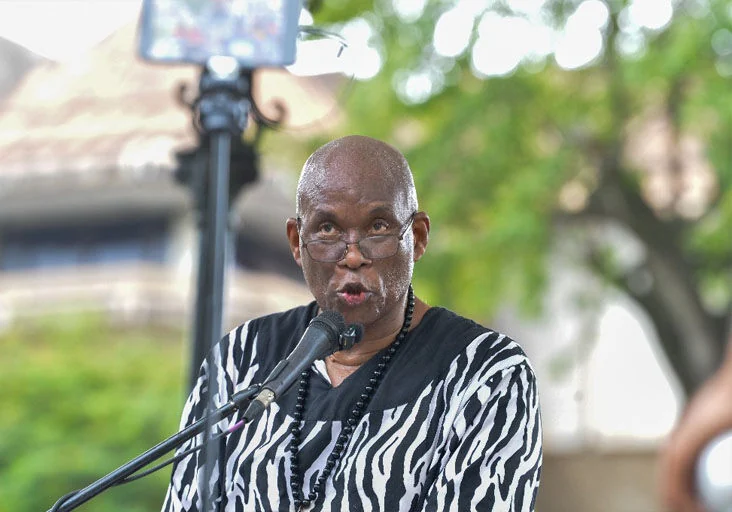
A major labour demonstration that unfolded across Port of Spain, Trinidad and Tobago, has sparked a fierce war of words between Prime Minister Kamla Persad-Bissessar and the island’s trade union leadership, with the two sides offering wildly divergent assessments of the march’s scale, purpose and outcomes. The cross-city procession, which set off from Memorial Park, snaked through the Woodbrook neighbourhood, and concluded at Woodford Square, drew affiliated members from 12 separate labour bodies, including representatives from the nursing union, the National Union of Government and Federated Workers (NUGFW), and the Seamen and Waterfront Workers Trade Union (SWWTU), alongside grassroots community supporters and a small contingent of political figures.
Leading the pro-march assessment is Michael Annisette, General Secretary of the National Trade Union Centre (NATUC), who framed the day of action as an unmitigated success designed to elevate long-simmering working-class grievances rather than advance partisan political goals. Annisette confirmed thousands of attendees joined the procession, holding placards that demanded urgent action on stalled wage negotiations, job security, systemic social equity and improved national governance. Marchers staged a noisy, peaceful demonstration outside Persad-Bissessar’s St Clair office, chanting calls for her administration to step down, while Annisette emphasized the event was intentionally structured to avoid becoming a partisan political rally: no elected political figures, including Opposition Leader Pennelope Beckles, were invited to address the assembled crowd, even as opposition representatives joined the march route in a show of solidarity. Annisette declined to directly address the notable absence of two major labour groups, the Oilfields Workers’ Trade Union (OWTU) and the Public Services Association (PSA), noting that the demonstration’s core mission centred exclusively on advancing worker interests, not partisan affiliations, and that all labour allies were welcome to stand in solidarity with their peers. For her part, Beckles confirmed her presence at the march was rooted in her personal and familial ties to the labour movement, pushing back against criticisms from the Prime Minister that her attendance represented partisan meddling, and accusing Persad-Bissessar of unnecessarily injecting racial framing into discussions of fundamental worker rights.
In stark contrast, Prime Minister Persad-Bissessar took to social media in the immediate aftermath of the march to dismiss the entire demonstration as a total, spectacular failure, branding it a “hate protest” driven by racial animus and partisan hostility toward her ruling United National Congress (UNC) government rather than legitimate labour concerns. She published an aerial photograph of the procession alongside her remarks, claiming that the well-resourced groups that had benefited financially under the previous People’s National Movement (PNM) administration – including wealthy business elites, alleged criminal networks and affluent members of Trinidad and Tobago’s Indo-Trinidadian, Chinese and Middle Eastern communities – had failed to turn out in the large numbers that protest organizers had promised. Persad-Bissessar went on to accuse union leaders of selective political activism, questioning why comparable mass demonstrations had not been staged during the PNM’s 10-year tenure in office, a period she claimed had seen public sector workers receive 0% salary increases and go years without receiving owed backpay. While she thanked the Trinidad and Tobago Police Service for their successful efforts to keep the march peaceful and prevent violence against unrelated bystanders along the route, she issued a direct rebuke to attendees, telling them their protest’s purported partisan and racially charged goals had been soundly rejected by the wider national population, and urging them to return to work the following Monday. At the same time, she extended an olive branch to labour groups that had continued to engage in formal negotiations with her administration, confirming that the Ministry of Public Administration had been directed to immediately fast-track all outstanding collective bargaining talks to resolve long-delayed wage settlements and backpay claims.
Local outlet the Trinidad Express observed several hundred attendees at the march, and submitted a formal request to the Trinidad and Tobago Police Service for an official verified headcount of participants, which had not been released at the time of publication. The public clash between the government and labour movement unfolds against a backdrop of months of rising tensions over unmet labour demands, with the two sides deeply divided over both the substance of pending worker benefits and the role of partisan politics in Trinidad and Tobago’s labour advocacy landscape.
Clash over march