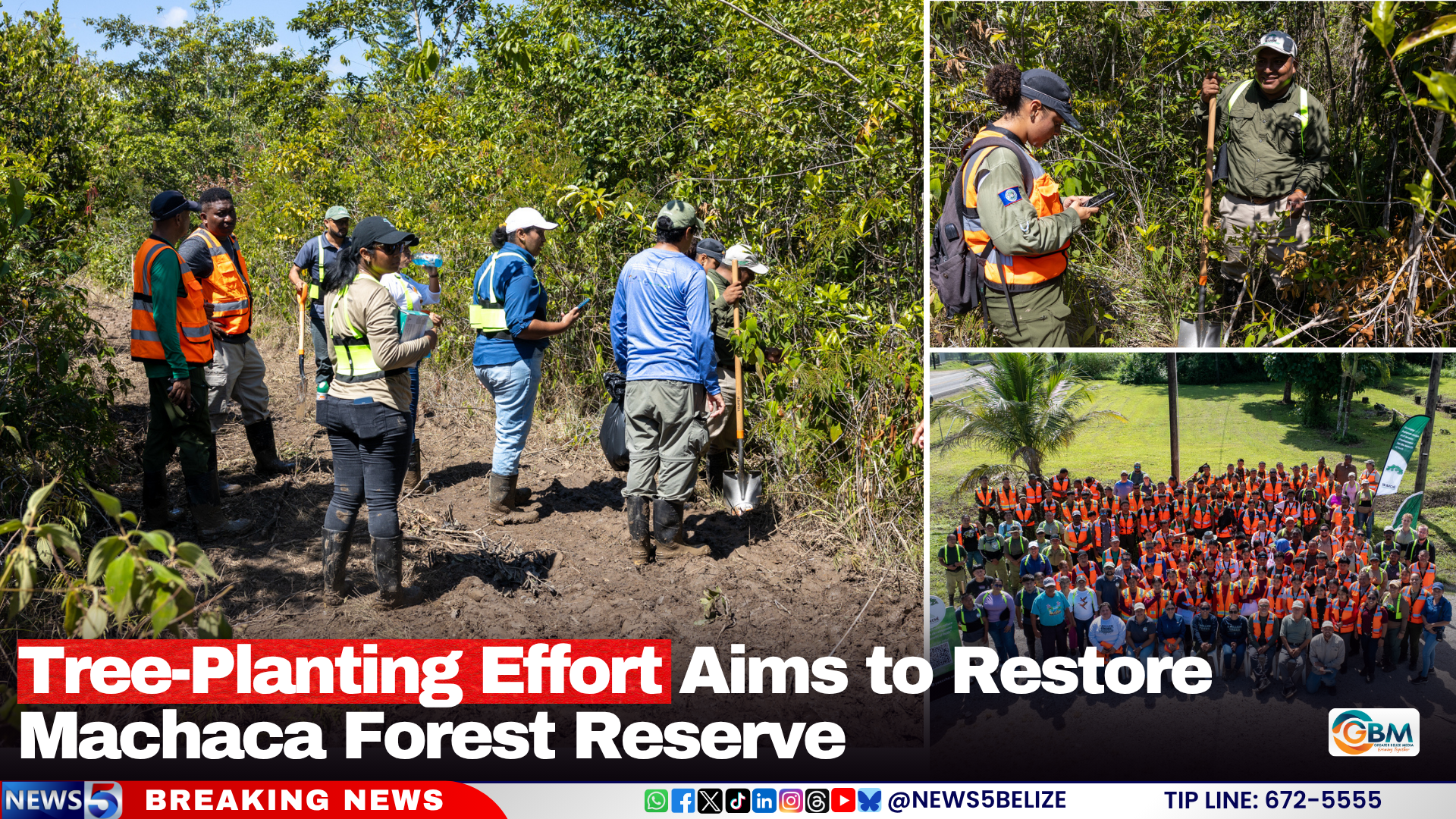
On October 30, 2026, a diverse cohort of 160 volunteers assembled at Belize’s Machaca Forest Reserve, a protected ecological site nestled in the country’s southern Toledo District, to kick off a large-scale reforestation campaign targeting long-degraded swathes of the critical reserve. Co-led by the Ya’axché Conservation Trust and Belize’s national Forestry Department, the plantation event represents a key milestone under the national Million Trees Initiative, a sweeping national framework committed to cultivating 1 million native trees across Belize by the end of 2030. The restoration push arrives after decades of sustained strain on Machaca Forest Reserve, where unregulated historical logging activities left large tracts of native vegetation depleted and local ecosystems destabilized. Christina Garcia, Executive Director of the Ya’axché Conservation Trust, confirmed that the day’s targeted output was the successful planting of 190 native saplings across pre-surveyed, high-priority degraded zones within the reserve. The volunteer roster drew broad cross-sector participation, including student groups from Julian Cho High School, Toledo Community College, and the University of Belize, alongside uniformed personnel from the Belize Defence Force, Forestry Department staff, and full-time conservation team members from Ya’axché. Milagro Matus, Chief Executive Officer of Belize’s Ministry of Sustainable Development and Climate Change, noted that the government had spent 25 years coordinating funding, stakeholder partnerships, and technical resources to activate targeted restoration work at Machaca, marking the event as the culmination of a generation-long planning effort. Matus extended a public call to all Belizean residents to join future national reforestation efforts, emphasizing that the long-term impacts of today’s plantings would extend far beyond the current cohort of volunteers: while many participants would not witness the saplings reach full maturity in the immediate years ahead, the growing forest would eventually supply food, shade, carbon sequestration, and habitat for local wildlife for generations to come.