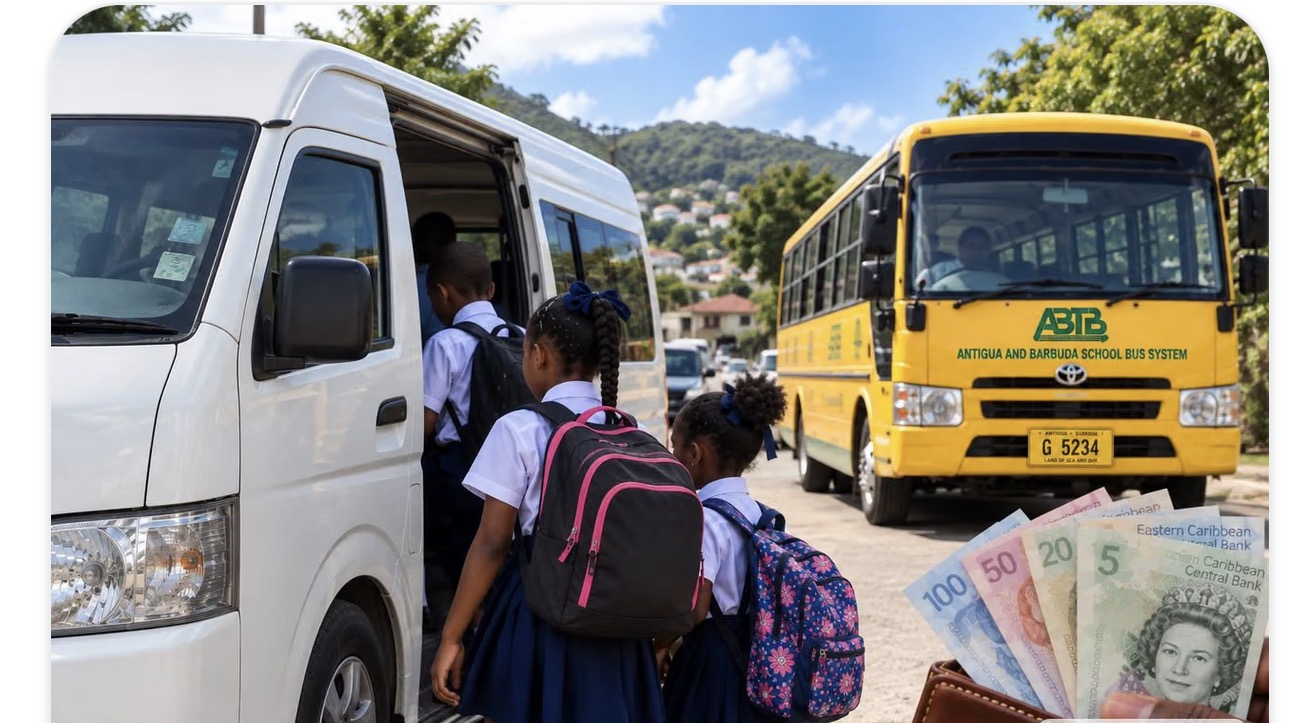
The Antigua and Barbuda Cabinet has formally launched a full-scale review of long-standing subsidized bus fare arrangements for uniformed primary school students, as part of a broader assessment of pending public transit fare adjustment requests put forward by the national Bus Association and the Ministry of Transport. For years, the existing policy has cut transit costs for primary pupils who travel to and from their campuses on regular public buses while wearing their official school attire, but no details have been released by government leaders on potential adjustments to the subsidy structure, whether parent contributions would rise, or what level of public financial support would be retained for student riders. The cross-sector committee tapped by Cabinet to lead the 90-day assessment is mandated to weigh two competing sets of priorities: the steep, sustained rise in operational costs that private bus operators have documented, and the risk of added financial strain for local families. Operators have outlined cascading cost pressures across nearly every part of their business, including soaring fuel prices, pricier spare parts and vehicle maintenance, climbing insurance premiums, rising labour expenses, and the growing cost of replacing aging fleet vehicles. The review process runs parallel to the government’s existing zero-fare National School Bus System, operated by the Antigua and Barbuda Transport Board, which provides completely free dedicated transit for schoolchildren. However, students who do not have access to the dedicated school bus network and rely on standard public passenger services would bear the brunt of any subsidy cuts or fare hikes. The appointed panel is required to deliver its full findings and actionable recommendations to Cabinet within three months, and no final decisions on fare increases or subsidy modifications will be made until the government has thoroughly reviewed the committee’s final submission. Officials have emphasized that no pre-determined outcomes have been set, and all options will be evaluated to balance the viability of the local public transit sector and the financial security of household budgets, especially for multi-child families that depend on public transit to get their children to school safely each day.
Schoolchildren’s Bus Fare Subsidies Under Review as Families Face Cost Pressures