On Wednesday, 28 October 2026, newly updated reporting outlines a sharp policy dispute in Guyana over surging cost of living pressures, as Opposition Leader Azruddin Mohamed reignites a push for government-mandated price caps on essential consumer food items, a proposal that has been categorically rejected by the Georgetown Chamber of Commerce and Industry (GCCI).
Mohamed first floated the price control proposal during his 1 May 2026 Labour Day address, and reaffirmed the demand at a recent press conference, arguing that targeted price regulation should be rolled out at major supermarket chains across the country. He specifically criticized large retail operators such as Massy for imposing exorbitant markups on staple goods, insisting that retailers must voluntarily reduce their profit margins to ease household financial strain, while also calling for government ministers to end unfair commercial competition with small local suppliers. Mohamed, a former major gold exporter who, alongside his father, was hit with U.S. government sanctions in June 2024 over alleged gold-linked tax evasion, also pointed to the country’s crippling foreign currency shortage as a core driver of runaway consumer costs, noting that local business owners seeking to process a US$20,000 wire transfer at domestic banks are now forced to wait two to three weeks to complete the transaction. He emphasized that Guyanese households should be enjoying far greater economic stability given that the nation generates roughly GY$8 billion in daily revenue from crude oil sales, which are split between the Guyanese government and its international industry co-venturers ExxonMobil, Chevron, and China National Offshore Oil Corporation.
In an official public statement that did not explicitly name Mohamed but directly addressed his policy proposals, the GCCI issued a forceful rebuttal of broad price control measures, warning that top-down price caps would severely distort existing market dynamics, fracture fragile cross-border and domestic supply chains, reduce the availability of essential goods, and ultimately drive up operational costs for both local businesses and end consumers. The chamber stressed that skyrocketing retail prices are not primarily fueled by excessive corporate profit margins, but are shaped by a complex web of overlapping external and domestic factors: volatile international commodity rates, soaring freight and transportation costs, widespread limited access to U.S. dollars, rising local production expenses, and layered distribution overheads. The organization noted that framing high prices as a product of corporate greed without full analysis of these interconnected cost drivers is deeply misleading.
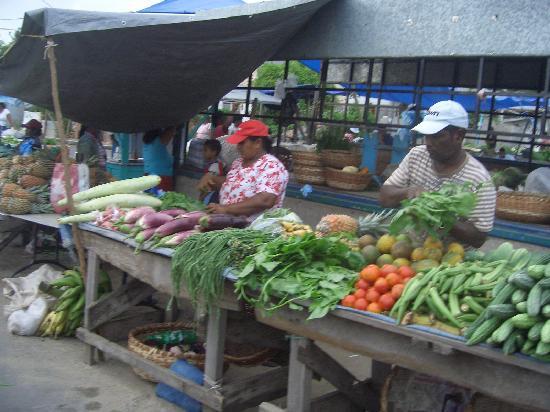
While the GCCI aligned with Mohamed’s assessment that resolving the national foreign currency shortage is a critical priority to ease cost-of-living pressures, it outlined a far broader, multi-pronged policy roadmap as a viable alternative to price controls: expanding foreign currency access for registered importers, revising punitive import duties and tariffs that artificially inflate commodity costs, streamlining logistics to cut freight and distribution fees, scaling up domestic agricultural output to reduce reliance on imported staples, and implementing policy reforms to foster greater competitive dynamism in the local retail market. The chamber explicitly stated that arbitrary price restrictions that fail to address the root structural costs of supplying goods will only create new, unforeseen market crises. It clarified that the organization does not endorse predatory price gouging, exploitation of supply shortages, or anti-competitive commercial behavior, and argued that all concerns about unfair pricing practices should be resolved through existing formal regulatory channels, rather than blanket price intervention. The GCCI concluded that any meaningful policy to improve affordability for Guyanese households must center on reducing the underlying costs of bringing essential commodities to market, rather than imposing arbitrary caps on final retail sale prices. The national government has already launched a series of farmers’ markets across the country as a targeted intervention to eliminate exploitative middleman networks and drive down costs for a range of locally produced staple items.
Opposition Leader insists on price control of basic food items but Georgetown Chamber disagrees