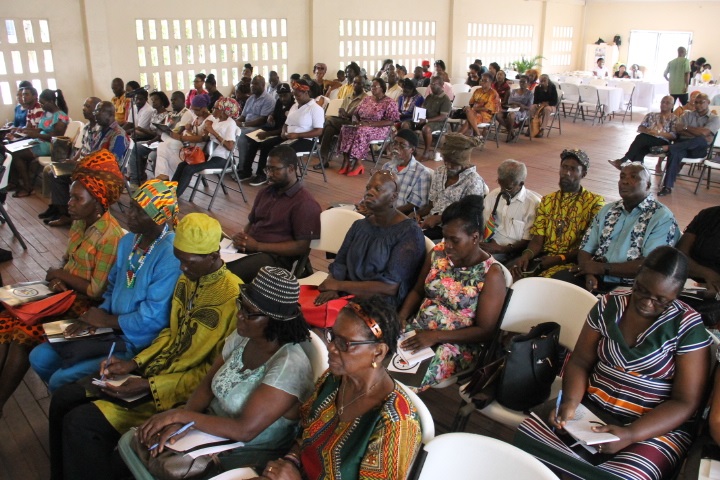
Georgetown, Guyana – October 28, 2026: The International Decade for People of African Descent Assembly–Guyana (IDPADA-G), a leading national coalition focused on redressing historical harms against communities of African descent, has formally submitted a formal written appeal to President Dr. Mohamed Irfaan Ali, calling on him to harness the upcoming state visit of King Charles III, scheduled for October 29–30, 2026, to push forward a two-pronged reparatory justice agenda spanning both international diplomatic advocacy and domestic policy action. Dated October 25, 2026, and signed by IDPADA-G Chairperson Vincent Alexander following a special meeting that secured full endorsement from the coalition’s member organizations, the letter outlines a clear distinction between two non-negotiable, complementary sets of obligations that cannot be treated as substitutes for one another. On the global diplomatic front, the organization is calling on President Ali to press the British Crown to formally acknowledge and make amends for centuries of state-sponsored African enslavement and colonial exploitation that stripped millions of people of their autonomy, labor, and cultural heritage across the Caribbean. In parallel, the coalition is demanding that the Government of Guyana launch an immediate, fully credible national reparations program targeted at addressing the persistent, systemic intergenerational harms that continue to marginalize African Guyanese communities today, emphasizing that domestic action must not be delayed pending a formal response from the United Kingdom. The letter commends President Ali for his prior public statements in support of reparatory justice, including his explicit position that a formal apology from former colonial powers alone is insufficient to redress the scale of historical injustices, and urges him to translate those stated commitments into actionable, time-bound policies. IDPADA-G’s submission grounds its demands in well-documented historical evidence: it highlights the extraordinary, uncompensated labor of enslaved African people who reclaimed Guyana’s flood-prone coastal plains, built the country’s foundational drainage and irrigation networks, and laid the entire framework for Guyana’s agricultural economy. It also notes that after emancipation, formerly enslaved communities pooled their limited personal resources to purchase abandoned plantations and establish independent self-governing villages, starting with the historic community of Victoria in 1839, only to face decades of deliberate colonial policy designed to erode their collective land ownership, block their economic advancement, and erase their cultural heritage – harms whose ripple effects remain visible in national socioeconomic disparities today. The advocacy group also cites formal findings from the 2017 visit of the United Nations Working Group of Experts on People of African Descent, which documented severe gaps in African Guyanese communities’ access to economic, social, and cultural rights, and issued targeted recommendations for targeted development interventions, expanded access to low-cost financing, and mandatory integration of African Guyanese history into national school curricula. To turn these longstanding calls into tangible progress, IDPADA-G has laid out a six-pillar national reparatory justice framework that it is urging President Ali to formally announce during King Charles III’s upcoming visit. The framework begins with a series of fully inclusive national consultations that center the voices of African Guyanese communities, smallholder farmers, entrepreneurs, women, youth, cultural leaders, academic researchers, and members of the global Guyanese African diaspora. This will be followed by an independent, evidence-based assessment that maps historical and contemporary structural disadvantages across key domains including land ownership, access to public and private financing, public procurement equity, participation in the country’s fast-growing petroleum economy, and gaps in intergenerational wealth accumulation. Additional pillars include a dedicated land justice initiative that will conduct independent reviews of verified historical land claims, protect legitimate community land rights, and deliver targeted investments in drainage infrastructure, flood resilience, and community public works. The plan also establishes a dedicated productive capital facility with technical support to uplift African Guyanese-owned businesses, agricultural cooperatives, and small-scale producers, alongside a cultural restoration program that invests in the preservation of African Guyanese historical archives, heritage sites, and neglected emancipation-era burial grounds, paired with a full review of national K-12 curricula to ensure underrepresented African Guyanese history is fully integrated. A final accountability pillar mandates transparent public oversight, independent third-party evaluation, and annual public progress reports to ensure no measures fall behind schedule. The coalition proposes that the first fully funded, approved measures under the framework be officially launched on August 1, 2027 – Emancipation Day – a date that also falls within the 400th anniversary year of the 1627 arrival of the first enslaved African people in Guyana, when Dutch colonial forces first established their permanent foothold in the territory. IDPADA-G notes that Guyana’s recent emergence as a major petroleum producer, which has unlocked unprecedented national prosperity, creates a once-in-a-generation policy window to redress centuries of structural inequality and ensure the country’s newfound wealth is shared equitably with communities that built the nation’s foundation through uncompensated forced labor. The letter closes with a call for President Ali to seize the high-profile, globally watched royal visit as a historic platform to demonstrate regional and global leadership on reparatory justice, aligning Guyana’s actions with the United Nations’ formal International Decade for People of African Descent mandates that the country is a signatory to, to turn the core principles of recognition, justice, and equitable development into tangible, measurable improvements in the daily lives of African Guyanese citizens.
Afro-Guyanese organisation urges Ali to push for reparatory justice during King Charles’ visit