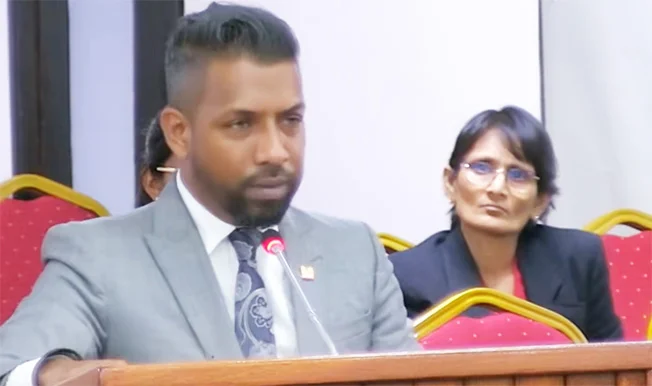
On October 28, Suriname’s National Assembly (DNA) failed to wrap up deliberations on a critical amendment to the Code of Criminal Procedure during its Tuesday session, pushing a large volume of unresolved questions to a second round of discussions scheduled to resume that Thursday. The proposed legislation forms a core component of the country’s broader anti-money laundering (AML) and counter-terrorist financing regulatory overhaul, which mandates that Suriname pass 19 related legislative bills before the mid-January deadline to meet international compliance obligations. Lawmakers across multiple political blocs pressed Justice and Safety Minister Harish Monorath for unambiguous clarity on three high-stakes areas: newly expanded special investigative powers, safeguards for civilian personal privacy, and independent oversight of law enforcement investigative units. While Monorath responded to a small subset of submitted queries, he deferred a majority of the concerns to the upcoming second debate round, noting that a 30-page document of formal parliamentary questions was still under review by the ministry’s legal revision team. Mounting anxiety has spread across legislative ranks over the slow pace of progress. National Democratic Party (NDP) faction leader Rabin Parmessar warned that the parliament was drifting into a “danger zone” if deliberations continued at the current sluggish pace, laying blame on the government side for delays. NDP committee member Rossellie Cotino echoed that frustration, pointing out that many of the questions raised during Tuesday’s interruptive debate had first been submitted to the minister 12 days prior, creating unnecessary barriers to moving the bill forward even as potential further revisions to the draft remain on the table. Committee chair Edgar Sampi of the ABOP party urged fellow legislators to grant the minister reasonable time to prepare thorough responses, while simultaneously emphasizing that urgency was non-negotiable to hit the international compliance deadline. Debate focused heavily on the lack of a binding maximum time limit for coercive investigative measures, an issue raised by VHP lawmaker Krishna Mathoera, who noted that current draft text only included three-month terms with provisions for extension, but no hard upper cap that could prevent open-ended, unregulated investigations. Monorath countered that investigation timelines would vary based on each case’s unique nature, complexity and progress, adding that all extension requests would require written, legally compliant justification. Additional points of contention included protections for confidential civilian data, with NDP lawmaker Raymond Sapoen arguing that existing internal law enforcement protocols, non-disclosure rules and staff training were insufficient to prevent unauthorized access, manipulation or misuse of personal data, and that explicit, legally enshrined privacy guarantees must be written into the final text. NPS lawmaker Jeffrey Lau also raised pressing questions about the impact of expanded law enforcement access to private emails, documents and digital networks on press freedom, whistleblower protections and journalistic source confidentiality, a query Monorath requested permission to address fully in the second debate round. Lawmakers also reviewed provisions governing the deployment of undercover infiltrators and delayed seizure of prohibited or dangerous goods, with Monorath confirming that any criminal conduct carried out by undercover operatives during investigations must be pre-authorised in a formal court order, and all delayed seizure requests must be documented in writing and meet strict legal conditions. Following a temporary suspension of the session, Monorath provided additional partial responses to a subset of outstanding questions, but failed to fully resolve the legislature’s widespread concerns. National Assembly President Ashwin Adhin stressed that the second debate round must proceed on the basis of the most up-to-date version of the draft legislation, while Monorath confirmed the government had no additional amendment proposals of its own at the current stage, but remained open to drafting suggestions put forward by parliamentary members.
Wijziging Strafvordering blijft steken in vragen; tijdsdruk op AML-wetten neemt toe