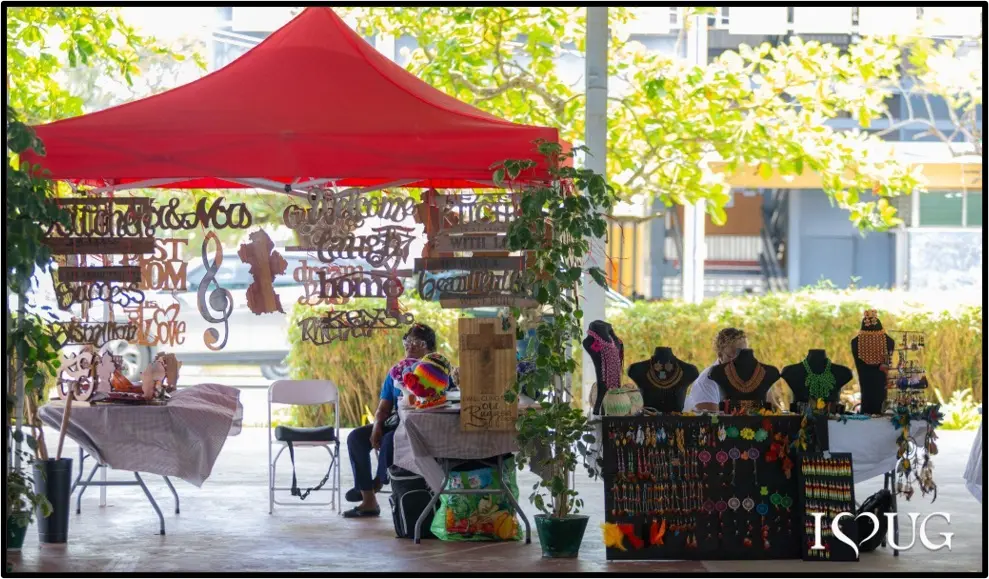
On October 14, 2026, a formal closing ceremony hosted at Grand Coastal Inn Hotel on East Coast Demerara marked the official end of the on-the-ground implementation phase of the Prevention of Marine Litter in the Caribbean Sea (PROMAR) project in Guyana, following a day-long Circular Economy Expo held earlier that week at the University of Guyana’s Turkeyen Campus. Spearheaded locally by the University of Guyana’s Faculty of Earth and Environmental Sciences (FEES), the multi-stakeholder initiative was funded by the German Federal Ministry for the Environment, Climate Action, Nature Conservation and Nuclear Safety, and delivered through a collaborative partnership between adelphi’s Green and Circular Economy division, the United Nations Environment Programme (UNEP) Cartagena Convention Secretariat, Guyana’s Environmental Protection Agency, and dozens of cross-sector local stakeholders. Over its implementation period, PROMAR targeted the pervasive flow of land-based single-use and packaging plastic waste that seeps into local rivers, coastal habitats, and eventually the wider Caribbean Sea, deploying a holistic framework that combines rigorous waste monitoring, community-led circular economy pilots, national policy advisory support, widespread public awareness campaigns, and cross-sector partnership building to replace linear “use-and-discard” material management systems. The October 13 Circular Economy Expo served as a hands-on showcase of the project’s tangible deliverables, displaying community upcycled goods, demonstrations of polyethylene terephthalate (PET) plastic processing, and the newly deployed equipment distributed to local partners including mechanical shredders and 3D-printing filament makers that turn post-consumer waste into usable new materials. The event drew researchers, small business owners, government officials, students, community leaders, and financial sector representatives to identify new collaborative pathways to scale waste-to-value models. During the expo, PROMAR Guyana Project Lead and FEES lecturer Professor Temitope Oyedotun emphasized that the initiative’s core mission was to dismantle long-held cultural assumptions about waste, stating, “The waste will not be treated as waste, but the waste will be treated as vital resources.” Amarnath Munnolimath, Head of Green and Circular Economy at adelphi, echoed this framing by highlighting the untapped economic potential embedded in repurposed waste, noting that intentional waste reduction, value creation, and circular systems design could drive inclusive local economic growth rather than framing sustainability as a cost burden. Beyond on-the-ground waste processing pilots, the project has embedded long-term institutional capacity within Guyana’s higher education system: custom circular economy assessment courses have been developed for potential full integration into the University of Guyana’s formal curriculum, while modules for marine litter monitoring and coastal environmental management are being woven into existing related academic programs. The PROMAR team also provided technical expertise to advance national packaging waste policy, including frameworks for extended producer responsibility (EPR) that hold product manufacturers accountable for end-of-life management of their packaging, alongside contributing standardized data to regional Caribbean marine litter monitoring networks. UNEP Cartagena Convention Secretariat representative Tracy Phillips underscored that marine pollution cannot be addressed through shoreline cleanup efforts alone, noting that the root of the crisis lies in upstream decisions around product design, import rules, consumption patterns, and the absence of functional material recovery markets. At the formal closing ceremony, partners distributed appreciation awards to recognize the contributions of community volunteers, researchers, civil society groups, and government teams that supported project delivery. All lead speakers stressed that the conclusion of the formal implementation phase does not mark the end of PROMAR’s mission in Guyana. Munnolimath noted that while technical tools, research reports, and equipment provide a foundational framework, it is sustained community buy-in and cross-sector collaboration that will turn short-term project outcomes into permanent systemic change. Phillips added that the initiative’s true success will not be measured by completed deliverables at the close of funding, but by the extent to which the knowledge, partnerships, and circular systems built over the project’s lifespan continue to drive progress toward zero plastic leakage into Guyana’s marine ecosystems. For the University of Guyana, the end of the implementation phase acts as a launchpad to scale the tested circular economy models, expand multi-stakeholder partnerships, and advance the national transition away from linear waste management toward a regenerative system that supports cleaner inland communities and a healthier Caribbean marine environment.
University of Guyana advances circular economy action as marine litter prevention project ends in Guyana