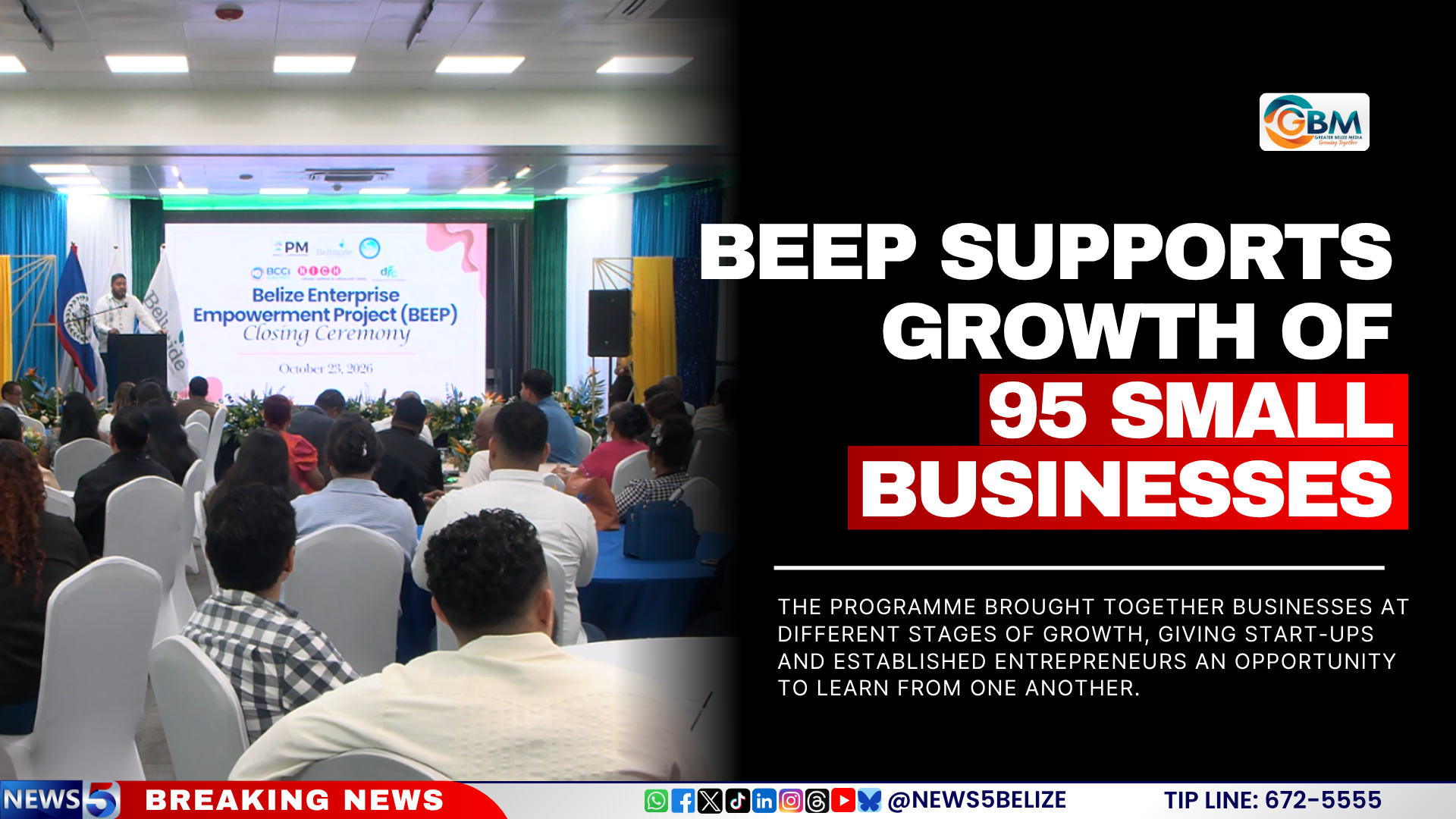
On October 23, 2026, the Belize Trade and Investment Development Service (BELTRAIDE) marked the official close of its landmark Belize Enterprise Empowerment Project (BEEP) at a formal closing ceremony, capping off a two-year initiative that has delivered transformative support to 95 local micro, small and medium-sized enterprises (MSMEs). Launched in August 2024 as a full replacement for the earlier Belize Enterprise Revolving Fund, BEEP was co-designed with the Caribbean Development Fund to resolve longstanding unmet financing and operational support gaps for growing local businesses, disbursing a total of $788,000 in combined direct financial assistance to its cohort of beneficiaries.
Far from operating as a standard small business grant scheme, BEEP wrapped its direct funding offerings with a comprehensive suite of non-financial resources tailored to the unique needs of Belize’s diverse entrepreneurial ecosystem, according to Monique Usher, BELTRAIDE’s Deputy Executive Director. Usher explained that every beneficiary accessed targeted capacity-building workshops, one-on-one dedicated business advisory support, and flexible financing packages, rather than only receiving monetary disbursements.
The program was intentionally structured to serve three distinct segments of the small business community: early-stage startups, already operating maturing enterprises, and firms actively laying groundwork to enter regional and international export markets. Its eligibility framework also prioritized underrepresented operators in the creative and service sectors, ranging from traditional artisans, floral arrangers and funeral service providers to digital marketing agencies and independent product-focused ventures.
A core design goal of BEEP was to address pervasive gaps in formal business training that had held back many local operators for years, including long-running ventures that had never accessed structured upskilling resources. The program delivered fully customized advisory training tracks tailored to the specific maturity level and operational gaps of each participating business, rather than applying a one-size-fits-all curriculum. Beyond formal training and funding, the initiative also curated structured peer networking opportunities that connected entrepreneurs across different stages of growth, enabling startup founders to draw insights from seasoned operators and more established firms to gain fresh perspectives from emerging innovators, fostering a collaborative, supportive local entrepreneurial community.