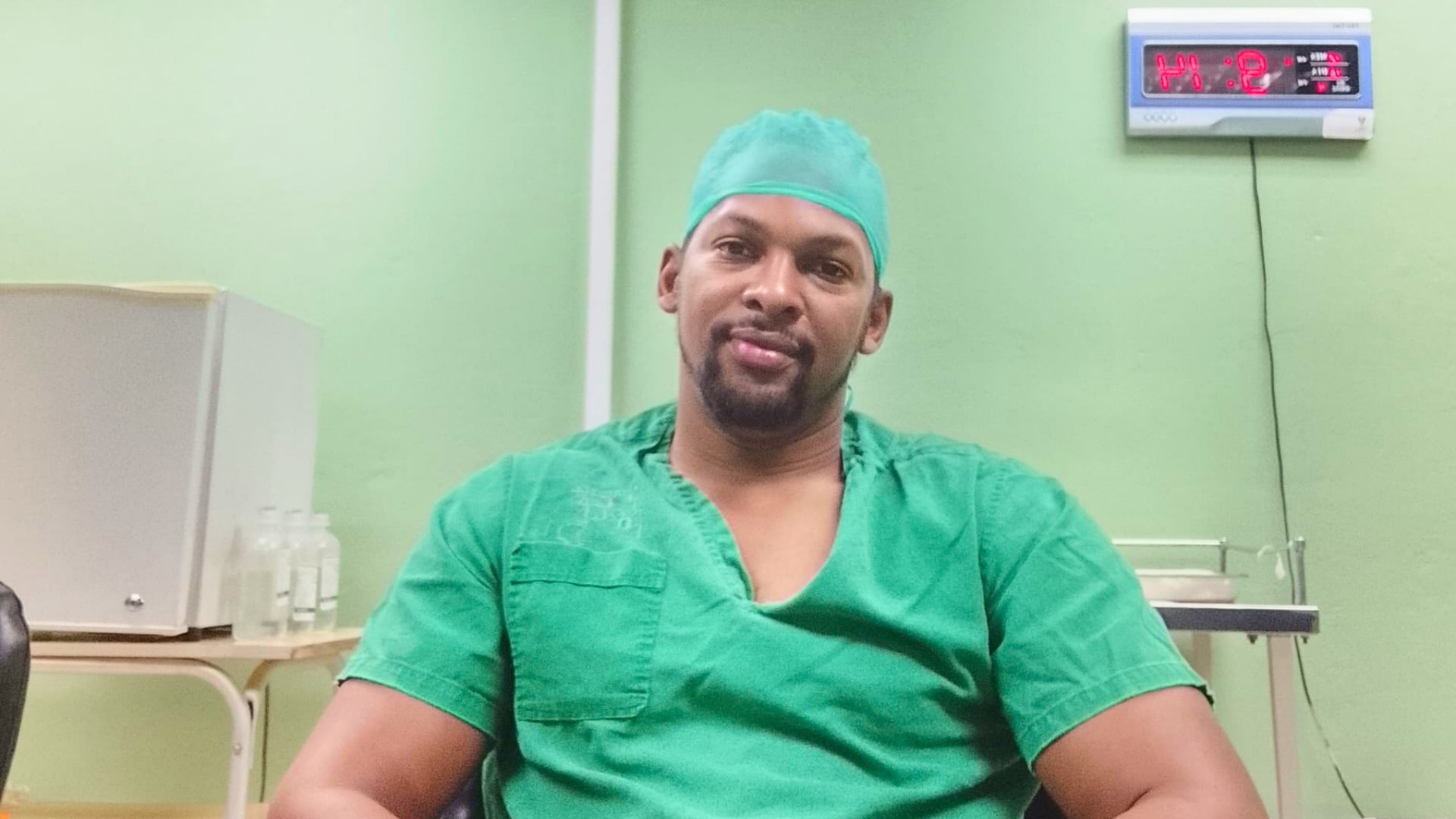
When Lestin Celestin stood at his thesis defense, moments away from formal confirmation of his Master of Interventional Cardiology credential, the choice to accept his promotion carried far greater weight than a routine academic milestone. That formal sign-off would mark the end of years of targeted training, and make Celestin the first and only locally based interventional cardiology specialist in Saint Lucia, poised to address a long-unmet need in the island nation’s public health ecosystem.
Interventional cardiologists are highly trained medical professionals who treat life-threatening conditions including ischaemic heart disease, a widespread ailment that develops when the arteries supplying blood to the heart narrow or become blocked, triggering heart attacks and cascading long-term complications such as heart failure. Using precise, minimally invasive procedures, these specialists can restore blood flow to damaged cardiac tissue, drastically reduce patient risk of permanent harm, and drastically improve long-term health outcomes for people living with cardiac conditions.
For years, Saint Lucia has lacked widespread, accessible access to these life-saving services. The only interventional cardiology care available on the island is offered at the private Tapion Hospital, delivered by overseas-based specialists who make periodic, limited visits, leaving most local patients with no reliable, timely pathway to this critical care. Unlike peer Caribbean nations Barbados and Trinidad and Tobago, which operate fully functional cardiac catheterization labs integrated into their public healthcare networks, Saint Lucia’s major public hospital facilities have no dedicated units for these specialized procedures.
Celestin, who completed his latest advanced training at Havana’s Instituto de Cardiología y Cirugía Cardiovascular, remains undeterred by that systemic gap, and is convinced building a local public-facing interventional cardiology service is a feasible, achievable goal. “Setting up a dedicated lab is far less resource-intensive than many other specialized medical units,” he explained in an interview with the *St Lucia Times*. “Full cardiac surgery requires a massive, multi-disciplinary team, but interventional cardiology only needs a well-trained, cohesive group of staff. This is absolutely something we can build in Saint Lucia. My core priority is to help our country reach a point where all residents can access this high-level specialized care, particularly for life-threatening ischaemic heart disease.”
That driving vision carried Celestin through 18 months of grueling study in Cuba, a period marked by severe daily hardships driven by intensified U.S. sanctions, widespread fuel shortages, rolling multi-hour power outages and broader economic crisis across the island. His determination to fill the unmet need back home was also the core motivation that pushed him to compete for the highly selective specialized medical placement in the first place. “I have no opposition to private healthcare, but I believe far more Saint Lucian families deserve reliable access to these life-saving interventions,” he noted.
Celestin’s path to this milestone stretches back to 2019, when he graduated as a general medical doctor from Cienfuegos Medical Science University (CMSU) under the bilateral Saint Lucia-Cuba scholarship programme, before returning home to complete clinical residencies at Saint Lucian healthcare facilities. He then went back to Cuba to earn his Clinical Cardiology Specialist Degree from CMSU, before enrolling in the competitive interventional cardiology master’s programme in January 2025. He was only able to secure a partial merit-based scholarship for this final phase of training, requiring him to cover the remaining financial costs out of pocket, a burden he says was fully justified by the outcome. “I felt far more joy graduating as an interventional cardiologist than I did when I finished my general cardiology qualification, because this is the milestone I have been working toward for years,” he shared. Over the 18-month programme, he gained extensive hands-on clinical experience working alongside Cuban care teams, supporting no fewer than five interventional cardiology cases per day.
Celestin is currently in the process of formalizing the translation and accreditation of his Cuban qualifications to meet regional medical regulatory requirements. While he has already received preliminary career offers from across the Caribbean via professional colleagues, his top priority remains bringing his newly honed expertise back to his home country to build the long-missed public interventional cardiology service for Saint Lucian residents.