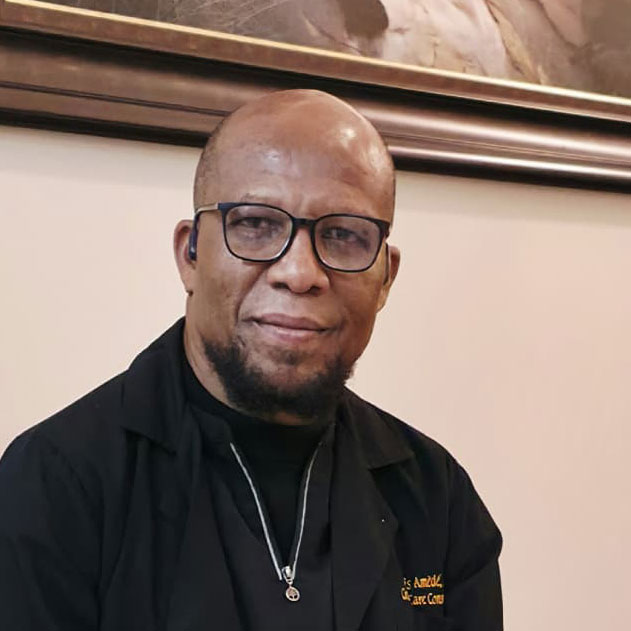
By Francis Amede, MD
In the second installment of this analysis, we build on earlier exploration of a core paradox at the heart of democratic governance: political factions that run for office on pledges to uphold free expression often grow hostile to that very right once in power, when members of the public challenge flawed policies, demand greater transparency, or question official decision-making. We previously examined the framework laid out in Muammar Gaddafi’s *The Green Book*, particularly its critique of overbearing party dominance and advocacy for expanded direct citizen involvement in public life. While Gaddafi’s own governing system ultimately failed to deliver the democratic freedoms it claimed to prioritize, the questions he raised about structural flaws in political representation, concentrated state authority, and the dynamic between governing bodies and the populations they serve remain deeply relevant for critical inquiry.
For Grenada and the broader Caribbean region, identifying these systemic gaps is only the first step. The far more formidable task is designing pathways that allow ordinary citizens to exert meaningful, tangible influence over public governance without fear of partisan retaliation, while establishing mechanisms to hold elected officials accountable that do not reduce every legitimate public concern to a divisive partisan battle. The core issue at stake is not merely whether citizens hold the constitutional right to voice dissent, but whether their input can drive measurable, positive improvements in the public institutions designed to serve them. This analysis addresses the critical questions facing regional democracies today: what practical, actionable reforms can turn constructive public criticism into corrective institutional action? How can public bodies become more transparent, responsive, and operationally efficient? And most crucially, how can these reforms be shielded from political interference to remain functional across successive changes in administration?
The costs of suppressing or discouraging legitimate public criticism extend far beyond isolated personal conflicts. First, eroding accountability: public officials receive far fewer independent, unfiltered assessments of their decisions, leaving institutions slow to respond to emerging community needs. Second, normalizing political conformity: members of the public may publicly endorse policies they privately recognize as ineffective, while skilled, competent public servants hesitate to propose alternative, evidence-based solutions. Third, eroding public trust: residents who repeatedly raise concerns and receive no meaningful response may eventually conclude that civic participation has no tangible impact. Over time, this widespread political disengagement creates conditions where ineffective, outdated practices become entrenched, as fewer people are willing to challenge them. These outcomes are not inevitable for every Caribbean democracy, but they represent well-documented institutional risks that demand proactive, deliberate attention from policymakers and communities alike.
Drawing lessons from *The Green Book*’s core insight on the value of meaningful public participation, the analysis outlines a suite of practical, nonpartisan institutional reforms for Grenada and neighboring Caribbean nations, aligned with 2022 OECD guidelines for civic engagement. First, the establishment of permanent, nonpartisan community accountability councils in every constituency, composed of diverse local stakeholders including residents, educators, healthcare workers, farmers, small business representatives, youth advocates, and community group leaders. These bodies would hold public quarterly meetings to identify gaps in public services, prioritize local development needs, and submit formal recommendations to relevant government ministries, with a legal requirement for a written official response within 60 days clarifying whether proposals are accepted, modified, or declined. Unlike the flawed model Gaddafi attempted to implement, participation in these councils would remain entirely voluntary, independent, and open to dissenting views, designed to complement rather than replace existing elected representative institutions.
Second, the introduction of legally enforceable public service performance standards, requiring all government departments to publish clear, measurable benchmarks for core services including document processing, business registration, licensing, and healthcare referrals. This reform would include the rollout of integrated, digitally supported public service hubs where residents can complete multiple government transactions in a single location, with regular public performance reports disclosing average processing times, backlogs of pending applications, public complaint volumes, and implemented corrective measures. Residents would be entitled to formal explanations for missed service deadlines, with access to an independent appeals mechanism for unresolved grievances.
Third, targeted strengthening of existing independent oversight bodies including Grenada’s 2009-established Office of the Ombudsman and the Integrity Commission, rather than creating redundant new institutions. Reforms would prioritize securing stable, adequate funding for these bodies, independent, nonpartisan appointment processes for leadership, timely investigation timelines, and regular public reporting on findings. Comprehensive, legally protected whistleblower safeguards would also be introduced to shield individuals who disclose suspected official wrongdoing in good faith, while ensuring fair procedural rights for any person accused of misconduct.
Fourth, a default open government information framework, making public contracts, procurement awards, approved project budgets, implementation timelines, and official performance reports accessible to all residents, with only narrow, clearly defined exceptions for legitimate national security and personal privacy protections. A robust freedom of information law would set strict response deadlines for public records requests, limit permissible grounds for refusal, and establish an independent appeal process for rejected requests, aligning with UNESCO’s recognition of access to information as a foundational pillar of free expression and meaningful civic participation.
Fifth, the launch of a national public accountability dashboard, a publicly accessible digital platform that tracks major government commitments and public spending across successive administrations. The platform would publish standardized, measurable indicators including healthcare wait times, public safety metrics, government service processing speeds, public project expenditure, and rates of citizen complaint resolution, with all data independently verified by external auditors to ensure full accuracy, and equal open access for political parties, journalists, researchers, and ordinary residents.
To ensure these reforms remain sustainable beyond individual political administrations, a series of binding safeguards would be embedded into their legal framework: all core accountability mechanisms would be established via primary legislation with clearly defined powers and reporting requirements; oversight bodies would receive guaranteed, multi-year funding and transparent appointment processes insulated from partisan political interference; performance data would be published on a fixed quarterly schedule, paired with independent annual third-party evaluations; governments would be legally required to issue public responses to all formal community recommendations explaining their decision-making rationale; and cross-sector civic education programs, supported by Grenada’s existing UNESCO partnership on media and information literacy, would be rolled out in schools, universities, professional associations, and community groups to help residents distinguish legitimate political disagreement from personal hostility.
The ultimate test of democratic leadership is not the ability of ruling authorities to silence public criticism, but the capacity of public institutions to respond constructively to legitimate community concerns. While Gaddafi’s *The Green Book* raised valuable questions about the risks of concentrated party power and the limits of traditional representative governance, Libya’s subsequent history also exposed the critical danger of promising popular sovereignty while failing to protect independent political expression. For Grenada and the wider Caribbean, the path forward lies in cultivating a more participatory model of democracy that preserves constitutional governance, political pluralism, and individual civil liberties. Citizens must remain free to scrutinize public spending, challenge ineffective policies, demand improved healthcare access, review government contracts, and propose alternative solutions without being automatically branded as partisan political opponents. In turn, elected leaders deserve fair, evidence-based evaluation of their performance that accounts for available resources, institutional constraints, and tangible outcomes, rather than unsubstantiated personal accusations. The core guiding principle is simple: accountability cannot be conditional on which political party holds power, which individual raises a concern, or whether criticism aligns with partisan political convenience. It must be embedded into the day-to-day functioning of public governance. When constructive public criticism is accepted as a legitimate tool for institutional improvement rather than a perceived threat to political survival, communities and public institutions alike can correct missteps long before they become entrenched, costly failures. By requiring governments to explain their decisions, measure their performance, and remain responsive to the public between election cycles, democracy takes on a far deeper meaning than the simple act of casting ballots. The fundamental purpose of political power is never to prioritize the survival of a political party at the expense of the people it serves, but to deliver public good through strong, independent institutions that hold every administration to the same consistent standard of accountability.
Political power versus free speech: Part 2