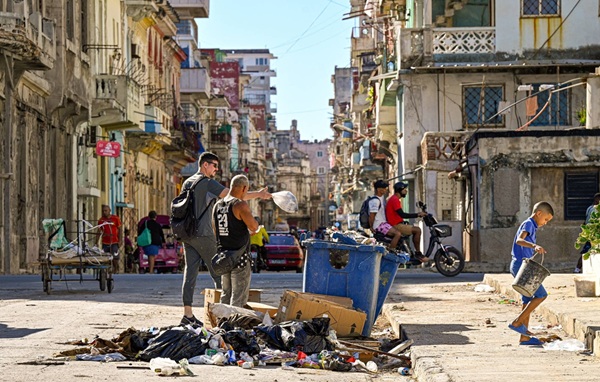
On October 24, 2026, a group of nine former Caribbean Community (CARICOM) heads of government, led by ex-Guyana President Donald Ramotar, released a unified public statement calling on every nation across the globe to reject ongoing U.S. lobbying and coercive tactics, and cast their votes in favor of an upcoming United Nations General Assembly (UNGA) resolution that would formally demand an end to Washington’s decades-long economic, commercial and financial embargo against Cuba. The high-stakes global vote is scheduled to take place on October 28, 2026. The distinguished cohort of signatories also includes Freundel Stuart, former Prime Minister of Barbados; Said Musa, former Prime Minister of Belize; Dr. Keith Mitchell and Tillman Thomas, both former Prime Ministers of Grenada; Bruce Golding and P.J. Patterson, two ex-Prime Ministers of Jamaica; and Dr. Ralph Gonsalves, former Prime Minister of St. Vincent and the Grenadines. Notably, Ramotar’s public advocacy for the Cuban cause comes at a time when the current People’s Progressive Party Civic (PPPC) administration in Guyana, the same left-leaning party he once led during his presidential tenure, has effectively severed the longstanding friendly diplomatic ties between Georgetown and Havana, while simultaneously forging unprecedented deep partnerships with the U.S. across military, security, economic and political domains. Sitting Guyana President Irfaan Ali has previously made public statements advocating for gradual, incremental political shifts toward rule of law, multi-party democracy and expanded personal freedoms within Cuba. In their joint communiqué, the group of mostly left and centre-left former regional leaders emphasized that the long-running U.S. embargo against Cuba fundamentally contravenes established international legal frameworks, as well as every universally recognized civilized standard for human dignity and equitable coexistence. They stressed that this year’s UNGA vote carries unprecedented urgency, as the administration of former U.S. President Donald Trump has recently intensified restrictive trade measures targeting the Caribbean island nation. In recent months, the U.S. government has escalated its extraterritorial third-party sanctions, imposing punitive measures against any foreign government, business or organization that supplies, sells or transports energy products including gasoline and diesel to Cuba. The former CARICOM leaders argue that these measures are deliberately designed to deprive ordinary Cuban citizens of critical resources and coerce the population into political submission. The signatories went on to state that Washington’s persistent disregard for repeated overwhelming UNGA votes calling for an end to the embargo represents a total rejection of the international community’s collective will, basic norms of international law and foundational civilizational principles. They characterized the U.S. unilateral coercive measures as patently inhumane, noting that the ongoing embargo poses a tangible threat to cross-hemisphere and global peace and security, constitutes a flagrant violation of Cuba’s inherent rights to national sovereignty and independent self-determination, and systematically erodes the basic fundamental human rights of the Cuban people that are enshrined in binding international legal conventions. The group further asserted that these U.S. actions amount to a rejection of rules-based global governance, representing a return to the unprincipled “law of the jungle” that cannot be justified under the United Nations Charter or any established framework of international justice. The former regional leaders also highlighted that Cuba poses no credible military or security threat to any country or individual anywhere on the planet, and called on all member states of the United Nations to contribute to healing the long-running diplomatic rift between the U.S. and Cuba by voting in support of the upcoming resolution. They closed their public appeal with a rousing call for global solidarity, urging all nations to “stand with Cuba and with shared humanity” when the measure comes before the General Assembly later that week.