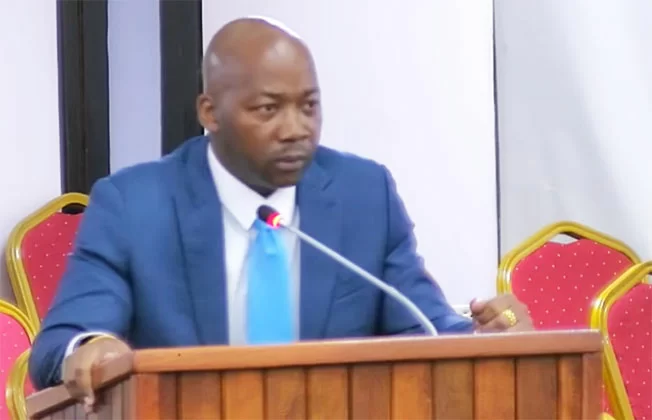
On October 23, during a parliamentary session in Suriname’s National Assembly (DNA), Minister of Natural Resources David Abiamofo laid out a stark overview of the country’s national drinking water system, operated by the state-owned Surinaamsche Waterleiding Maatschappij (SWM). The core crisis facing the public utility is a crippling lack of operating capital that prevents it from bringing coastal area drinking water services up to required public health and reliability standards.
Abiamofo explained that SWM already has a fully developed master plan for system upgrades, but cannot execute the required large-scale investments to replace decades-old, corroded pipelines and outdated water extraction pumps, as well as extend service connections to fast-growing new residential neighborhoods across the coastal zone. Compounding the funding gap is the fact that regulated retail water tariffs remain far below actual operational and maintenance costs, while promised government operating subsidies have never been disbursed, and multiple national government ministries are delinquent on their own outstanding water bills owed to SWM.
Lawmakers raised additional public concerns during the session, highlighting exorbitant one-time connection fees that can reach up to 237,000 Surinamese dollars for households seeking to link to the public water main, a cost many low-income coastal families cannot afford. Abiamofo acknowledged that laying primary water distribution lines is legally a core government public responsibility, but confirmed that neither SWM nor his ministry currently holds the budget to fund all required network expansions. He noted that SWM and the national energy utility EBS already offer flexible payment plans for connection costs, and committed to review a formal parliamentary request to extend the current 6-month repayment window to 12 or 24 months to reduce household financial strain.
While the coastal system faces immediate fiscal pressures, Abiamofo also outlined parallel progress on rural drinking water access for Suriname’s inland communities. The Inter-American Development Bank-funded BioSuite initiative will deliver safe drinking water, renewable energy and telecommunications infrastructure to 26 inland villages, including 10 Indigenous communities in the southern region, 14 settlements in the Upper Saramacca and Matawai areas, and two villages in Brokopondo. A separate 26-village water access project, backed by grant funding from the Government of China, has just received formal approval for an expanded budget to complete all planned installations. Additional local water projects funded via the national federal budget are underway in communities including Boslanti, Stoelmanseiland, Dangogo, Nieuw-Jacobkondre and Nieuw-Aurora. The minister confirmed that a recent water supply outage in the remote village of Kwamalasamutu has been fully repaired, and administrative processes to formally transfer a third-party built water system in Tipu to local operators are underway to establish long-term scheduled maintenance.
Abiamofo emphasized that SWM holds full public health certification for its distributed tap water, and that water quality safety is strictly guaranteed for all connected households. He noted that Suriname still has significant ground to cover to reach universal, reliable water access, and reaffirmed the government’s formal commitment to meet the United Nations Sustainable Development Goal of 100% national access to safe drinking water for all residents no later than 2030.
Abiamofo: SWM mist geld voor noodzakelijke investeringen in drinkwater