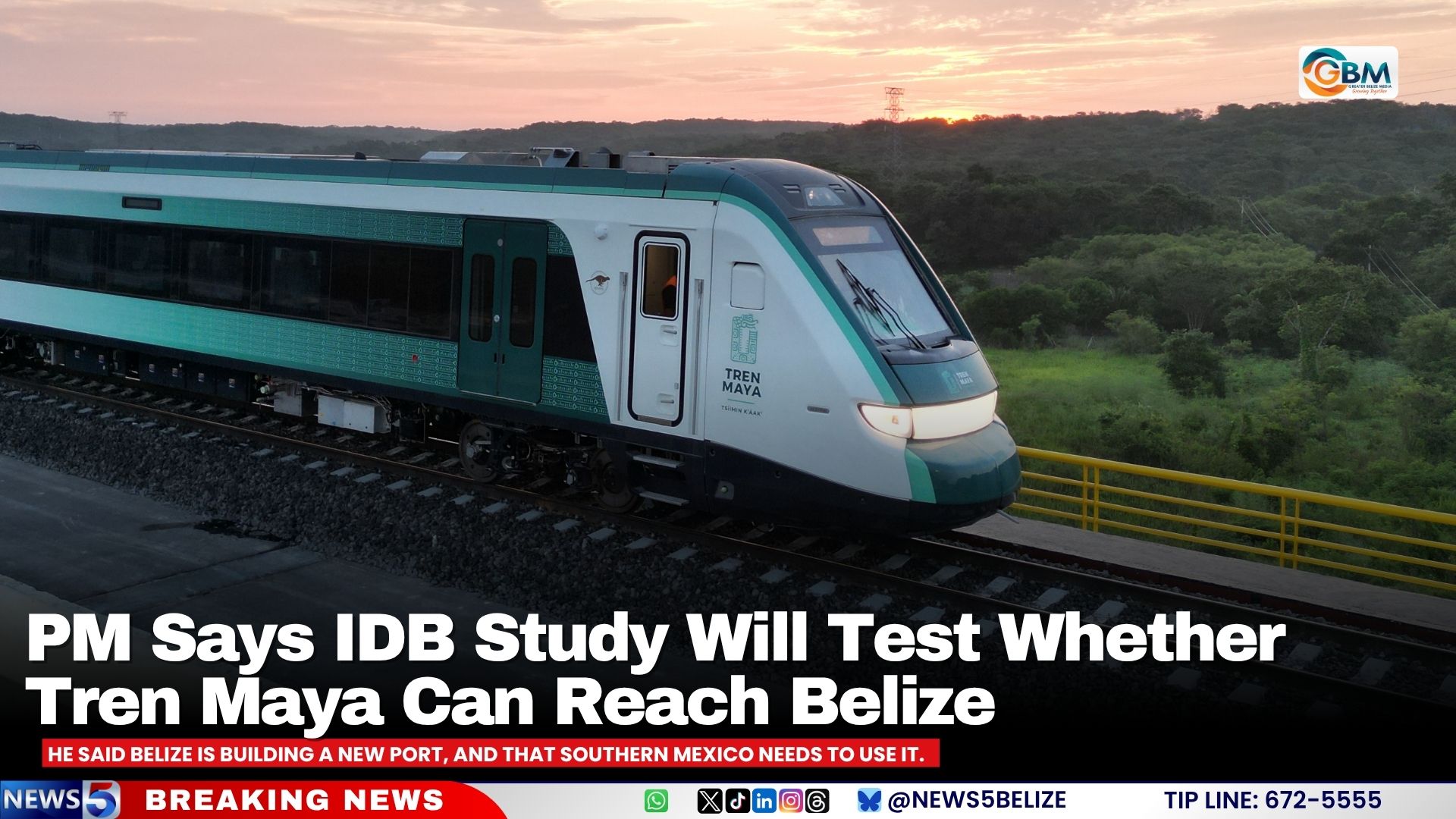
On October 23, 2026, Belizean Prime Minister John Briceño announced that the Inter-American Development Bank (IDB) has launched a formal feasibility assessment to map out the technical, financial, and logistical requirements to extend Mexico’s landmark Tren Maya passenger and freight railway network into Belize, with a long-term vision to link the line onward to Guatemala. The proposed cross-border rail connection is framed as a transformative catalyst for regional economic integration, with dual core benefits for Belize’s fast-growing tourism sector and its underdeveloped maritime trade infrastructure.
Briceño outlined that the planned multi-node rail corridor would first connect the extended Tren Maya route from southern Mexico into Belize’s capital Belize City, before continuing east to link with Guatemala’s national transport network. The project aligns with Belize’s ongoing construction of a new, purpose-built deep-water port, which officials note addresses a critical unmet demand from southern Mexican commercial operators that currently lack efficient, low-congestion access to Atlantic maritime trade routes. The prime minister highlighted that Guatemala’s existing Atlantic coast port facilities are severely overstretched, with cargo vessels regularly facing wait times of three weeks or longer to offload shipments due to limited capacity. A modernized Belize port paired with the cross-border rail link would create a streamlined transshipment hub, allowing large cargo vessels to dock in Belize, transfer goods to freight rail, and move shipments efficiently to markets in Guatemala, southern Mexico, and across the wider Central American isthmus.
While emphasizing the significant long-term economic upside of the integrated rail and port project, Briceño also tempered public expectations by noting that the initiative represents a major, multi-year capital investment that will not deliver immediate returns. He drew a parallel to large-scale public infrastructure projects such as new airport construction, which typically require years of operations to reach profitability and full utilization. At this stage, no finalized cost estimates, specific route alignments, or formal construction timelines have been released, as the ongoing IDB study is tasked with generating the empirical data required to de-risk the investment. Briceño added that existing informal cross-border trade flows between Belize, Mexico, and Guatemala already provide a solid foundational demand base that the extended rail network would formalize and scale for broader economic gain.
PM Says IDB Study Will Test Whether Tren Maya Can Reach Belize