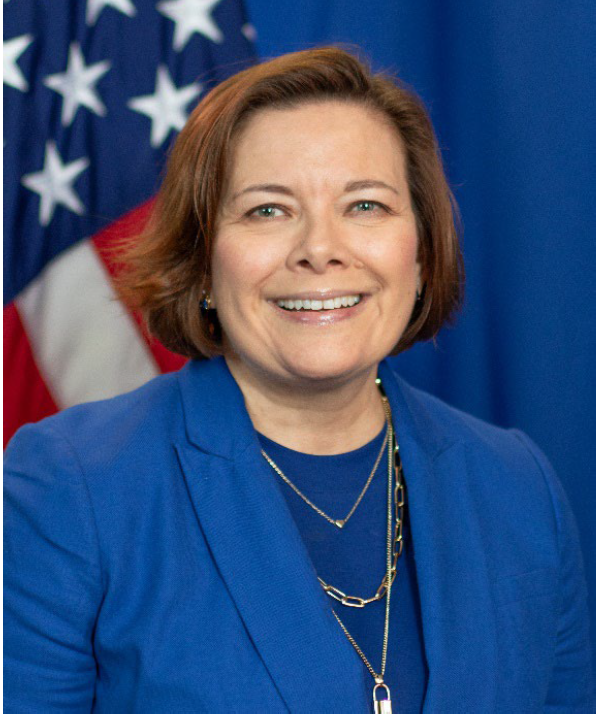
As the United Nations General Assembly prepares to vote on Cuba’s annual resolution addressing U.S. economic restrictions on October 28, a senior U.S. diplomatic representative to the Eastern Caribbean has issued a sharp rebuke of what he calls Havana’s false propaganda blaming Washington for the island nation’s ongoing humanitarian and economic crises.
Karin Sullivan, Chargé d’Affaires at the U.S. Embassy to Barbados, the Eastern Caribbean, and the Organization of Eastern Caribbean States (OECS), outlines in a new op-ed that while the hardship facing ordinary Cuban people is undeniable, the Cuban regime’s long-standing attempt to pin all blame on U.S. measures ignores fundamental domestic failures. Sullivan clarifies widespread misinformation about U.S. policy: current U.S. economic restrictions do not block Cuba from accessing global markets or trading with third countries, and U.S. law explicitly permits the export of food, medicine, and critical medical equipment to the island. Data from 2025 shows U.S. exports to Cuba topped more than $810 million in that year alone, proving that access to goods is not the core issue, Sullivan argues.
Beyond economic mismanagement, the op-ed frames the Cuban government as an aggressive actor that undermines regional security. For more than 60 years, Sullivan claims, Havana has armed, trained, and supported tens of thousands of militants across multiple continents, backed violent revolutionary movements, and supported extremist networks linked to bombings, assassinations, and the deaths of U.S. citizens. Positioned just 90 miles off the U.S. coast, a Cuban regime aligned with U.S. geopolitical adversaries poses a direct threat not only to the United States but to all Caribbean nations, the argument continues.
Sullivan goes on to detail how domestic policy choices, not external restrictions, have created widespread shortages and blackouts across Cuba. Between late 2024 and late 2025, Venezuela supplied Cuba with approximately 70,000 barrels of crude oil per day – enough to address most domestic energy needs, Sullivan notes. But instead of directing that fuel to domestic power grids and public services, the Cuban regime sold roughly 60 percent of the shipment to Asian markets to generate hard currency. Budget priorities also reflect the regime’s focus on consolidating power: in 2024, the Cuban government spent 11 times more funding its military-controlled tourism sector than it allocated to healthcare and education combined. As a result, empty tourist hotels receive consistent electricity while ordinary Cuban families face widespread blackouts, and children go without critical medicine and basic nutrition.
The lion’s share of any economic gains from current policies is captured by a small elite connected to the regime, Sullivan claims. Military-led conglomerates including GAESA dominate the Cuban national economy, holding billions of dollars in hidden overseas accounts while everyday citizens struggle to access basic food and reliable power. U.S. Secretary of State Marco Rubio summed up this dynamic, saying, “The suffering in the rural areas of Cuba is acute and deep. It’s not because of the embargo. It’s because they don’t know how to run an economy.”
Sullivan also calls out the Cuban regime’s medical labor export program, which is marketed to Caribbean nations as humanitarian aid. In practice, host countries pay premium rates for Cuban medical professionals, but the regime seizes between 50 and 95 percent of the workers’ wages, confiscates their identity documents, and restricts their freedom of movement. Sullivan labels this practice not humanitarian assistance, but modern forced labor.
The op-ed emphasizes that the Trump Administration draws a clear distinction between the Cuban people, who the U.S. seeks to support, and the authoritarian regime that oppresses them. To date, the U.S. has provided $9 million in direct humanitarian aid to Cubans most severely affected by Hurricane Melissa, distributed through the Catholic Church. An additional $100 million in aid is being delivered via Catholic Relief Services and Samaritan’s Purse, with measures in place to ensure no funds flow to the Cuban regime. This assistance comes as the Cuban government detains more than 800 political prisoners, many jailed solely for exercising free speech, Sullivan adds.
In closing, Sullivan warns that Eastern Caribbean nations that vote in favor of Cuba’s UN resolution are effectively enabling a dictatorship that represses its own population, exports violence and extremism, and threatens hemispheric stability. The op-ed urges regional partners to publicly reject the regime’s narrative and pressure Havana to enact meaningful reform, instead of allowing it to continue shifting blame for its own failures. “The Cuban people deserve a future free from the regime that has failed them, not another year of its excuses,” Sullivan writes.