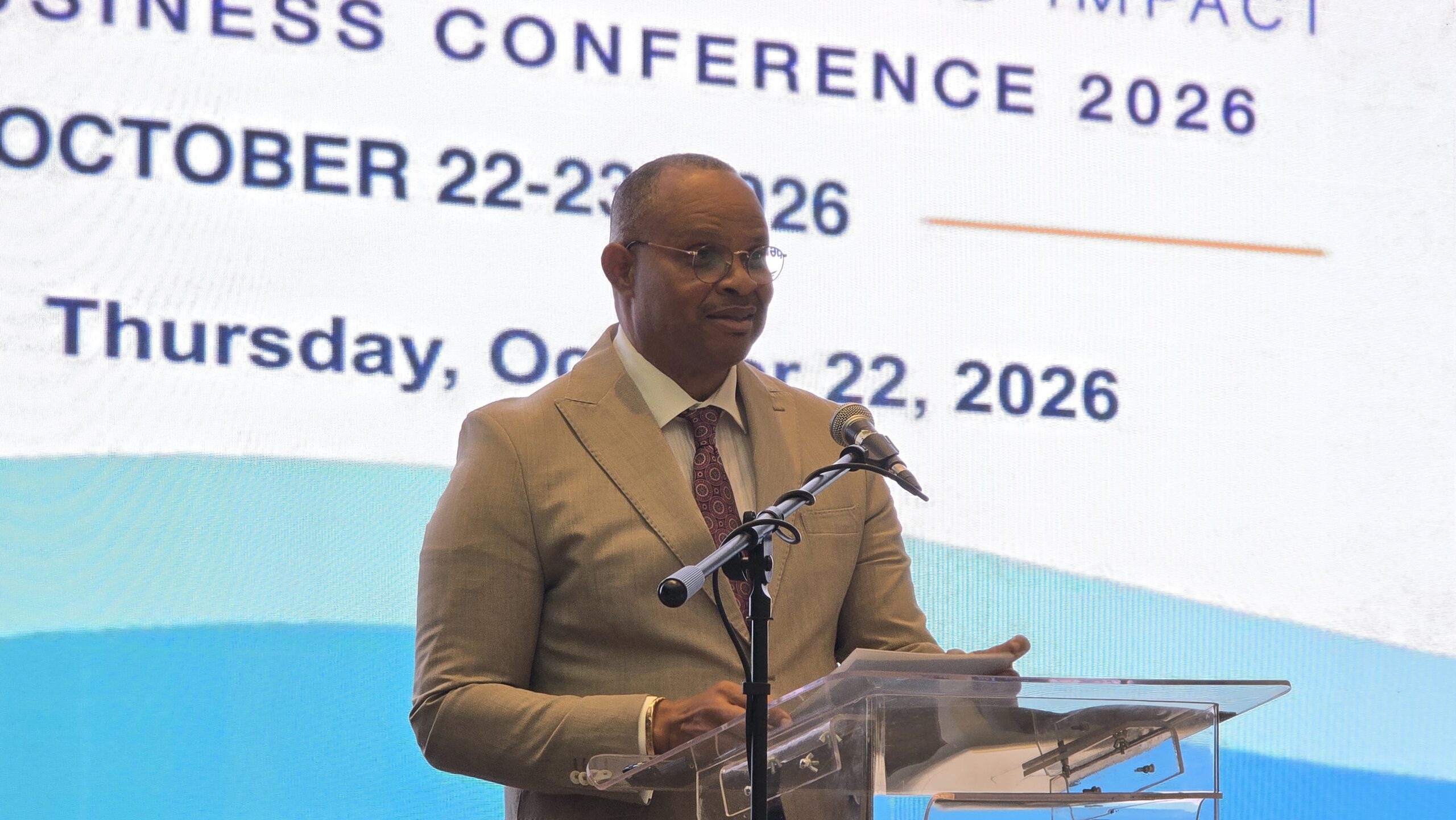
As the United Nations faces sweeping organizational reforms driven by budget shortfalls that threaten deep funding cuts and a potential merger of the Economic Commission for Latin America and the Caribbean (ECLAC), Barbados has stepped forward to safeguard the Caribbean region’s long-standing access to the commission’s critical evidence and research, according to the country’s Foreign Minister, Senator Christopher Sinckler.
In an exclusive interview with Barbados TODAY, Sinckler explained that the UN system is currently grappling with severe financial strain, sparked by dwindling overall resources and widespread delays and failures in member states paying their required institutional contributions. This fiscal pressure has forced ECLAC leadership to draft a bold new strategic framework for the next three to five years, refocusing the commission’s work to center on the most pressing challenges facing the Latin America and Caribbean (LAC) region.
The updated strategic agenda tackles a broad range of high-stakes issues, from sovereign debt restructuring and global financial system reform to the accelerating climate crisis, economic and social resilience, the integration of artificial intelligence into regional governance, and the shifting tides of global geopolitics—including ongoing tariff disputes, trade conflicts, and the ripple effects of active military conflicts around the world. Sinckler confirmed that the commission’s leadership has already finalized the strategic roadmap document, which outlines priorities aligned with on-the-ground needs across the region.
A high-profile advisory committee, led by Barbados Prime Minister Mia Mottley, prominent development economist Professor Keith Nurse, and former Chilean President and UN human rights chief Michelle Bachelet, played a central role in designing ECLAC’s revised operating model. This new structure was built from the ground up to account for the coming reductions in both financial and human resources that ECLAC will face as part of UN reforms. While the full UN restructuring process is still ongoing, Sinckler confirmed that significant budget cuts are all but guaranteed, and a full merger of ECLAC into another UN body remains a likely outcome once the process concludes.
Barbados’s core mandate throughout the restructuring negotiations has been to advocate for the specific needs of Caribbean nations, mirroring the advocacy efforts of Latin American countries for their own regional priorities, before final sign-off on the new framework. For more than 70 years, ECLAC has filled an irreplaceable gap for small Caribbean states, providing high-quality empirical research and standardized data that supports decision-making across the public sector, private industry, and civil society.
Sinckler emphasized that empirical research and large-scale data collection are prohibitively expensive for many small island developing states in the Caribbean, most of which lack the domestic budget to expand these capabilities on their own. “ECLAC has been there for us over many decades, both private sector, public sector, and civil society, and so our thing is to ensure that it can continue,” he noted.
One of the commission’s most impactful ongoing initiatives is its capacity-building work with national statistical agencies across the region. ECLAC experts help local departments upgrade their systems, adopt modern digital tools and technologies, and produce consistent, internationally comparable data that is relied on by policymakers crafting national policy and private sector investors evaluating market opportunities. Sinckler highlighted that this work has positioned ECLAC as a regional leader in statistical development across the Caribbean, supporting continuous improvement in data literacy and analytical capacity for member states.
Sinckler stressed that Caribbean nations must have a seat at the table for all decisions about ECLAC’s future to guarantee that the region’s unique priorities are not sidelined by external actors whose interests do not align with those of small island states. “In institutions, an individual view of what may be important or a group’s view of what may be important may not be what is important to us. So we have to be at the table to ensure that our agenda is there. We know what our issues are,” he said.
For the Caribbean, those core priorities revolve around building systemic resilience across every sector of the economy and society. This includes strengthening financial resilience to withstand global economic shocks, boosting climate resilience to adapt to rising sea levels and extreme weather events, and addressing pressing social challenges ranging from rising rates of non-communicable diseases to expanding investment in education, digital transformation, healthcare infrastructure, and sustainable development.
Even amid the uncertainty of UN restructuring, Sinckler reaffirmed that ECLAC remains one of the most trusted regional institutions for Barbados and the wider Caribbean. “There are a number of agencies that we can rely on, but ECLAC has been consistent in producing credible data, credible analysis for Barbados and the Caribbean, and we know we can rely on them. And that’s why we’re there,” he said.