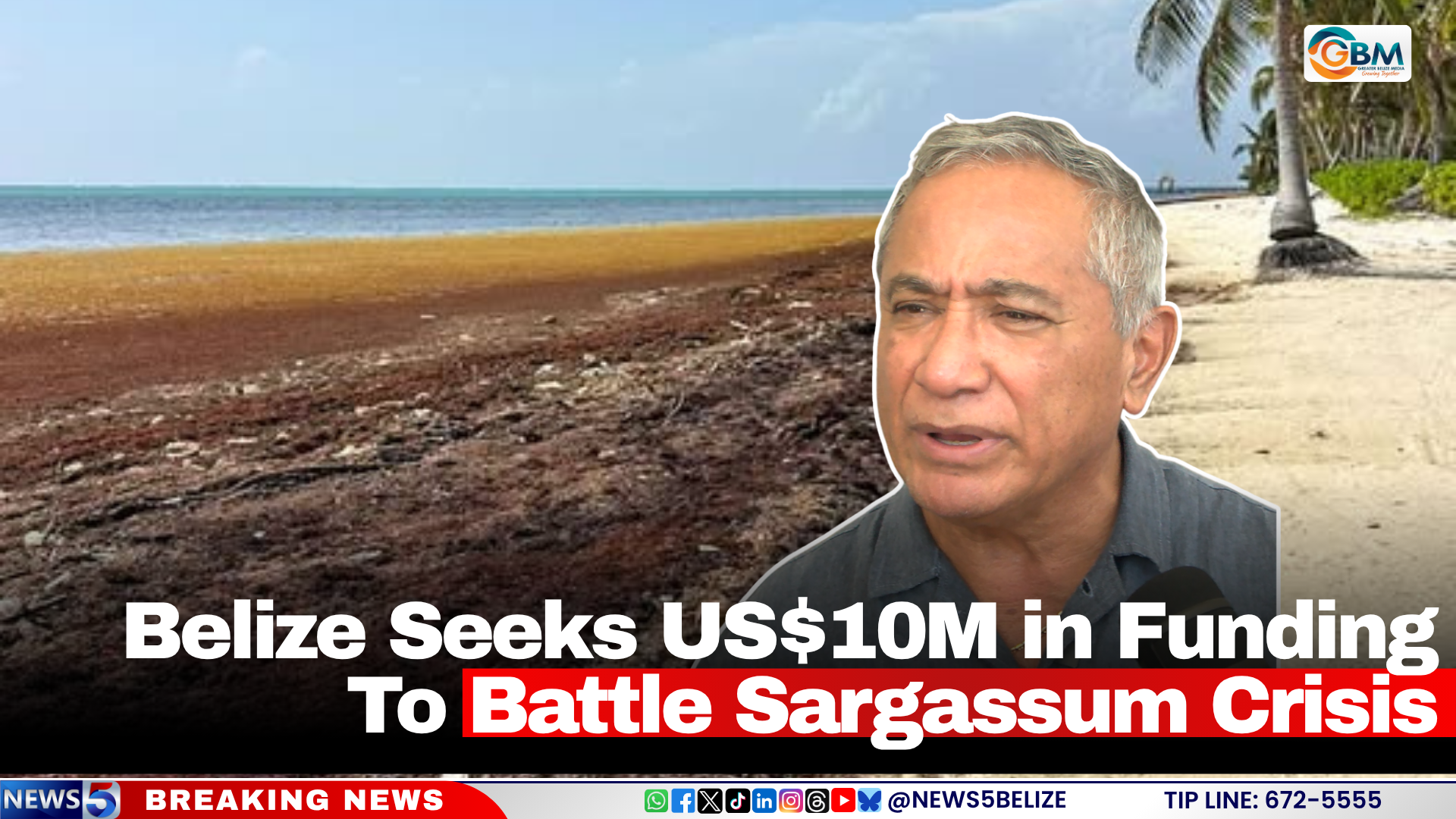
Against a backdrop of accelerating climate change that has amplified a transboundary ecological threat across the Caribbean, the Central American nation of Belize has launched a push to secure an initial $10 million in concessional financing from the World Bank to counter its growing sargassum crisis. Prime Minister John Briceño detailed the government’s funding strategy in recent discussions with World Bank representatives, outlining that officials are first targeting $5 million in financing, with a second $5 million tranche to follow. The full $10 million forms the first phase of a broader, $20 million plan that Belize aims to implement to mount a serious, large-scale response to the invasive seaweed inundation.
During talks with bank leadership, Briceño highlighted sargassum as one of three top-priority initiatives Belize has put forward for World Bank support. The other two priority projects include expanding an existing agricultural program that supports small-scale farmers in building resilience to climate shifts, and moving forward with a planned utility-scale energy storage project, which aligns with Belize’s broader climate adaptation goals.
Briceño emphasized that the sargassum crisis is not confined to Belize: it is impacting coastal communities and ecosystems across the entire Caribbean region. He added that human-caused climate change, which Belize contributed very little to, is a key driver of the increasingly severe sargassum blooms that are now threatening the country’s coastlines. Citing the nation’s limited economic resources to address a problem it did not create, Briceño noted that Belize is specifically seeking low-interest loans with extended repayment terms to make the response effort financially feasible.
The urgency of the crisis is already visible on Belize’s iconic coastlines: popular tourist destination Hopkins Beach is visibly shrinking as massive piles of smothering sargassum accumulate along its shore, eroding natural beach habitat and threatening the local tourism economy that supports thousands of Belizean households.