In a landmark step forward for the country’s flagship urban renewal initiative, the Cabinet of Antigua and Barbuda has formally approved a full policy framework governing resettlement, housing allocation, and long-term community management for the newly built Pelican Court residential development, located in Point.
The green light came after Prime Minister Gaston Browne presented a detailed proposal to the body, covering every critical aspect of the project from unit allocation and property ownership structures to financing arrangements, rental provisions, condominium registration protocols, and sustained community governance. This approval marks the most significant milestone to date in the government’s Booby Alley Urban Development and Renewal Project, a transformative initiative that has redeveloped the former informal Booby Alley community into a modern, 150-unit condominium-style housing complex.
Funded by an approximately 50 million Eastern Caribbean dollar grant from the Government of the People’s Republic of China, Pelican Court forms a core part of Antigua and Barbuda’s broader national urban renewal strategy. The overarching goals of this strategy are to upgrade substandard housing across the country, foster structured, sustainable community growth, and deliver dignified, quality accommodation to residents displaced by the redevelopment.
The newly approved policy establishes a clear, equitable structured allocation process that prioritizes former Booby Alley homeowners and other eligible residents, with criteria that take into account each applicant’s previous property holdings, individual living circumstances, and qualification for replacement housing. It outlines specific, fair pathways for all groups of former residents, including original property owners, long-term tenants, individuals who wish to remain in the Bay and Pestaina Streets vicinity, and applicants who do not meet immediate requirements for full homeownership.
To streamline property transitions, the country’s National Housing authority will provide dedicated support for all legal and technical procedures required to complete condominium registration and ultimately transfer property titles to successful homeowners. Cabinet has issued a formal directive to the Ministry of Legal Affairs, National Housing, the Development Control Authority, and the Land Registry to accelerate necessary land surveys, finalize condominium planning documents, complete registration, and process title transfers ahead of occupancy.
In addition to allocation procedures, Cabinet has approved a robust set of binding rules to regulate occupancy and ongoing maintenance of the Pelican Court development. No resident will be allowed to move into a unit without formal written authorization; for those approved to take possession before final title documentation is completed, occupancy will be governed by provisional allocation letters, written binding commitments, formal occupancy agreements, and legally enforceable covenants.
Every homeowner and approved occupant is required to sign a covenant that outlines their individual responsibilities for property upkeep, adherence to national law, and compliance with shared community rules. Cabinet confirmed that violations of these regulations will trigger appropriate enforcement action, up to and including termination of occupancy rights and eviction, carried out in full alignment with existing legal agreements and national legislation. The policy also specifically addresses responses to illegal activity on site, including illicit drug use, with cases referred to law enforcement authorities when necessary.
Prime Minister Browne stressed that the significant public investment in Pelican Court requires active protection to preserve the development as a safe, orderly, family-focused residential community for all residents. To support ongoing upkeep and administration, Cabinet approved a monthly consolidated community charge of 50 Eastern Caribbean dollars per unit. This fee will cover core shared services including common area cleaning and sanitation, waste management, landscaping, public lighting, on-site security, and community administration. It will also fund routine preventative maintenance, minor common area repairs, and build a dedicated reserve fund for emergency repairs to shared infrastructure. Notably, the charge does not replace individual resident obligations for rent, mortgage payments, utility bills, property insurance, or other private financial commitments.
Cabinet emphasized that these sustained maintenance arrangements are critical to preserving the development’s infrastructure and ensuring all residents continue to benefit from a clean, well-managed living environment. To support day-to-day operations, Cabinet also approved the establishment of a dedicated on-site Management Office, formalized security protocols, and a permanent Police Outpost to oversee administration and public safety at Pelican Court. The Management Office will be responsible for enforcing occupancy rules, coordinating maintenance services, and managing shared community responsibilities. Government officials note that these structures are key to ensuring professional long-term management of the development and giving residents a formal system to raise and address community concerns.
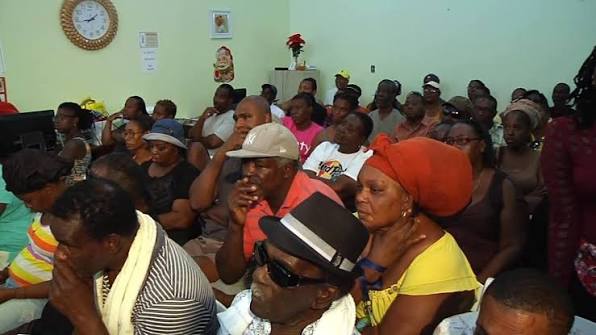
Moving forward, the Pelican Court Project Team has been authorized to begin one-on-one consultations with former Booby Alley residents, verify each applicant’s legal status and eligibility for housing, and develop a comprehensive unit allocation map for final Cabinet approval before any move-ins take place. The team will also receive dedicated transportation support to facilitate resident meetings, site visits, community outreach, and coordination of relocation logistics. Prime Minister Browne underlined that open, direct communication with former residents is a top priority to ensure all stakeholders fully understand the approved allocation and governance arrangements and their individual responsibilities under the policy.
The government has set a target of January 2027 for the start of occupancy at Pelican Court, a timeline that remains contingent on the timely completion of all required legal, administrative, and operational preparations. Cabinet welcomed the policy approval as a critical milestone toward delivering successful occupancy and long-term sustainability for the Pelican Court development.
Prime Minister Browne reiterated that the redevelopment of Booby Alley is about far more than constructing new modern housing units. The project is intended to build a new community defined by dignity, personal responsibility, public safety, and respect for shared infrastructure and amenities. Cabinet noted that the policy framework developed for Pelican Court will serve as a replicable model for the management of future government-supported housing and urban renewal projects across Antigua and Barbuda.
The government reaffirmed its ongoing commitment to ensuring former Booby Alley residents gain access to vastly improved housing conditions, while also putting in place the necessary safeguards to protect this major public investment for current and future generations of residents. With Cabinet’s formal approval, the project now has a complete policy foundation to support the orderly resettlement of eligible residents, fair allocation of housing units, and the development of a sustainable, well-governed residential community at Pelican Court.