### Introduction
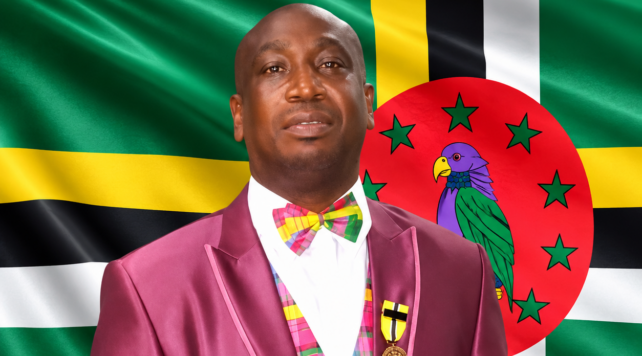
Nestled along the sun-drenched coast of Dominica, the small fishing village of Pottersville in the 1960s was far more than a collection of wooden homes and sandy shorelines. It was a crucible of community solidarity, Creole culture, and musical tradition that would shape one of Dominica’s most influential cultural advocates: Ambassador Leroy “Prince Wadix” Charles. Raised amid the rhythms of the Caribbean Sea, the beats of Carnival drums, and the shared generosity of neighbors, Charles would grow from a curious child listening to vintage records in his grandfather’s boathouse to a globally recognized champion of Creole music, cultural preservation, and Caribbean regional unity. This profile traces his extraordinary life journey, rooted in the communal values of his Pottersville upbringing and extended across the Caribbean and beyond.
### Childhood Roots: Community, Tradition, and the First Notes of Music
Leroy Charles was born in May 1963 to Angelo Charles, a bus driver known for carrying low-income schoolchildren for free, and Cecilia Hector, a hardworking food vendor who woke before dawn to prepare meals for Roseau’s waterfront and banana industry workers. His grandparents, whose lives were deeply tied to cross-Caribbean fishing trade, played an equally foundational role. His grandfather, a fisherman who traded with Guadeloupe and Martinique, and his grandmother Ma’Anna, who ran a popular seaside provision shop, immersed young Leroy in the Kwéyòl language and the interconnectedness of Caribbean communities.
Pottersville’s tight-knit communal culture left an indelible mark on Charles. In a time when material resources were scarce, the village practiced *Koudmen*, a tradition of mutual assistance inherited from Dominica’s African and Kalinago heritage. Neighbors shared catches, sent meals to elderly residents living alone, and celebrated every child’s success as a community victory. These values of collective responsibility and dignity grew alongside the labor movement and democratic awakening that pushed Dominica toward political independence, shaping Charles’ lifelong worldview.
The natural world of Pottersville was Charles’ first playground. He swam and fished in the Roseau River, climbed the surrounding hills, and used surplus export-rejected grapefruit as makeshift footballs with other neighborhood children. But it was Carnival that introduced him to his life’s calling. In the weeks leading up to the celebration, lapo kabwit drum bands paraded through Pottersville’s streets, filling the air with goatskin drum beats, call-and-response singing, and collective creativity. Those village streets became Charles’ first music academy, and his neighbors his first cultural teachers.
Cross-Caribbean trade connections deepened Charles’ musical education. His grandfather’s voyages to the French Antilles brought back not just trade goods, but vinyl records of Haitian and French Caribbean music. Long before the 1970s Cadence-Lypso revolution, Charles was listening to regional greats like Les Aiglons and Les Gypsies on battery-powered phonographs in Pottersville’s boathouses. For Charles, Kwéyòl language and French Creole music were never foreign imports—they were core elements of Dominican identity, forged by centuries of shared kinship and trade across the Caribbean Sea, which colonial powers had framed as a boundary but ordinary people used as a highway for connection.
### Education and Early Adulthood: Forming a Commitment to Equity
Charles began his formal schooling at a preschool near St. Alphonsus Church, then attended Goodwill School and Roseau Boys School, where teachers nurtured his growing interest in music. At 11, he passed the competitive Common Entrance Examination to attend St. Mary’s Academy, a rare achievement at a time when secondary education opportunities were limited for many Dominicans. Community figures supported his participation in sports and cultural activities, reinforcing the cooperative spirit he had learned in childhood.
At St. Mary’s Academy, Charles excelled across athletics, debating, drama, and calypso singing, representing Dominica in youth football and earning distinction as a sprinter. He became involved with the Young Cultural Dramatists and the People’s Action Theatre, deepening his appreciation for Dominican artistic expression. But no institution shaped him more profoundly than the historic Roseau Public Library, which served as a “people’s university” for generations of Dominican children. Charles spent hours poring over *Encyclopaedia Britannica* and the *Guinness Book of Records*, expanding his worldview beyond Dominica’s shores. He and the author share deep concern over the library’s deterioration following Hurricane Maria in 2017, and Charles has long advocated for its restoration as a historic center of learning and cultural activity.
After graduating secondary school, Charles entered waterfront employment and became active in the Waterfront and Allied Workers Union (WAWU). Between 1986 and 1988, he traveled to Moscow to receive trade union training at the Academy of Labour and Social Relations, studying alongside labor organizers from across the globe during the Gorbachev reform era. Upon his return to Dominica, Charles and fellow unionists challenged systemic inequities in waterfront employment, where favored workers received preferential access to jobs. Through democratic organizing, Charles became chairman of WAWU’s waterfront section, and the group implemented a fair job rotation system that prioritized equity over personal connections. This experience cemented his lifelong belief that working people deserve dignity, opportunity, and a voice in shaping their own future—a principle he would later extend to advocating for Dominican musicians and cultural workers.
### Preserving a Musical Inheritance: Rescuing Cadence-Lypso from Oblivion
One of Charles’ most lasting contributions to Dominican culture is his work preserving endangered Cadence-Lypso recordings, a genre that defined modern Dominican music. Hurricane David in 1979 destroyed thousands of private records, photographs, and cultural artifacts, leaving much of the nation’s early musical heritage at risk of being lost forever. Charles and his close friend Francis “Ole” launched a decades-long effort to track down surviving recordings across Dominica and the French Antilles, where many original recordings had been produced. They purchased water-damaged vinyl albums for as little as two or three dollars, then spent countless hours cleaning the records, removing damaged paper sleeves and accumulated grime. Working with audio engineer Ken Robinson, they transferred the rescued music first to CDs and later to digital formats, ensuring the work of pioneering bands like Exile One, Grammacks, Midnight Groovers, and Naked Feet would not be forgotten.
Charles, Ole, and Steven Joseph also founded WadiCole, a humble sound system built from repurposed household stereo equipment that grew into an influential promoter of Cadence-Lypso, Haitian Compas, Zouk, African Soukous, and other regional traditions. WadiCole performed across Dominica and toured the Caribbean, North America, and Britain, growing from a small community project into a major Caribbean cultural enterprise that demonstrated the power of cooperation and creativity.
### Shaping Dominican Cultural Nationalism and the World Creole Music Festival
Charles’ musical career developed during a period of extraordinary cultural renaissance in Dominica, led by pioneers like Gordon Henderson (founder of Exile One and the pioneer of Cadence-Lypso), playwright and national flag designer Alwin Bully, dancer Raymond Lawrence, and music educator Pearle Christian. This movement grew out of the cultural nationalism of Chief Minister Edward Oliver LeBlanc, who encouraged Dominicans to embrace Kwéyòl, traditional dress, and indigenous music, challenging colonial narratives that European culture was inherently superior to Dominican traditions. Charles inherited this spirit of cultural self-confidence and made preserving this heritage his life’s mission.
Charles’ most visible contribution to Dominican culture is his role as a founding figure of the World Creole Music Festival, first launched in 1997. Initial discussions in 1996 among musicians, cultural organizers, and tourism leaders centered on celebrating Dominica’s French Creole musical heritage, and Charles served as chairman of the festival’s band selection committee for many years. The festival, which aligned with Dominica’s Independence celebrations, grew from a focus on Cadence-Lypso to a global celebration of Creole music, becoming one of Dominica’s most famous international cultural attractions. Charles has long advocated that the festival maintain its core commitment to French Creole traditions, arguing that commercial growth need not come at the expense of cultural authenticity. He popularized the concept of *Music Anou*—“our music”—emphasizing that Creole music is a shared inheritance belonging to all Caribbean people.
Through his organization Creole Heartbeat, Charles has expanded his work across cultural preservation, musical education, broadcasting, and historical documentation. The group runs radio programs, cultural symposiums, the Dominica Music Awards, and has published eight extensive magazine editions documenting the history of Creole music in Dominica. In recognition of his decades of work, Charles was appointed Dominica’s Cultural Ambassador in May 2024, and has received numerous honors including the Golden Drum Award and the Meritorious Service Award for his work promoting Kwéyòl and Creole music regionally. He continues to advocate for a comprehensive national Kwéyòl language policy, stronger cultural education, proper recognition of Dominican national heroes, and deeper cooperation among Creole-speaking societies across the Caribbean.
### A Vision for Caribbean Unity
Charles’ most far-reaching vision is for deeper cultural and economic cooperation between Dominica, Guadeloupe, and Martinique, a goal rooted in the cross-Caribbean trade traditions of his grandfather and the regional solidarity philosophy of former Dominican Prime Minister Rosie Douglas. Douglas believed colonial-imposed boundaries should not block cooperation between neighboring Caribbean societies, and his vision was embodied in the Roosevelt Douglas Primary School in Portsmouth, built with funding from Martinique’s Regional Council after the original school was destroyed in a 2004 earthquake. Martinique political leader Alfred Marie-Jeanne, who oversaw the project, shared Douglas’ commitment to Caribbean self-determination, and the school stands as a lasting monument to regional solidarity benefiting Dominican children.
Charles calls for a permanent framework for cooperation between the three islands across music, historical archives, language education, tourism, agriculture, and youth entrepreneurship. He and the author have discussed hosting a symposium to examine the deep historical connections between the islands, including the aid Dominican communities provided to refugees from Vichy-controlled French Antilles during World War II, and to explore new opportunities for collaboration between historians, cultural organizations, musicians, and academic institutions. Charles argues that shared cultural heritage can be transformed into a driver of practical regional development.
### Conclusion: The Enduring Legacy of a Son of Pottersville
Today, Charles looks back on his childhood in Pottersville with deep nostalgia, concerned that the strong communal solidarity that shaped his youth has been eroded by modern political divisions. He emphasizes that Dominica’s cultural inheritance—its music, language, traditions, and historical institutions—belongs to all Dominicans, regardless of political affiliation. These are national treasures that transcend the governments and political controversies of any era.
The child who listened to lapo kabwit drums on Pottersville’s streets grew into a champion of traditional Carnival music. The boy who discovered French Caribbean records in his grandfather’s boathouse grew into the man who rescued thousands of endangered Cadence-Lypso recordings. The student whose imagination was opened by the Roseau Public Library grew into a researcher and broadcaster dedicated to sharing Dominican culture with the world. The trade unionist who fought for fair employment in the waterfront grew into an advocate for fair treatment of musicians and cultural workers. And the grandson of a cross-Caribbean fisherman grew into a passionate champion of regional Caribbean unity.
His life’s work remains rooted in the belief that the dignity, creativity, and collective progress of ordinary people must be at the center of national development. His vision is of a Dominica confident in its own cultural identity, respectful of its ancestral roots, united across political divides, and serving as a bridge between the English-speaking and French-speaking Caribbean. As the gentle waves still lap against Pottersville’s shores, and the lapo kabwit drums still announce each new Carnival season, the legacy of Leroy “Prince Wadix” Charles endures: a legacy of cultural preservation, regional solidarity, and unwavering commitment to the idea that a people’s culture is their most precious inheritance.