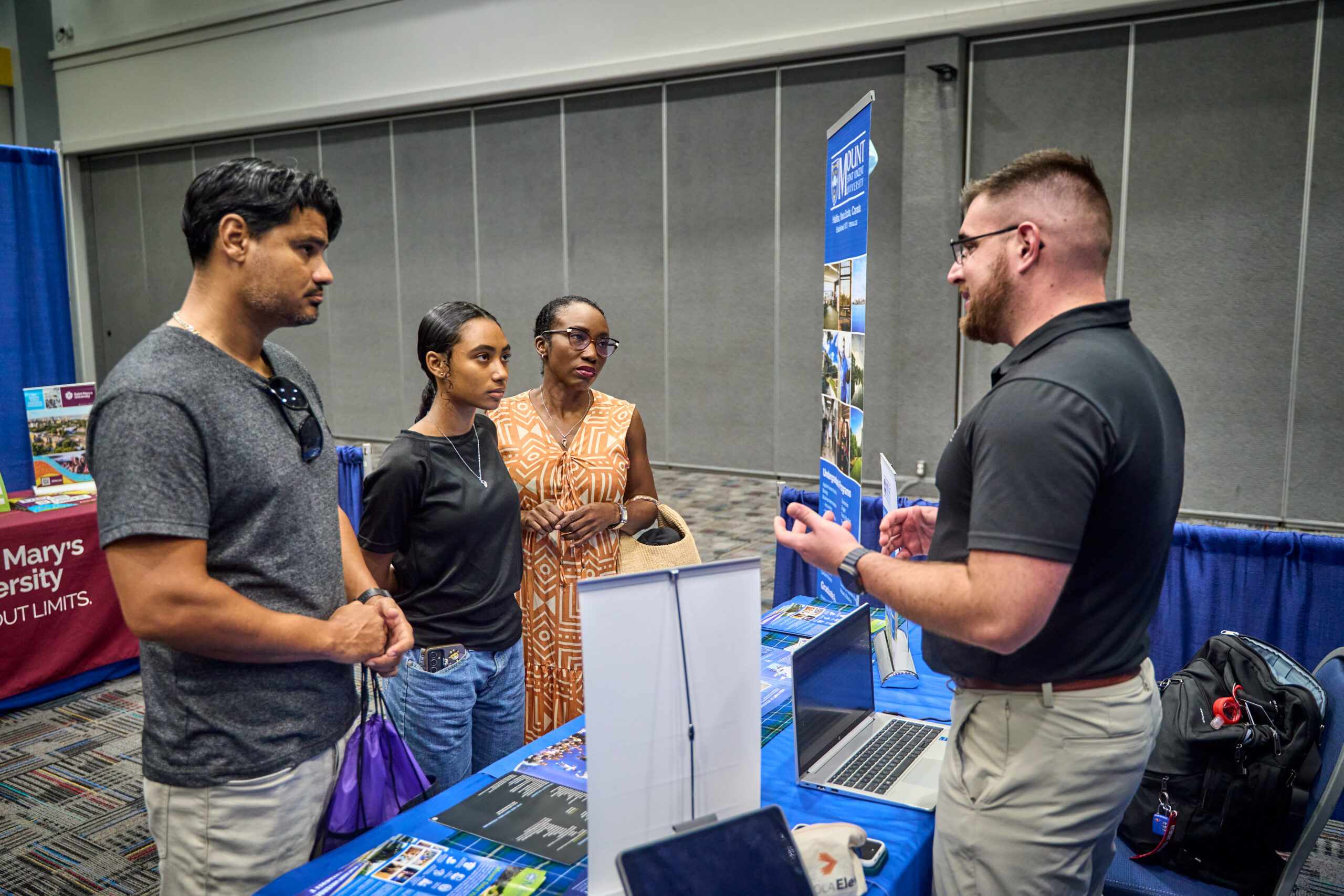
As thousands of prospective international higher education students and their families gathered at the Lloyd Erskine Sandiford Centre for Saturday’s 2026 CUP Fest International Education Fair, industry leaders issued a key reminder: intentional financial preparation is non-negotiable for anyone pursuing studies abroad.
Organized by The Student Centre, the College and University Prep (CUP) event was designed to connect secondary school graduates and working professionals with accredited higher education institutions from around the world, helping them map out sustainable paths to overseas learning. This year’s gathering brought 25 international institutions to the venue, with 21 based in Canada and four from other nations. Attendees could explore undergraduate programs spanning arts, science, engineering, medical training and dozens of other disciplines, alongside one-on-one guidance from local financing bodies including the Student Revolving Loan Fund (SRLF) and RBC Royal Bank.
Sheena Alleyne, Managing Director of The Student Centre, told media that far too many prospective students fixate on the prestige and experience of studying at a foreign university without building a clear, diversified plan to cover costs. “You have to have a financial plan. You can’t put all your eggs in one basket, so you have to map out all the funding pipelines available to you,” Alleyne said.
While Alleyne emphasized that scholarships are a valuable resource for offsetting tuition and living expenses, she warned against relying on them as a single source of funding. Instead, she encouraged students to combine multiple funding streams, from institutional and government scholarships to bank loans, the local SRLF, personal savings, and contributions from extended family. “A scholarship is nice… You can have a loan; that’s why we have the banks, and we have the Student Revolving Loan Fund here. You may have your own personal savings, auntie, your uncle, sometimes there’s a whole village to support this journey, so you can piece different options together,” she explained.
Alleyne also noted a key distinction between scholarship types that students often miss: some higher education institutions automatically consider all admitted applicants for merit scholarships, while others require separate, standalone applications to access financial aid. Prospective students must account for these procedural differences to avoid missing out on available funding, she added.
Beyond financial guidance, Alleyne highlighted that the fair serves a far broader purpose: making international education accessible to all groups, not just recent secondary school graduates. “This is one step in the direction of preparing for education after you complete your secondary studies, but it’s not only for our school students; we are also targeting persons, working professionals who might want to upgrade their credentials,” she said. The in-person event also gives applicants a unique chance to connect directly with institutional representatives before diving into deep online research, helping them quickly assess whether their target programs align with both their academic goals and their budget.
Caroline Mourand, Senior Trade Commissioner at the High Commission of Canada in Barbados, echoed the call for thorough pre-application research, noting that Canada remains one of the most popular destinations for Barbadian and Caribbean students seeking overseas degrees. The country’s enduring appeal, she explained, stems from its globally recognized high-quality education system and its well-earned reputation as a safe, welcoming environment for international learners.
“I think that there’s a lot of interest in education in Canada. I’ve had a lot of conversations today, meeting a lot of people that have long-standing education ties with Canada,” Mourand said. This year, Canada is projected to welcome 155,000 new international students across its institutions, and Mourand confirmed that abundant spots remain open for qualified applicants from Barbados and the wider Caribbean.
Mourand encouraged prospective students to leave no question unasked during the research process, covering everything from program curriculum and admission requirements to total tuition costs, off-campus living expenses, campus community culture, and all available scholarship opportunities. “Do not be afraid to ask 1000 questions because it is a very important and big decision that you’re going to make,” she said, adding that students can access up-to-date, verified information on all Canadian higher education programs via the official EduCanada website.