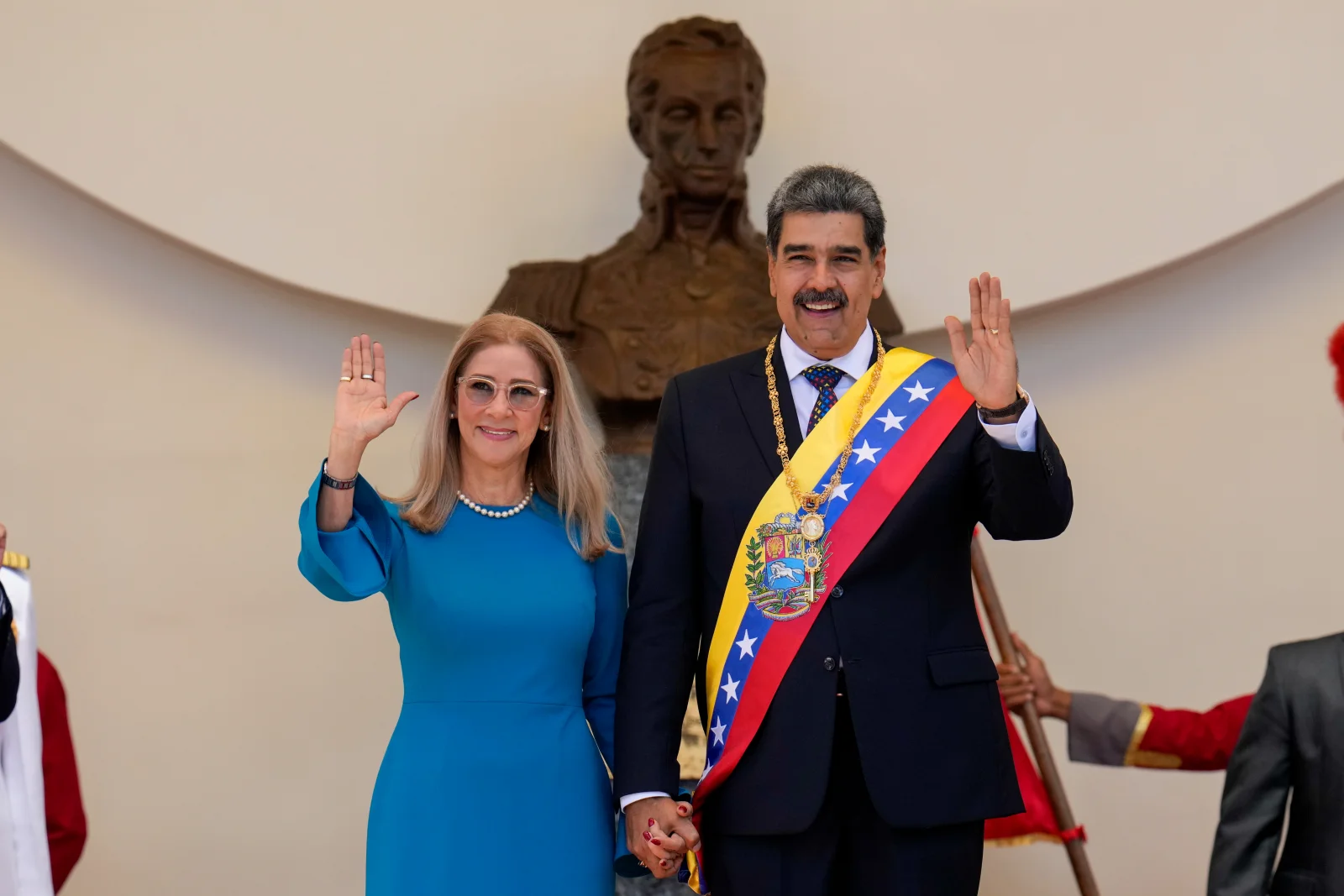
In a high-stakes arraignment hearing in Manhattan federal court on Thursday, ousted Venezuelan President Nicolas Maduro and his wife Cilia Flores formally pleaded not guilty to an expanded U.S. indictment that charges the pair with conspiring to torture political opponents in the South American nation.
The new charges, which were filed just one week prior to Thursday’s hearing, dramatically widen the scope of the ongoing U.S. criminal case against 63-year-old Maduro and 70-year-old Flores. The couple already entered not guilty pleas earlier to separate charges alleging they abused their official positions to facilitate large-scale cocaine shipments by international drug trafficking networks.
Maduro and Flores were taken into U.S. military custody during a January raid on their Caracas home authorized by former President Donald Trump, and were immediately transported to New York to face justice. During Thursday’s hearing before U.S. District Judge Alvin Hellerstein, the pair appeared in tan prison uniforms with ankle shackles. When Hellerstein requested Maduro enter his plea, the ousted leader stated the accusations were unsubstantiated and a repeat of prior false claims.
“I have seen it in its entirety, Judge Hellerstein,” Maduro said of the indictment. “I reject this document in its entirety.” Hellerstein interrupted Maduro’s extended remarks and formally entered a not guilty plea on his behalf. Flores followed, stating clearly to the court: “I am completely innocent. I am not guilty.”
Notably, the indictment does not accuse Maduro or Flores of personally committing acts of torture. If convicted on all charges currently levied against them, however, each faces a mandatory minimum prison sentence of 50 years. Due to the addition of the new charges, Hellerstein granted a two-week delay to the trial’s start date, pushing it to June 14, 2027.
Prosecutors from the Manhattan U.S. Attorney’s Office allege that Maduro ordered Venezuelan state officials to torture opposition politicians and military personnel suspected of plotting against his government, as part of a campaign to consolidate and retain power. The indictment details a 2014 incident in which Maduro directed officials to kidnap dissident military personnel to extract intelligence about opposition networks. When some captives refused to cooperate, Maduro explicitly told officials to “squeeze them harder,” according to the charging document. Prosecutors claim Flores supported the torture plan during the planning meeting, rejecting an alternative proposal to gather intelligence through infiltration of opposition ranks instead.
Tensions between the socialist Maduro administration and the U.S. government ran high throughout Maduro’s 13-year tenure leading the oil-rich country. Multiple consecutive U.S. administrations imposed sweeping economic sanctions on senior Venezuelan officials and major state-run enterprises, justifying the measures with claims of human rights abuses, systemic corruption, and election manipulation. Maduro repeatedly pushed back against U.S. intervention, arguing that American efforts to remove him from power were rooted in a desire to seize control of Venezuela’s vast natural resource reserves.
The years-long U.S. pressure campaign culminated in the January 3 raid that resulted in Maduro and Flores’ capture. The pair have remained in custody at New York’s Metropolitan Detention Center in Brooklyn ever since their transfer to the U.S. Following Maduro’s ouster, former vice president Delcy Rodriguez assumed leadership of Venezuela and has significantly expanded bilateral cooperation with the U.S. Trump has publicly highlighted Maduro’s capture and the reset of U.S.-Venezuela relations as a landmark foreign policy victory as his Republican party fights to retain control of Congress in the upcoming November 3 midterm elections.