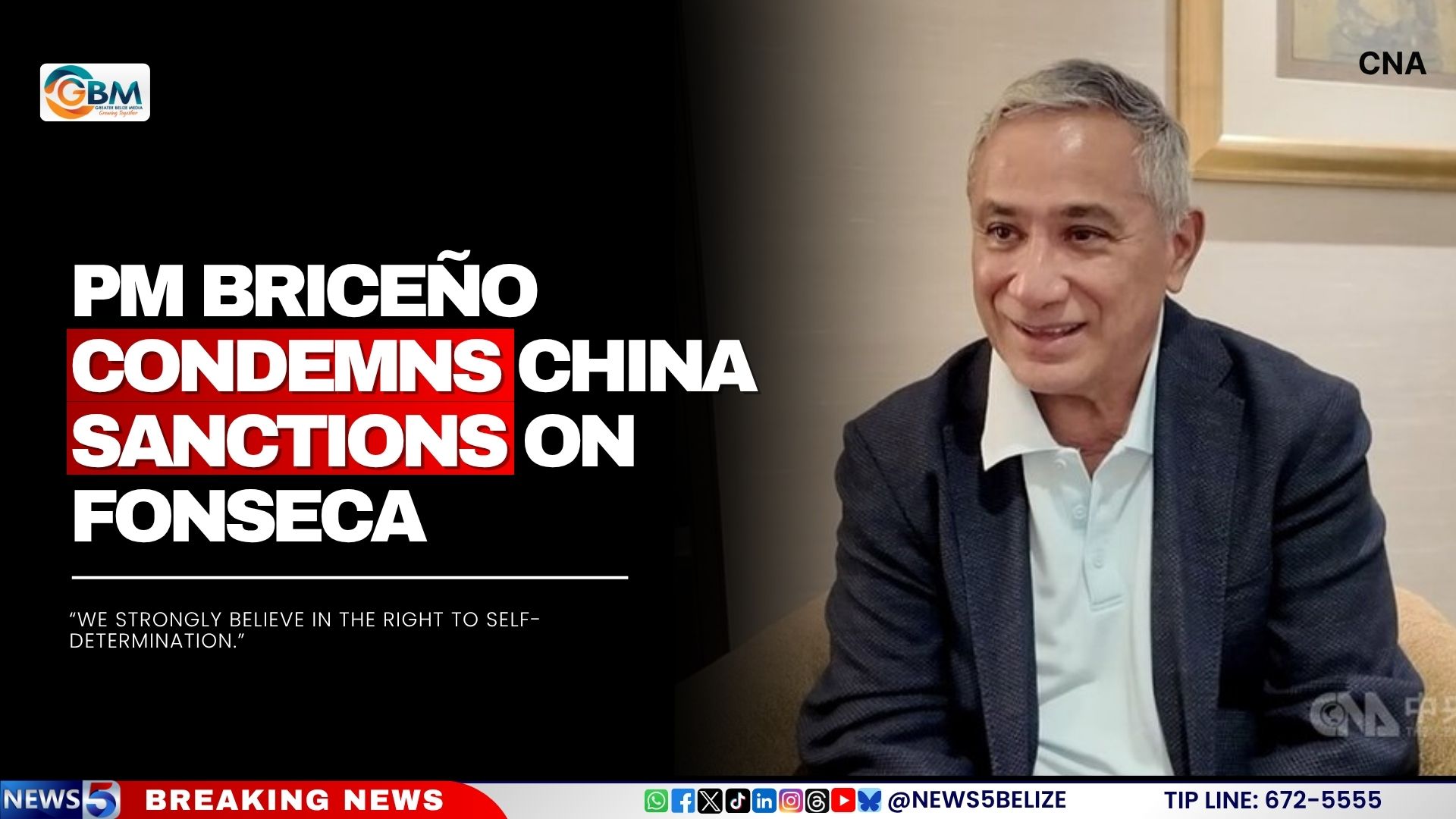
In a breaking statement made from Bangkok, Thailand, where he is attending the 2026 Annual Meetings of the International Monetary Fund and World Bank Group, Belizean Prime Minister John Briceño has rejected China’s recent sanctions targeting Belizean Foreign Minister Francis Fonseca, vowing the punitive measure will not shift Belize’s long-standing diplomatic relationship with Taiwan. Instead, Briceño argued, the action will only harden the government’s commitment to its independent foreign policy choices.
Briceño is participating in the global financial gatherings in his dual capacity as Belize’s finance minister and chair of the World Bank’s Small States Forum. Speaking to CNA, he labeled the sanctions imposed on Fonseca as arbitrary, unjustified, unlawful, and completely without basis. He emphasized that as a sovereign, independent nation, Belize holds the inherent right to determine its own diplomatic partnerships, saying “We strongly believe in the right to self-determination for all nations, including our own.”
Going beyond his response to the sanctions, Briceño made the case for broader international recognition of Taiwan, pointing to the island’s substantial advances across a range of critical sectors. He highlighted Taiwan’s global leadership in economic development, digital technology, artificial intelligence innovation, accessible health care, educational advancement, and climate change research as proof that the island deserves formal inclusion in the United Nations and other major multilateral institutions.
Briceño also outlined a vision for deepening bilateral collaboration between Belize and Taiwan across multiple fronts, including cross-border investment, technological knowledge sharing, and expanded people-to-people exchange. He pointed to shrimp farming technology as a particularly promising area for future partnership, noting that Taiwan’s expertise in this field could bring tangible economic benefits to Belize’s growing agricultural sector. Additionally, he cited Belize’s large, young population as a major strategic advantage for tech-focused cooperation, explaining that young Belizean students progressing from junior college to university adapt quickly to new skills and technologies, creating fertile ground for joint work.
Currently, six Taiwanese exchange students are already embedded in roles across Belizean government ministries and other local sectors, a people-to-people partnership Briceño praised as a key tool for building long-term trust and connection between the two nations. He also touched on the persistent domestic challenges Belize faces as a small nation: with a total population of roughly 420,000 spread across 196 scattered small communities and a limited domestic tax base, striking a sustainable balance to deliver universal access to core public services—from clean water and electricity to education and health care—remains an ongoing priority for his government.
The development comes as Taiwan’s foreign ministry has separately issued a warning to the European Union, framing excessive economic and strategic dependence on China as a growing risk to European autonomy and freedom.