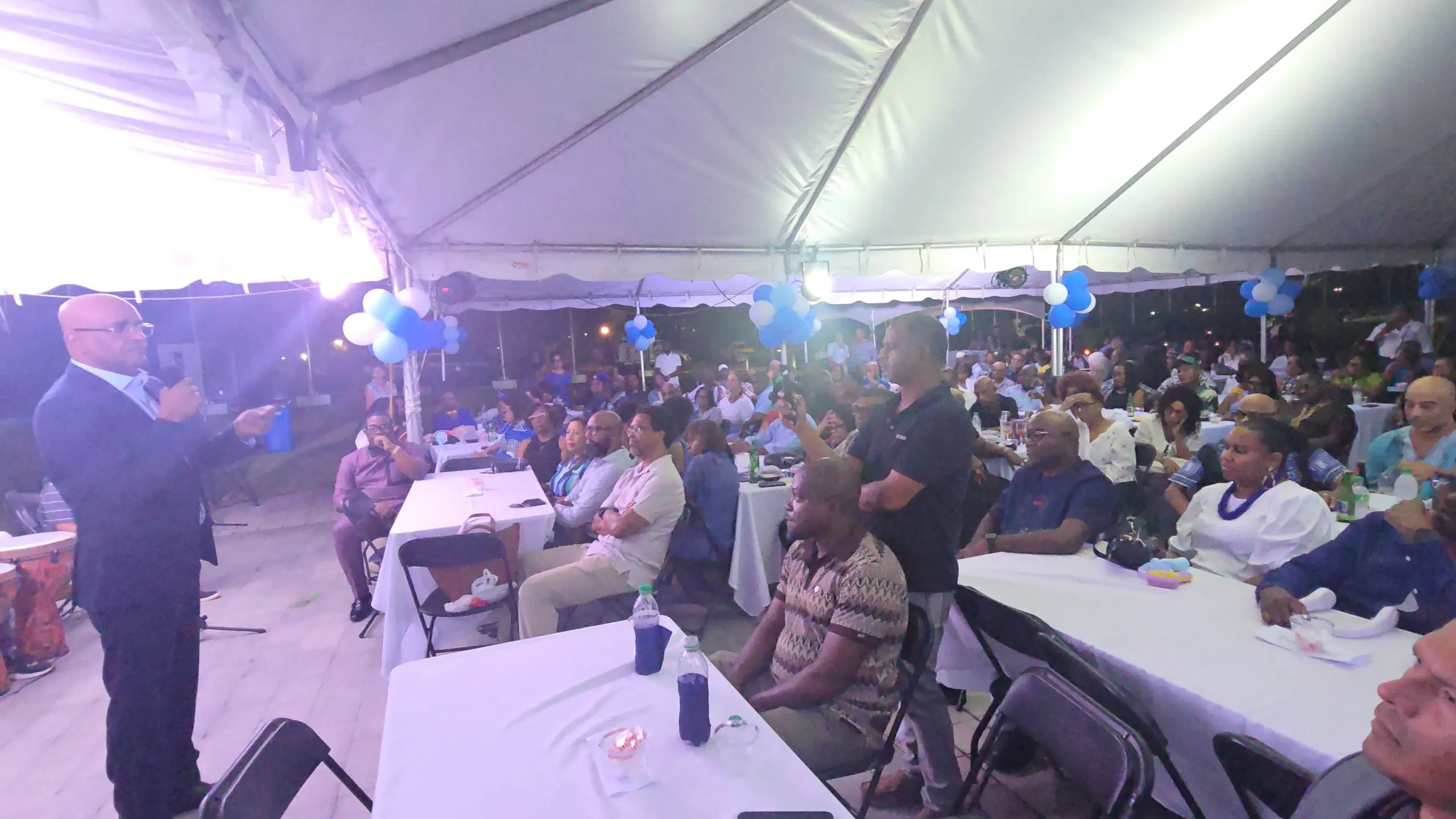
On a reflective Wednesday evening, October 14, 2026, at Georgetown’s Arthur Chung Conference Centre, Guyana’s Vice President and People’s Progressive Party (PPP) General Secretary Bharrat Jagdeo delivered a landmark call for cross-party collaboration during a tribute event honoring the late former opposition leader Robert Corbin. Corbin, who led the main opposition People’s National Congress Reform (PNCR) and previously served as Deputy Prime Minister, passed away on October 4 after an extended battle with illness.
Jagdeo’s remarks centered on a pressing plea for Guyana’s two long-dominant political forces to abandon decades of race-based political rhetoric and historical animosity, framing renewed collaboration as not just a benefit for the nation, but an existential necessity for both parties. “The future of Guyana will require these two parties to work together in some framework, in some form – it is an unavoidable necessity,” Jagdeo told the assembled crowd, which included sitting PPP government ministers, PNCR supporters, members of the legal community, and former PNCR members who have since joined alternative political blocs or aligned with the PPP. “Only through this cooperation can we deliver on the dreams of Guyanese who were forced to flee the country seeking better opportunity abroad, and of those who call this nation home today.”
The former president (1999–2011) warned that failure to embrace this new, enlightened approach to governance would leave both parties vulnerable to extinction, noting that young Guyanese voters no longer adhere to rigid, decades-old party loyalties. “Today’s young people support candidates and parties based on individual issues, not blind ideological alignment,” he explained. “Their support is fluid, and outdated political thinking will not hold their allegiance long-term.” Jagdeo added that the PNCR must reevaluate its core philosophy and adapt to shifting global and domestic challenges to remain a relevant force in the new Guyana.
Addressing the historical rift between the two parties, Jagdeo argued that racial division was a damaging legacy imposed on the nation that continues to hold Guyana back from reaching its full potential. “Until our parties grow, mature, and move past the hurts of our shared history, until we recognize how that era of division harmed us for generations, we cannot deliver the transformative leadership this country deserves,” he said.
In his tribute to Corbin, Jagdeo praised the late PNCR leader for his bold, forward-thinking decision to lay the groundwork for cross-party cooperation during Jagdeo’s presidential tenure, a choice that drew fierce internal criticism from PNCR hardliners and ultimately contributed to Corbin stepping down as party leader. Rejecting posthumous claims that Corbin “sold out” his party to the PPP, Jagdeo emphasized that Corbin was a fierce, unwavering advocate for the PNCR in all negotiations – he simply held a larger vision for national progress over partisan gain. “That is the furthest thing from the truth,” Jagdeo said of the “sellout” claims. “Robert Corbin defended his party fiercely in every engagement we had, but he never lost sight of what was best for the entire country.”
Jagdeo noted that collaboration with Corbin was always productive because the late leader’s decades of experience in government and party leadership gave him a practical understanding of the limits of executive action. “He never demanded the impossible from any government,” Jagdeo added. The two leaders launched their cross-party engagement with the full backing of the PPP executive, recognizing that their parties shared a common origin as a single political bloc in 1950, with only the persistent “boogeyman of race” dividing them. “There were few fundamental differences between us – we all recognized that coming together was good for Guyana,” Jagdeo said.
Admitting that decades of opposition had eroded trust between the two parties, Jagdeo acknowledged that meaningful collaboration will require intentional work to rebuild that foundational faith. He pointed to the 2001 constitutional reform process, which delivered the most inclusive governing framework in the Commonwealth, but noted that persistent mistrust has created ongoing friction in implementing power-sharing provisions at the legislative level. Bringing that same mistrust into executive government would lead to crippling policy paralysis, Jagdeo warned – the single greatest threat to effective governance anywhere in the world.
As PPP General Secretary, Jagdeo shared that his party has already adapted its own thinking to meet modern local and global challenges, working to become more receptive to new ideas and even the perspectives of political opponents. “Opponents do not take positions against us because they hate us as individuals – more often than not, their ideological framework leads them to those stances,” he explained.
Former PNCR executive member Lurlene Nestor, who spoke on behalf of a US-based PNCR affiliate group, echoed tributes to Corbin, highlighting his lifelong commitment to humility and economic redistribution to lift up marginalized Guyanese communities. “You cannot hold public office, enrich yourself, and let families live on the street,” she said, echoing Corbin’s core political values.
The push for PPP-PNC unity has a long history in Guyana: the last major round of unity talks in 1985, led by then-opposition PPP leader Cheddi Jagan and ruling PNC leader Forbes Burnham, collapsed after Burnham’s sudden death in August of that year. The subsequent PNC government led by Desmond Hoyte soon abandoned its socialist framework, aligned with the United States, and transitioned to a market-oriented economy.